Will Türkiye Invade Iran? Kurdish Dynamics Could Shape Ankara’s Next Move
 tsk1
tsk1
As the U.S.–Israeli military campaign against Iran intensifies, questions are emerging about whether Türkiye could eventually intervene across its eastern border. Analysts say Ankara is unlikely to join the conflict directly, but instability inside Iran—especially involving Kurdish groups—could trigger Turkish military action. Ankara views Iran’s Kurdish population and militant groups linked to the PKK as a potential threat to Türkiye’s territorial integrity.
Ankara keeps distance from the war—for now
Before U.S. and Israeli strikes began against the Islamic Republic of Iran, Türkiye sought to maintain a cautious stance. Ankara called for de-escalation and diplomatic dialogue, while denying speculation that it was preparing for military involvement.
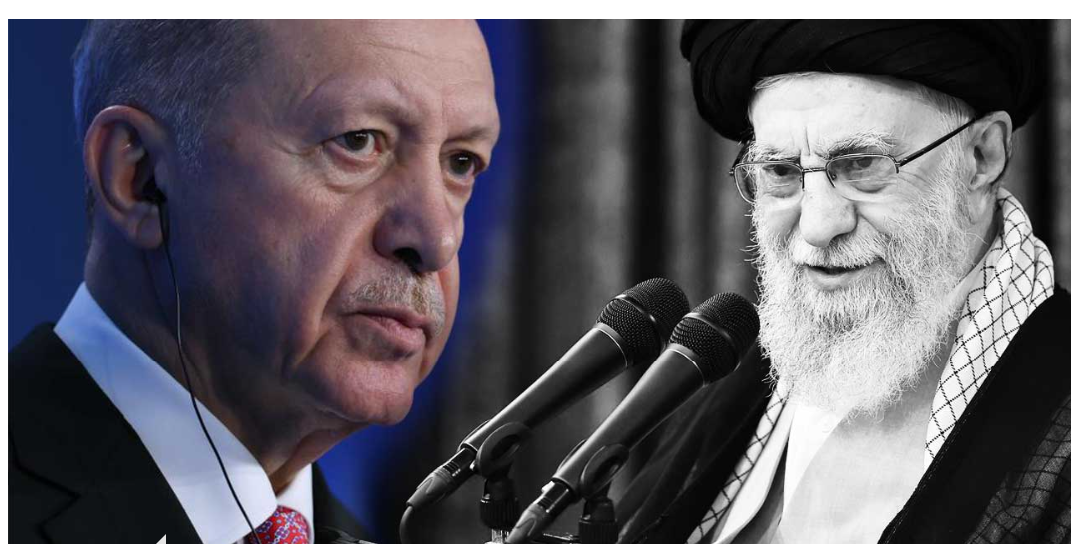
President Recep Tayyip Erdoğan has continued to condemn the strikes, even expressing sadness following the reported killing of Iran’s Supreme Leader Ali Khamenei in the opening phase of the conflict.
Unlike several U.S. allies that have supported military operations, Ankara has so far chosen to remain outside the coalition against Tehran.
However, analysts caution that Türkiye’s current restraint does not necessarily mean it will remain a passive observer if the conflict evolves.
Erdoğan weighing strategic opportunities
Türkiye’s leadership appears to be calculating how to respond to a rapidly shifting regional landscape.
Publicly, Ankara has focused on national security risks along its eastern border, particularly concerns about refugee flows and instability spilling over from Iran.
Erdoğan has also conducted a series of calls with Gulf leaders, seeking support for a ceasefire and warning that continued escalation could engulf the Middle East in a “ring of fire.”
For now, Türkiye’s decision not to join military operations alongside Washington may also help explain why Iran has not targeted Turkish territory or military assets, unlike strikes reported against facilities in countries such as Saudi Arabia, Qatar, and the United Arab Emirates.
Kurdish dynamics could trigger Turkish action
The most likely trigger for Turkish military intervention in Iran would be the emergence of Kurdish militant activity perceived as threatening Türkiye’s internal security.
Türkiye has long viewed Kurdish separatist movements in neighboring countries as a direct national security challenge.
This concern could intensify if instability inside Iran allows Kurdish armed groups to expand their operations near the Turkish border.
Recent developments have heightened those concerns. Reports indicate that U.S. President Donald Trump held discussions with Kurdish leaders in the region, raising speculation that Kurdish groups could be encouraged to challenge Tehran’s rule.
If a Kurdish uprising inside Iran were to materialize, it could provide Ankara with a political justification for cross-border military operations.
Focus on PJAK and Kurdish coalition
One group closely watched by Ankara is the Kurdistan Free Life Party (PJAK), an Iranian Kurdish militant organization linked to the Kurdistan Workers’ Party (PKK).
The PKK is designated as a terrorist organization by Türkiye, the United States, and the European Union.
In February, PJAK joined four other Iranian Kurdish parties to form a coalition aimed at what they described as the “liberation of Eastern Kurdistan.”
Turkish nationalist media have warned that such groups could attempt to create a “terror corridor” along Türkiye’s eastern border, similar to Kurdish-controlled zones that once emerged in northern Syria.
Türkiye’s military posture
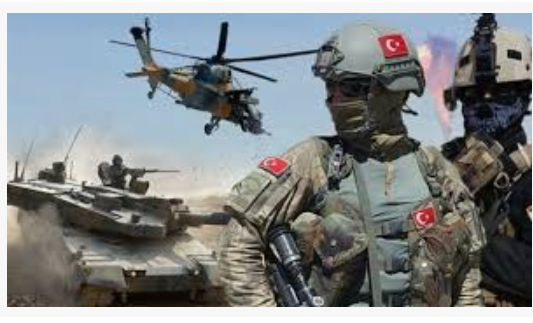
Although Türkiye has not mobilized large forces toward Iran, recent developments suggest Ankara is maintaining operational readiness.
NATO airborne early-warning aircraft have conducted monitoring flights over eastern Türkiye. These AWACS aircraft help track airspace activity and provide valuable intelligence on military developments near Iran.
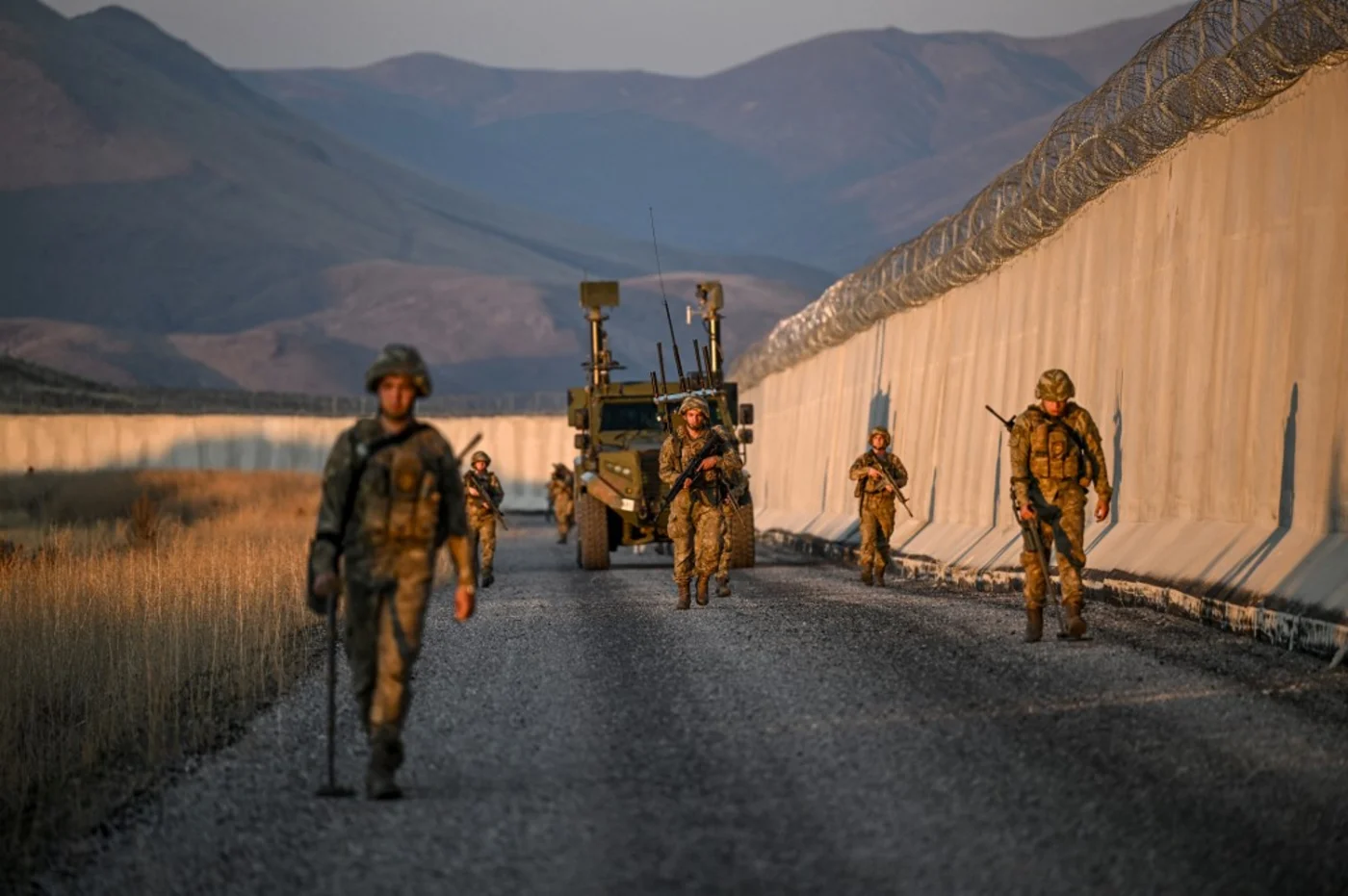
So far, there have been no confirmed major deployments from Türkiye’s Second Army, which is responsible for securing the country’s borders with Syria, Iraq, and Iran.
However, speculation about possible cross-border operations has intensified in both Turkish and international media.
Mixed signals from Ankara
Official statements from Ankara combine denials with open-ended warnings.
The Turkish Defense Ministry recently dismissed claims that Türkiye plans to invade Iranian territory, stating such reports “do not reflect the truth.”
At the same time, Erdoğan has emphasized Türkiye’s readiness to act unilaterally if national security is threatened.
“Wherever there is a threat, we will eliminate it at its source without asking anyone for permission,” the president said in a recent speech.
Refugees and security risks
Another possible trigger for Turkish intervention could be a large-scale refugee influx from Iran.
Türkiye already hosts millions of refugees from Syria and has repeatedly warned that further migration pressure could destabilize its border regions.
If conflict inside Iran were to cause mass displacement, Ankara could attempt to establish temporary security zones across the border to manage refugee flows.
Iran War: The Kurdish Puzzle — Will They Turn Against Tehran?
Lessons from Syria and Iraq
Türkiye’s military operations over the past decade offer insight into how Ankara might act if it intervenes in Iran.
Turkish forces already maintain military positions across northern Syria, following several cross-border operations launched between 2016 and 2019.
Similarly, Türkiye has built a network of military bases in northern Iraq as part of its campaign against PKK militants.
A similar model—combining air strikes with limited ground positions—could potentially be applied in northwestern Iran if Ankara perceives a direct security threat.
Domestic political considerations
Despite the potential security concerns, Erdoğan may also face political constraints at home.
Türkiye is expected to hold its next national elections within the next two years, and analysts say the president is preparing to position his son Bilal Erdoğan as a future leader within the ruling Justice and Development Party (AKP).
A costly or prolonged military intervention abroad could therefore carry domestic political risks.
As a result, any Turkish military action would likely be carefully calibrated to balance security concerns with domestic political considerations.
A volatile strategic equation
For now, Türkiye remains officially outside the conflict with Iran. Yet the evolving war and the possibility of Kurdish mobilization inside Iran could reshape Ankara’s calculations.
If Kurdish militant groups gain momentum in a destabilized Iran, analysts say Türkiye could decide that intervention is necessary to prevent the emergence of a new Kurdish militant stronghold near its borders.
In that scenario, Ankara’s role in the regional conflict could shift dramatically.
Source: Analysis by Sinan Ciddi (Foundation for Defense of Democracies)
PA Turkey intends to inform Turkey watchers with diverse views and opinions. Articles in our website may not necessarily represent the view of our editorial board or count as endorsement.
Follow our English YouTube channel (REAL TURKEY):
https://www.youtube.com/channel/UCKpFJB4GFiNkhmpVZQ_d9Rg
Twitter: @AtillaEng
Facebook: Real Turkey Channel: https://www.facebook.com/realturkeychannel/
Related articles
President Erdoğan Condemns U.S.-Israeli Strikes on Iran, Warns Against Regional Escalation

What’s at stake for Erdoğan in the Iran conflict?
Turkey Navigates Neutrality Amid US-Israel-Iran Conflict