Iran War: The Kurdish Puzzle — Will They Turn Against Tehran?
 kurds iran
Intensifying airstrikes along Iran’s western border and reports of Kurdish militant mobilization have raised speculation that the United States and Israel may be seeking to open a new front against Tehran. Kurdish opposition groups based in northern Iraq appear to be positioning fighters near the Iranian border, though both Kurdish factions and Iranian officials deny that a ground incursion into Iran has begun. Analysts warn that mobilizing ethnic militias inside Iran could destabilize the country and trigger broader regional repercussions.
Airstrikes hit Iran–Iraq border as tensions escalate
A wave of airstrikes has struck military installations, border posts, and security facilities along Iran’s northern frontier with Iraq, fueling speculation that Washington and Israel may be preparing to open a new front in the conflict with Tehran.
A U.S. official familiar with discussions between American authorities and Kurdish leaders said the United States would be prepared to provide air support if Kurdish peshmerga fighters crossed into Iran from northern Iraq.
Meanwhile, a spokesperson for the Israeli military said the country’s air force had been “heavily operating in western Iran to degrade Iranian capabilities and open a path toward Tehran.”
Several media outlets, including Axios and Fox News, reported that Kurdish militias may have already begun operations inside Iranian territory. However, there has been no official confirmation regarding the scale or location of such activities.
Trump’s Secret CIA Plan: Arming Kurds for the “Great Iran Uprising”
Kurdish groups move forces toward the Iranian border
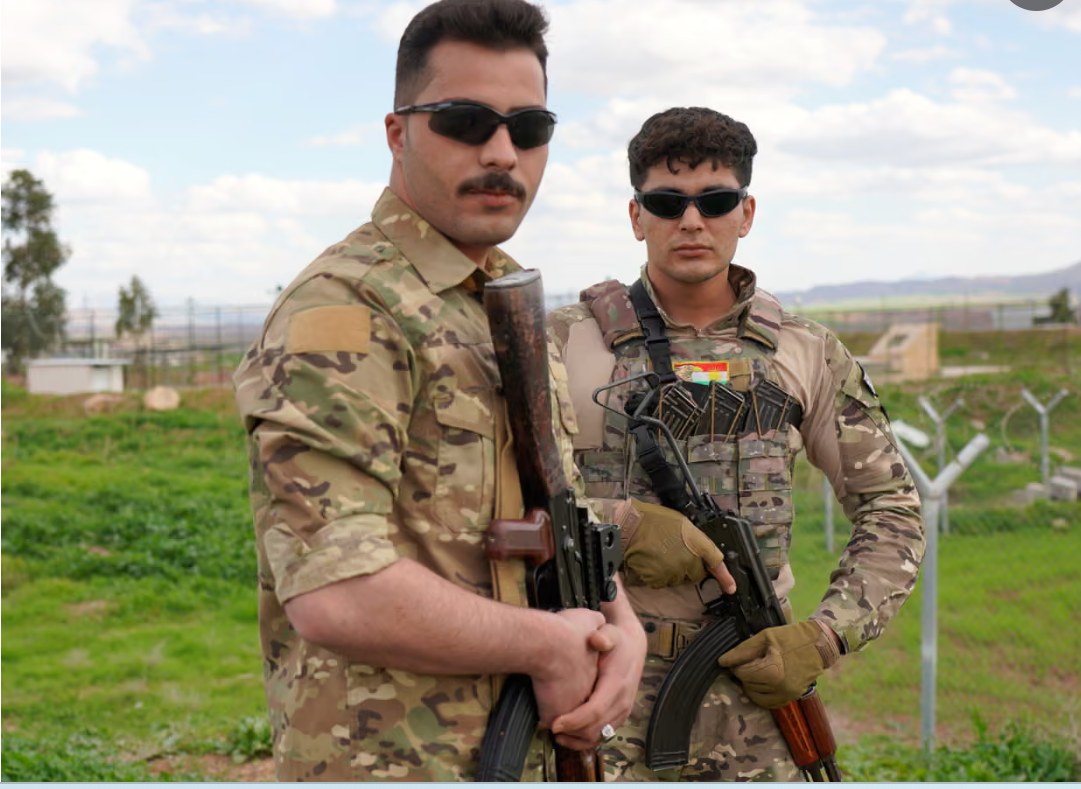
Kurdish officials told the Associated Press that Iranian Kurdish opposition groups based in northern Iraq are preparing for a possible cross-border operation.
Khalil Nadiri, an official from the Kurdistan Freedom Party (PAK) operating in the Kurdistan Regional Government (KRG) area of Iraq, said some fighters had been moved closer to the Iranian border in Sulaymaniyah province.
According to Nadiri, the forces are currently on standby, and Kurdish opposition leaders have been contacted by U.S. officials about a potential operation, though details remain unclear.
At the same time, reports suggest that Baloch militant groups hostile to the Iranian regime may also have crossed into Iran from remote mountainous areas along the Pakistan border.
Kurdish factions deny entering Iran
Despite reports of an offensive, several Kurdish opposition organizations have denied that their forces have crossed into Iran.
The Democratic Party of Iranian Kurdistan (KDPI) told Kurdish media outlet Rudaw that none of its fighters had entered Iranian territory.
Similarly, the Iranian Kurdish group Komala dismissed claims that its forces had moved into Iran.
Iranian authorities also rejected the reports. The semi-official Tasnim News Agency said correspondents stationed in border provinces had found no evidence of militant infiltration from Iraq into Iran.
Iran’s Foreign Minister Abbas Araghchi reportedly raised the issue during talks with Iraqi Kurdish leader Bafel Talabani, warning about the activities of armed groups near the border.
Iranian forces strike Kurdish opposition camps
Iran’s Islamic Revolutionary Guard Corps (IRGC) announced that it had carried out missile and drone strikes against bases used by Iranian Kurdish opposition groups in northern Iraq.
According to Iranian officials, facilities belonging to groups such as Komala and other Kurdish separatist organizations were targeted.
A spokesperson for the Kurdistan Freedom Party (PAK) confirmed that one member of the group had been killed in a missile strike near Erbil, while three others were wounded.
Local officials in the Iraqi Kurdish town of Koysinjaq also reported drone strikes on Azadi Camp, a base used by the Iranian Kurdish Democratic Party (PDKI).
Other reports suggested that a camp belonging to Komala in the Dukan district of Sulaymaniyah province had been hit by an armed drone strike, causing damage but no casualties.
Kurdish coalition seeks to challenge Tehran
Earlier this month, five Iranian Kurdish opposition organizations formed a new coalition, reportedly led by the Democratic Party of Iranian Kurdistan (KDPI).
The alliance aims to coordinate efforts to overthrow the Iranian regime, according to statements from Kurdish political leaders.
In a separate development, reports indicated that former U.S. President Donald Trump had held phone conversations with leaders of Iranian Kurdish factions based in northern Iraq and signaled openness to supporting groups willing to challenge Tehran.
Mustafa Hijri, the KDPI leader, recently called on Iranian soldiers to abandon their posts and return to their families, citing the risks posed by ongoing U.S. and Israeli strikes on military facilities.
Risks of ethnic fragmentation inside Iran
Experts warn that mobilizing armed groups drawn from Iran’s ethnic minorities could have unpredictable and potentially destabilizing consequences.
Iran’s Kurds, who make up between 5% and 10% of the country’s population, have a long history of political opposition and occasional armed resistance against the central government.
However, analysts caution that supporting separatist movements could trigger broader ethnic tensions across Iran, potentially leading to internal fragmentation if the regime weakens.
Alia Brahimi, a Middle East expert at the Atlantic Council, said relying on local militias could limit Washington’s influence over events on the ground.
“If the ground fighting is outsourced to ethnic separatist groups, the U.S. may have even less ability to shape developments than in previous conflicts,” she warned.
Regional powers watching Kurdish mobilization closely
Any attempt to mobilize Kurdish armed groups against Iran could alarm neighboring countries with large Kurdish populations.
Turkey, Iraq, and Syria all closely monitor Kurdish militant movements and could react strongly to efforts that might encourage cross-border Kurdish insurgencies.
Barbara Leaf, former U.S. Assistant Secretary of State for Near Eastern Affairs, warned that involving Kurdish forces in a wider conflict with Iran could “open up a hornet’s nest.”
She added that regional leaders — including Turkish President Recep Tayyip Erdoğan, Iraqi Prime Minister Mohammed Shia al-Sudani, and Syrian President Ahmed al-Sharaa — would likely respond strongly to any such development.
Gulf Arab states could also view the move with caution due to concerns about broader regional instability.
Iraqi Kurdistan signals neutrality
Officials in Iraq’s semi-autonomous Kurdish region have attempted to distance themselves from the escalating tensions.
Qubad Talabani, deputy prime minister of the Kurdistan Regional Government, said the region is not part of the current conflict and intends to remain neutral.
Nevertheless, the growing military activity along the Iran-Iraq border suggests that the Kurdish dimension of the conflict could become a significant factor in the evolving confrontation between Iran and its adversaries.
Source: The Guardian, Axios, Associated Press, Cumhuriyet
Author: PA Turkey Editorial Desk
PA Turkey intends to inform Turkey watchers with diverse views and opinions. Articles in our website may not necessarily represent the view of our editorial board or count as endorsement.
Follow our English YouTube channel (REAL TURKEY):
https://www.youtube.com/channel/UCKpFJB4GFiNkhmpVZQ_d9Rg
Twitter: @AtillaEng
Facebook: Real Turkey Channel: https://www.facebook.com/realturkeychannel/
Related articles

Iran War to Drive Food Inflation, Deepen Economic Strains
Why the Next Escalation in the Iran Conflict Could Be Between the US and Türkiye
Bahçeli Says Regional Turmoil Has Created a New Opening for Türkiye’s Global Ambitions