Turkish View: Will the Mullah Regime Collapse?
 iran sokak
By Hurriyet Daily
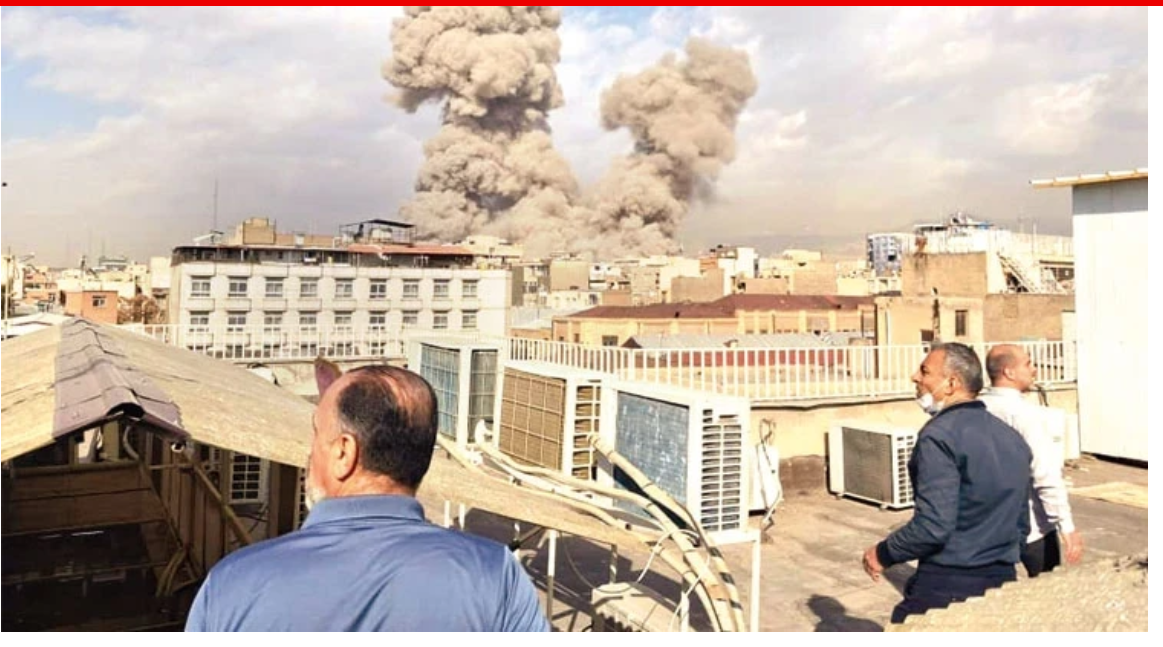
The latest U.S.–Israeli air campaign against Iran appears aimed not only at military infrastructure but at producing direct political consequences. With calls from Washington and Tel Aviv urging Iranians to overthrow their leadership, debate is intensifying over whether the Islamic Republic could destabilize — or whether external strikes might instead consolidate the regime through nationalist backlash. Analysts say the outcome will depend on a complex mix of internal fractures, public mobilization and the cohesion of Iran’s security apparatus.
A Three-Pronged Strategy?
According to analysts, the U.S.–Israeli approach rests on three pillars:
-
Weakening Iran’s leadership and command structure
-
Creating economic and security shock to destabilize the system
-
Triggering mass mobilization among regime opponents
Public statements by Donald Trump and Benjamin Netanyahu have explicitly encouraged Iranians to rise up against their government.
However, early reports from inside Iran suggest that ordinary citizens are primarily focused on survival rather than political mobilization.
Uğur Ergan: Could Kürecik and the Turkish Base in Qatar Become Targets?
Will Protests Reignite?
The strikes came shortly after protests that began on December 28, 2025 and ended last month following a harsh security crackdown that reportedly left thousands dead.
Recent unrest had been concentrated in university campuses, with at least ten campuses witnessing renewed anti-regime demonstrations in the past week. Some universities have since been closed and shifted to remote learning.
Videos circulating on social media showed small groups celebrating the strikes and chanting slogans against Supreme Leader Ali Khamenei. Yet many opposition-minded Iranians appear conflicted, caught between hostility toward the regime and fear of foreign intervention.
One Iranian quoted by Reuters said, “Let them bomb the regime,” while another expressed concern that Iran could “turn into Iraq.”
Survival Instinct Dominates
Initial reports from major cities indicate that panic buying and precautionary behavior are more visible than mass protests.
-
Long queues formed at gas stations
-
Crowds gathered at ATMs
-
Residents began leaving large cities
A woman interviewed said, “My children are scared. We don’t know where to go.”
Analysts say such reactions suggest that survival instinct currently outweighs political momentum.
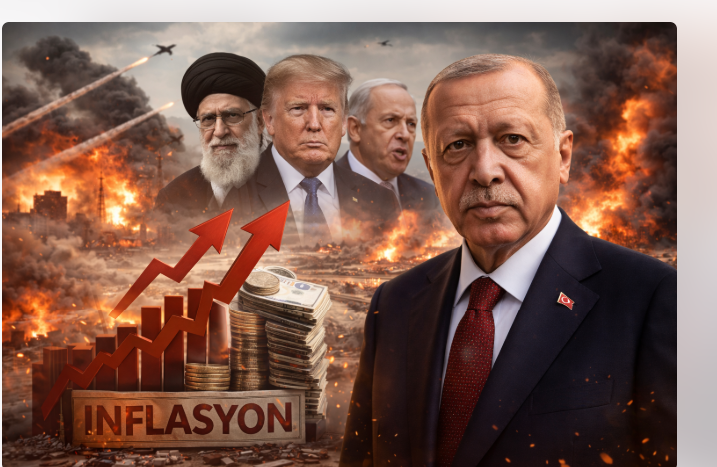
Economic Analysis: Turkey Facing Regional Instability and Inflationary Pressure
Could the Strikes Backfire?
Associate Professor Hakan Güneş of Istanbul University argues that external attacks may strengthen nationalist reflexes rather than weaken the regime.
He notes that during the “12-Day War” in June 2025, the leadership ultimately consolidated its position despite initial unrest.
“Opposition groups are now more cautious,” Güneş said, adding that recent protests saw historically low participation compared to earlier waves.
He also warned that civilian casualties — especially attacks affecting schools or residential areas — could generate nationalist backlash even among regime critics.
So far, he added, there has been no “shock factor” such as a decisive blow to central regime figures that might fundamentally shift public calculations.
Medium-Term Scenarios Remain Unclear
Looking beyond the immediate phase, Güneş says instability could lead to clashes between irregular armed groups and state forces, though a large-scale popular uprising remains unlikely in the short term.
He also referenced Kurdish exile groups that recently announced cooperation, but assessed their territorial influence and mobilization capacity as limited.
Even in a scenario of regime weakening, these groups would not necessarily determine the political character of any successor system.
The IRGC Factor
Academic Oral Toğa from the Center for Iranian Studies emphasizes that large-scale mobilization would likely require several converging factors:
-
The confirmed death of Khamenei
-
Visible fractures within the security forces
-
Divisions inside the military or the Islamic Revolutionary Guard Corps (IRGC)
Islamic Revolutionary Guard Corps is not only a military force but also a dominant economic actor within Iran.
Toğa argues that without internal fragmentation within the IRGC, a civil war scenario remains unlikely.
He also warns that external strikes may trigger consolidation rather than collapse.
“Societies under foreign attack can move in two directions — toward breakdown or toward unity. At this moment, no one can say which path will prevail,” he said.
Military Limits of Air Power
Toğa also highlighted Iran’s mountainous terrain and extensive underground infrastructure, built over decades.
These factors make it technically difficult to eliminate strategic capabilities through air power alone.
He noted that in the current phase, Israel appears to be targeting political-military leadership while the U.S. focuses on missile and nuclear infrastructure — suggesting coordinated but distinct operational roles.
A Strong State Tradition
Unlike Syria or Libya, analysts say Iran has a deep-rooted state tradition and strong institutional continuity.
Fear of “statelessness” runs deep in Iranian society, which could act as both:
-
A brake on regime collapse
-
A factor making any collapse more traumatic
“The Iranian public’s potential resilience should not be underestimated,” Toğa said.
Conclusion
While Washington and Tel Aviv may hope for regime destabilization, the immediate signs inside Iran point to caution, survival behavior and possible nationalist consolidation.
Whether the current conflict leads to systemic breakdown or reinforces existing power structures remains uncertain. Much will depend on developments within Iran’s security elite — and whether internal fractures emerge.
PA Turkey intends to inform Turkey watchers with diverse views and opinions. Articles in our website may not necessarily represent the view of our editorial board or count as endorsement.
Follow our English YouTube channel (REAL TURKEY):
https://www.youtube.com/channel/UCKpFJB4GFiNkhmpVZQ_d9Rg
Twitter: @AtillaEng
Facebook: Real Turkey Channel: https://www.facebook.com/realturkeychannel/