Netanyahu Names Cyprus in Proposed ‘Hexagon of Alliances’ for Israel
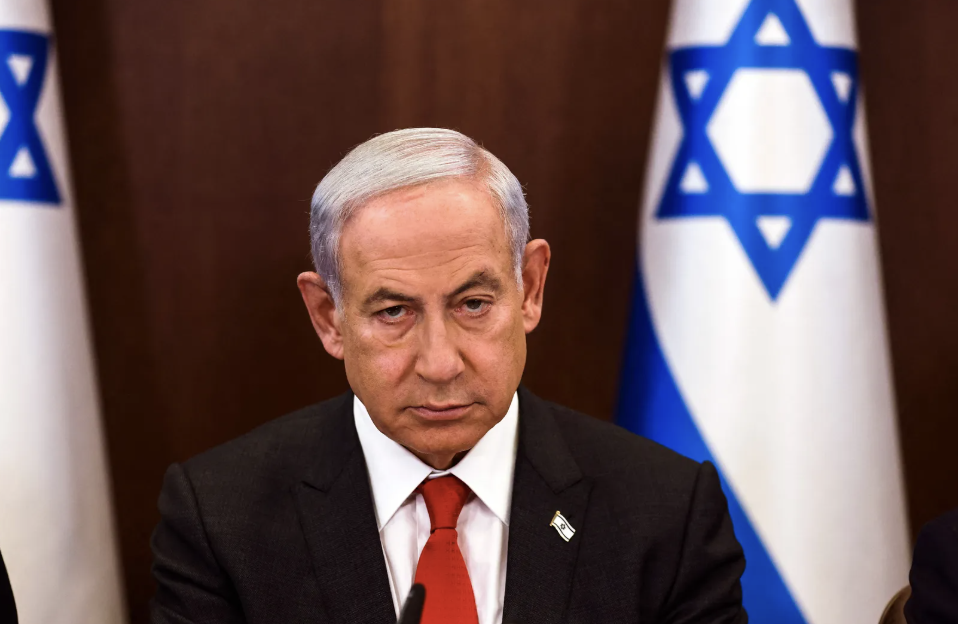 Netanyahu
Israeli Prime Minister Benjamin Netanyahu has outlined plans for a new regional “hexagon of alliances,” naming Cyprus and Greece among the countries Israel aims to partner with. The proposal comes amid heightened tensions in the Eastern Mediterranean and strained relations with Türkiye.
Israeli Prime Minister Benjamin Netanyahu said on Sunday that Cyprus would form part of a broader strategic alignment he described as a “hexagon of alliances” designed to strengthen Israel’s regional position.
Speaking ahead of a cabinet meeting, Netanyahu said Israel intends to build “an entire system, essentially a kind of hexagon of alliances, around or within the Middle East.”
According to Netanyahu, the envisioned framework would include India, Arab countries, African nations, Mediterranean partners such as Greece and Cyprus, as well as other Asian states he did not specify.
Countering “Radical Axes”
Netanyahu said the goal of the alliance network is to create an “axis of countries that see reality, the challenges, and the goals in the same way,” positioning it in contrast to what he called “radical axes.”
He referenced both a “radical Shiite axis,” which Israel has confronted in recent years, and what he termed an “emerging radical Sunni axis.”
While Netanyahu did not name specific countries, the reference to a Sunni axis may be interpreted in the context of strained ties with Türkiye, particularly following Israel’s military campaign in Gaza launched in 2023.
“All these countries share a different outlook, and cooperation between us can yield very great fruits and ensure our strength and our future,” Netanyahu said.
Cyprus and Regional Security Dynamics
Netanyahu’s remarks come amid renewed discussion of defense cooperation in the Eastern Mediterranean.
Earlier reports had suggested that Cyprus, Israel, and Greece were considering establishing a joint “rapid reaction force” aimed at countering Turkish influence in the region. However, Cyprus’ Defense Minister Vasilis Palmas publicly denied that any such initiative had been formally discussed.
Palmas stated that no proposal for a rapid reaction force had been raised at the political leadership level, though he also noted that confidential discussions would not be publicly disclosed.
The trilateral relationship among Israel, Cyprus, and Greece has deepened in recent years, particularly in the areas of energy cooperation, maritime security, and infrastructure projects in the Eastern Mediterranean.
Rising Tensions with Türkiye
Relations between Israel and Türkiye have deteriorated sharply since the outbreak of the Gaza conflict in October 2023.
Türkiye’s permanent representative to the United Nations, Ahmet Yıldız, recently accused Israeli forces of repeated attacks and restrictions on humanitarian assistance in Gaza. He called for significantly increased and unhindered aid flows and urged the UN Security Council to compel Israel to halt its escalation in the occupied West Bank.
Diplomatic tensions have previously extended to Cyprus. Last year, Israeli Foreign Minister Gideon Sa’ar referenced the Cyprus issue after Turkish President Recep Tayyip Erdoğan accused Netanyahu of committing acts worse than those of Hitler.
Sa’ar responded by pointing to Türkiye’s military presence in northern Syria and northern Cyprus, suggesting that Ankara’s leadership should reflect on its own regional policies.
Strategic Implications
Netanyahu’s proposed “hexagon of alliances” reflects Israel’s effort to consolidate partnerships across multiple regions — from the Mediterranean to South Asia — at a time of shifting Middle Eastern power balances.
For Cyprus and Greece, deeper coordination with Israel could reinforce existing energy and security ties. For Türkiye, the framework may be viewed as part of a broader regional realignment that intersects with longstanding disputes in the Eastern Mediterranean.
As geopolitical fault lines continue to evolve, the proposed alliance structure signals that regional blocs — rather than bilateral ties alone — may increasingly shape the strategic landscape.