



Bear’s Claws: How Truth Turned Berlinale Into a Mirror Reflecting Germany’s Hypocrisy
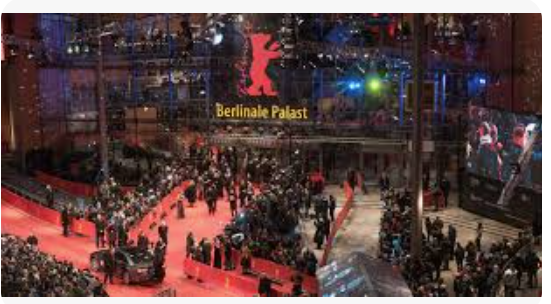 berlinale
By Yavuz Baydar
Strange times.
After the horrors in Gaza, Germany’s readiness to curtail some of its most fundamental civil liberties was bound to hit a wall somewhere. That moment arrived at the Berlinale awards ceremony.
A film festival that had tried to sever the link between politics and art ultimately surrendered to it.
This year’s Berlin International Film Festival did not merely “allow” dissent. It evolved into something much larger — a de facto referendum on Germany’s tightening red lines around Gaza and the growing restrictions on freedom of expression and assembly inside the country.
And in the end, it took only two Turkish filmmakers and one Palestinian-Syrian director to shatter the festival’s carefully constructed atmosphere of restraint and pacification.
Neutrality in a Time of Atrocity
The attempt to depoliticize this year’s Berlinale was never sustainable. At a moment when mass killings and ethnic cleansing unfold in plain sight, “neutrality” does not mean the absence of politics — it means taking a side.
When festival organizers and jury members began implying that press conferences were “not appropriate” venues for political questions and that filmmakers should “stay out of politics,” the contradiction became impossible to ignore.
Whatever the intention — protecting the event’s reputation, avoiding scandal, calming sponsors and politicians — the result was clear: Berlinale began to resemble a space managed by official authority rather than a platform for artistic freedom.
Some realities were acceptable if kept at a safe distance (war as an abstract theme). Others were effectively declared unspeakable.
The strategy backfired.
An open letter signed by dozens of prominent artists — including Mark Ruffalo, Tilda Swinton, Ken Loach, Mike Leigh and Javier Bardem — condemned what they described as a culture of silence and censorship around Gaza. The letter also reminded organizers that the festival has historically taken moral positions when Europe itself was the victim.
Its subtext was devastating: If Berlinale can speak clearly about Russia’s war in Ukraine but develops an allergy to language when Palestinian civilians — women, elderly, children — are killed, then the rhetoric of “apolitical art” is nothing more than a pretext.
The Awards Ceremony That Broke the Silence
Award ceremonies are meant to celebrate art. This one exposed the gap between institutional messaging and artistic truth.
Palestinian-Syrian filmmaker Abdallah Alkhatib, whose Chronicles of the Siege won Best First Feature, turned his moment into a direct indictment of power. He openly questioned Germany’s complicity: “You are responsible for this genocide too.”
He also rejected the familiar warning often directed at migrants: “Be careful what you say.”
Whether one agrees with his words is secondary. What mattered was that he named the pressure — and then returned it to power like a registered letter.
It was a political boomerang launched from the core of art. A festival trying desperately to avoid politics became, for one night, the loudest political stage in the country.
The Familiar Choreography of Intimidation
Filmmakers are often the first to recognize patterns of intimidation.
In Germany in 2026, that choreography increasingly follows a recognizable script: ban the individual, socially “cancel” them, isolate them. Not imprisonment — unemployment. No need to refute arguments — smear them morally so institutions panic and cut ties.
Turkish-German director İlker Çatak’s Golden Bear-winning film Yellow Letters built the sharpest conceptual bridge between what unfolds on screen and what is happening in Germany today.
The film does not center on spectacular violence. It depicts bureaucratic cruelty.
An artist couple loses their home and livelihood after the husband’s online criticism makes them targets. They become alienated through official mechanisms. Some people accept the dominant narrative. Others surrender to fear — the twin sibling of conformity.
State power operates through subtraction: income removed, status stripped, social security withdrawn. Eventually language itself erodes. Those punished for speaking learn to censor themselves.
The film’s producer Ingo Fliess captured the larger stakes during the ceremony: “The real threat is out there… autocrats… right-wing parties… nihilists.”
The trap is cultural division — artists against artists, communities against communities — while real power tightens invisibly.
Çatak’s insight resonates because repression does not always require overt dictatorship aesthetics. It can function quietly through contracts, careers, reputations — through a silent terror of professional exclusion.
Germany’s Gaza Reckoning
Since the Gaza war began, Germany has witnessed protest bans, speech restrictions, cancelled events, and professional consequences for academics and cultural figures expressing solidarity with Palestinians or criticizing Israeli government policy.
The mechanism is familiar.
Accusations of antisemitism are deployed so broadly that they risk transforming from a serious moral category into a governance tool. When criticism of Israeli military actions can automatically be classified as hate speech, institutions default to safety:
Cancel the panel. Withdraw the invitation. Suspend the academic. Terminate the contract.
The message shifts from “speak carefully” to “remain silent.”
Germany’s history makes this particularly sensitive — not because 1933 is repeating, but because Germany understands better than most how quickly democratic societies can normalize exclusion.
Long before physical harm occurs, social death can begin — professionally, economically, reputationally.
The Shadow of 2024
The 2026 controversy did not emerge in a vacuum. It follows the 2024 Berlinale episode, when the Palestinian-Israeli documentary No Other Land won Best Documentary. Its creators called for a ceasefire and condemned Israeli actions.
German politicians publicly labeled parts of the ceremony antisemitic. Israeli co-director Yuval Abraham later said that the political labeling triggered threats against his family.
An unofficial rule seemed to emerge:
Berlinale can be political — but only within limits that do not force the German state to hear itself described as complicit.
Once such a rule exists, every subsequent year becomes a test of obedience.
In 2026, that test failed.
The Boomerang Effect
The boomerang was not just about the festival’s inability to depoliticize itself.
It was also about Germany’s failure to manage Gaza at a safe moral distance through cultural administration.
Çatak’s film examines cancellation through unemployment and isolation. Germany’s present-day reflexes — bans, cancellations, dismissals, heavy policing, erosion of liberal democratic norms — provide the contemporary resonance.
If Berlinale wanted a quiet festival, it chose the wrong country, the wrong year, and the wrong artists.
The winners did what cinema is meant to do: they forced the hall — and the world — to look at what needed to be seen.
And that, perhaps, was the most honest award of all.