



Government Faces Heat Over Öcalan as Erdoğan Pushes for New Constitution
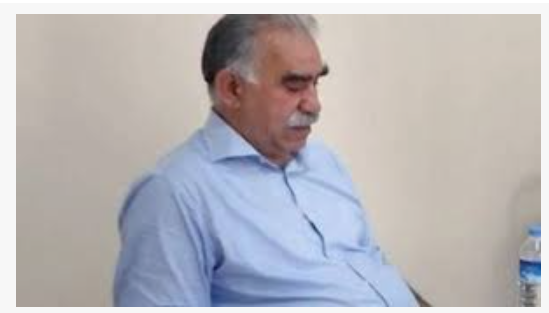 abdullah ocalan
Turkey’s ruling party is grappling with growing political risks over discussions surrounding possible legal reforms that could affect PKK leader Abdullah Öcalan. As debate intensifies over conditional release frameworks and the so-called “right to hope,” President Recep Tayyip Erdoğan is simultaneously accelerating efforts toward drafting a new constitution. The developments place the government at a sensitive intersection between electoral calculations and the ongoing İmralı process.
Tensions Rise Over “Right to Hope” Debate
Following the completion of work by a parliamentary commission established to oversee the İmralı process, attention has shifted to the controversial issue of legal adjustments that could potentially affect long-term prisoners, including PKK leader Abdullah Öcalan.
According to reporting from Ankara-based journalists, the government is working on a draft framework for conditional release that could include inmates serving aggravated life sentences. Officials have indicated that the proposed regulation would not be framed as an amnesty and would not contain language explicitly referring to a “right to hope.”
Government sources suggest that the measure would apply broadly to inmates meeting specific criteria, rather than targeting any individual. However, internal discussions reportedly center on how Öcalan would be positioned within such a framework — a politically sensitive question with potential electoral consequences.
Political and Electoral Risks
The issue has reportedly exposed divisions within the ruling Justice and Development Party (AKP). Concerns have emerged over potential voter backlash if legal adjustments are perceived as benefiting PKK figures.
Opposition circles argue that reconciling legal reform efforts with electoral strategy presents a difficult balancing act for the government. Some political observers suggest that even if the regulation is presented as universal, its indirect implications for Öcalan could generate public controversy.
Reports indicate that additional proposals under discussion include:
-
Conditions for the return of non-violent PKK members
-
The relocation of certain senior figures to third countries
-
Synchronizing legal reforms with steps toward organizational disarmament
While these proposals remain speculative, analysts note that their public communication would pose significant political challenges.
Security Coordination and Institutional Involvement
Sources close to the process suggest coordination between Turkey’s intelligence services, the military, and the Ministry of National Defense regarding the broader goal of organizational dissolution.
Officials emphasize that the reforms are not designed as a personalized arrangement but rather as part of a broader legal recalibration.
Nonetheless, debate continues within political circles over how to manage the optics of any measure that could be interpreted as softening the legal framework surrounding terrorism-related convictions.
Erdoğan Accelerates New Constitution Push
Parallel to the İmralı-related discussions, President Recep Tayyip Erdoğan is advancing work on a new constitution.
Preparations are reportedly being coordinated under Vice President Cevdet Yılmaz. According to parliamentary sources, broad agreement has been reached on the general framework of the draft.
The proposed constitution is expected to contain fewer articles than the current text. Importantly, there are no reported plans to amend the first three foundational articles, which define the basic characteristics of the Turkish state.
Following final revisions and Erdoğan’s approval, the draft is expected to be shared with political parties represented in parliament and eventually presented to the public.
Government sources stress that the constitutional reform initiative is not directly linked to the İmralı process, noting that replacing the 1982 military-era constitution with a civilian charter has long been part of the ruling party’s agenda.