



Epstein’s “Sultan” Fantasy: Survivor Reveals Harem Obsession and Topkapı Palace Fixation
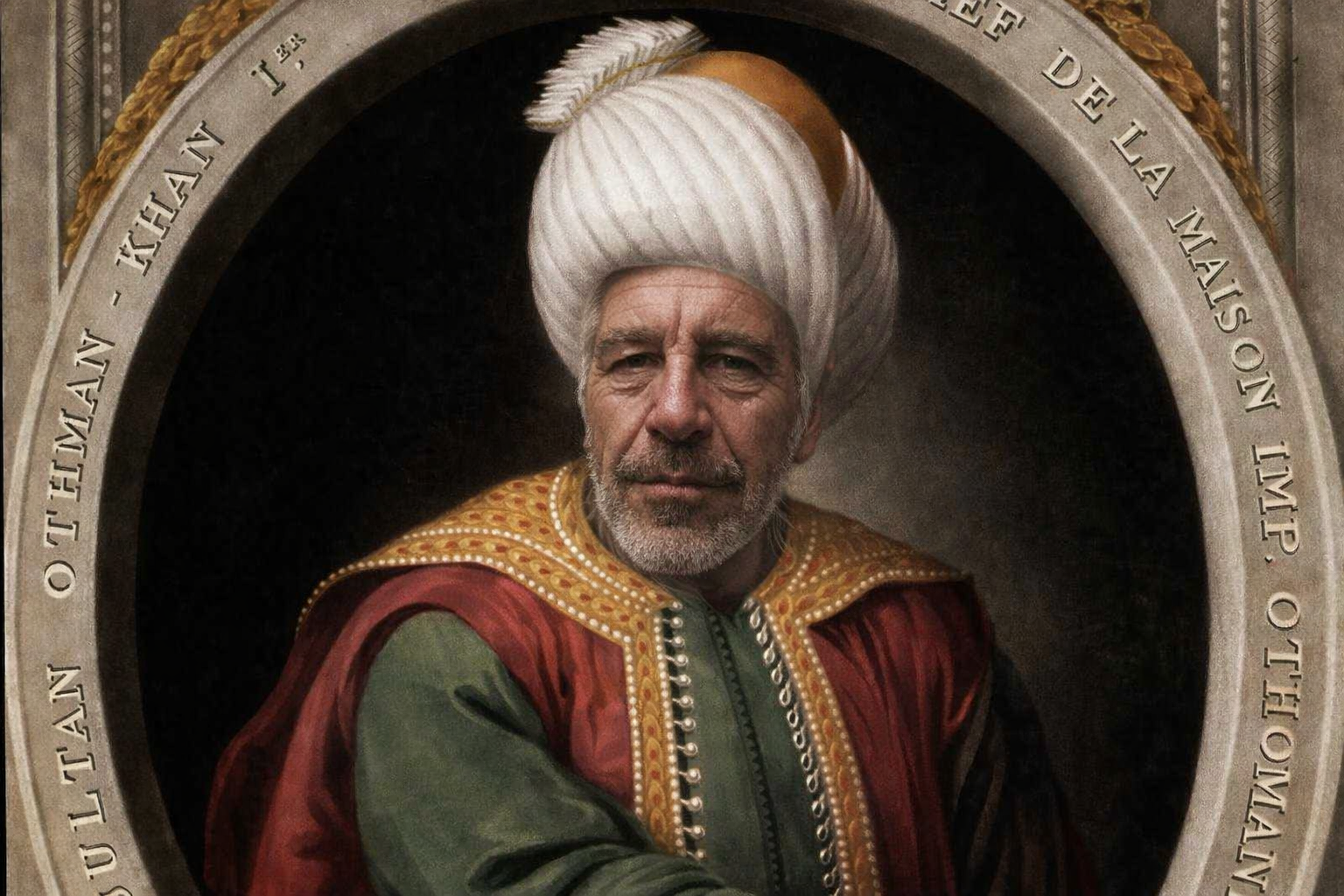 epstein
The shadow surrounding convicted sex offender Jeffrey Epstein continues to deepen as new testimony from one of his victims sheds light on a disturbing personal narrative. Rina Oh, who says she was manipulated under the promise of educational support, has described in detail what she calls Epstein’s fixation with building a “harem,” his self-styled identity as a “Sultan,” and an unusual obsession with the Topkapı Palace and the Ottoman Empire.
Speaking about her experience, Oh outlined a pattern of psychological manipulation that she claims was framed as mentorship, philanthropy, and intellectual exchange—but gradually revealed itself to be something far more coercive.
A Scholarship Promise with Hidden Conditions
Oh explained that she first encountered Epstein through a former model and actress friend. At the time, she had heard that he was active as an art collector and philanthropist. According to her account, Epstein presented himself as someone who funded the university education of numerous young students.
“He introduced himself as a benefactor who sent many young people to university and covered their full tuition fees,” she said. “He told me I would never have to see him again and that the scholarship was ‘unconditional.’”
However, she alleges that the reality diverged sharply from that initial promise. When she refused to comply with what she described as his unspoken expectations, the financial support was immediately withdrawn. She claims he then blamed her for not continuing her education.
“The things he expected from me were not things I wanted to be part of,” she stated, implying that the offer of support was contingent on personal demands she was unwilling to meet.
Her account echoes a broader pattern described by multiple Epstein accusers over the years—an approach built on influence, financial leverage, and psychological pressure.
Referring to Himself as “Sultan”
One of the most striking aspects of Oh’s testimony involves Epstein’s alleged fascination with imperial imagery and hierarchy. She claims that shortly after meeting him at his residence, he gave her two books written in a foreign language and asked her to study them carefully.
“He talked about his plans,” she recalled. “He said I would be part of a harem and become his ‘favorite.’ He described himself as my ‘mentor,’ but throughout our nearly two-year conversations, he constantly referred to himself in the third person as ‘Sultan.’”
According to Oh, these conversations initially seemed abstract and intellectual. She believed that discussions of harems and palaces were either metaphorical or historical. Over time, however, she realized that he was not speaking symbolically.
“He tried to convince me to see the world within this framework,” she said, describing repeated references to “Sultan,” “harem,” and “palace.” What she initially interpreted as cultural or historical dialogue, she later understood as a literal blueprint for the kind of life he envisioned.
Obsession with the Ottoman Empire and Topkapı Palace
Oh further claimed that Epstein frequently spoke about Turkey and displayed a particular fixation on the Ottoman period. He allegedly asked her to research architectural structures, palace layouts, and written accounts from women who lived in imperial harems.
“He was obsessed with the Ottoman Empire and talked about it constantly,” she said. “He wanted me to examine paintings, architectural designs, palaces, and narratives written by women in the harem.”
Among the sites he referenced most frequently was Topkapı Palace in Istanbul. According to Oh, he urged her to study the architecture, culture, and history of the country in detail. She later noted that in her own independent research on harem history, she found that many of the specific details Epstein emphasized were not commonly discussed in mainstream literature.
The palace, once the administrative and residential center of Ottoman sultans, appears to have served as a symbolic anchor in the worldview he was attempting to construct.
A Vision of Control Disguised as Security
Oh also described what she characterized as a long-term reproductive plan. She alleges that from the beginning, Epstein made clear that he wanted her to bear children.
“He told me my entire life would be taken care of—house, staff, money, everything I needed,” she said. “He explained that this is how the system worked in a harem.”
She claims that he presented himself as a powerful, wealthy man with extensive connections, and that he intended to marry multiple women. The narrative, she said, was framed as security and privilege but felt increasingly restrictive and predetermined.
“He guided me step by step toward becoming one of the Sultan’s wives and having children,” she stated.
Oh never agreed to such a future, nor did she explicitly reject it at the time, describing instead a dynamic where assumptions were made on her behalf. She also reflected on how her high school artwork—sculptures depicting angels and mothers with children—may have reinforced his belief that she could be persuaded to become a mother.