



Fidan Warns Expanding Iran Talks Could Spark “Another War”
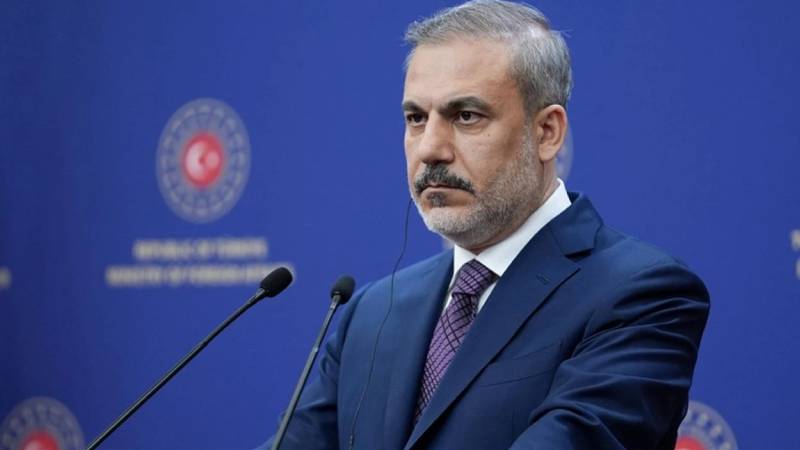 Hakan Fidan
Turkey’s Foreign Minister Hakan Fidan has signaled cautious optimism about renewed efforts to revive a nuclear agreement between the United States and Iran, while warning that expanding negotiations beyond the nuclear file could ignite a fresh regional conflict.
In a wide-ranging interview with the Financial Times, Fidan outlined ongoing diplomatic contacts and suggested that both Washington and Tehran are showing signs of flexibility in search of common ground. At the same time, he cautioned that linking the nuclear issue with Iran’s ballistic missile program could derail progress and heighten tensions in an already fragile region.
Signs of Flexibility from Washington and Tehran
According to Fidan, the United States appears to be reconsidering its earlier insistence that Iran must completely halt uranium enrichment. Instead, Washington may be prepared to tolerate enrichment within clearly defined limits.
“The fact that the Americans appear willing to tolerate Iran’s uranium enrichment activities within clearly defined limits is a positive development,” Fidan said.
He added that Iranian officials recognize the urgent need for sanctions relief and appear open to accepting strict oversight and enrichment caps similar to those contained in the 2015 Joint Comprehensive Plan of Action (JCPOA).
Fidan emphasized that both sides are increasingly aware of each other’s red lines, suggesting that the diplomatic environment may be more conducive to compromise than in recent years.
Ballistic Missile Issue Carries High Risk
While acknowledging momentum on the nuclear track, Fidan issued a stark warning about expanding the scope of negotiations. If the United States seeks to simultaneously address Iran’s ballistic missile program and its regional influence alongside nuclear limitations, the talks could collapse.
“If every issue is sought to be resolved simultaneously, this could ignite the fuse of another war in the region,” Fidan cautioned.
The foreign minister argued that overloading the negotiation agenda risks undermining progress on the nuclear front. He suggested that Iran’s missile capabilities, while a source of regional concern, are primarily linked to local security balances rather than posing a broader global threat.
Turkey and other regional actors, he noted, are working to develop “constructive and creative ideas” to ease tensions and prevent escalation.
Military Action Would Not Change the Regime
Fidan also addressed speculation about potential U.S. military action against Iran’s nuclear infrastructure. He rejected the notion that such operations would produce regime change.
“Military attacks may cause significant damage to state institutions and strategic targets, but as a political entity, the regime will continue to function,” he said.
His remarks underscore Ankara’s long-standing position that diplomatic engagement, rather than force, offers the most sustainable path toward de-escalation. The comments come amid lingering regional instability following previous military operations and heightened tensions over Iran’s nuclear facilities.
Diplomatic Channels Remain Active
Recent indirect talks between U.S. envoys Steve Witkoff and Jared Kushner and Iranian Foreign Minister Abbas Araghchi reportedly took place in Muscat, Oman. The meetings followed months of behind-the-scenes diplomacy involving Turkey, Qatar, Oman, and Egypt.
These discussions marked the first indirect high-level contact since U.S. military operations targeting Iranian nuclear facilities in June. Diplomatic observers have interpreted the renewed engagement as a potential turning point.
Despite earlier calls from former U.S. President Donald Trump for a broader agreement addressing multiple areas of concern, recent signals suggest that a deal focused solely on the nuclear program could now be considered acceptable.
A Narrow Nuclear Deal Back on the Table?
Fidan’s assessment points toward a possible return to a framework resembling the JCPOA, centered on uranium enrichment limits, enhanced inspections, and phased sanctions relief. While not identical to the 2015 agreement, such an arrangement would prioritize immediate nuclear risk reduction over more comprehensive regional restructuring.
For Turkey, which maintains diplomatic channels with both Washington and Tehran, preventing another military confrontation in the Middle East remains a strategic priority. A narrowly focused nuclear agreement could reduce tensions without entangling negotiators in more contentious issues like ballistic missiles or regional proxy networks.