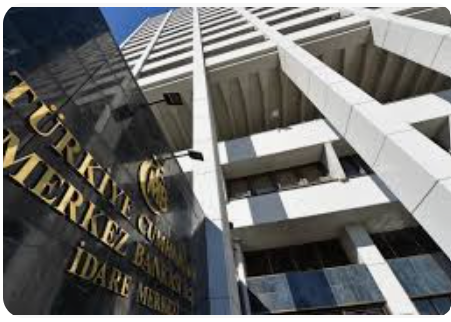
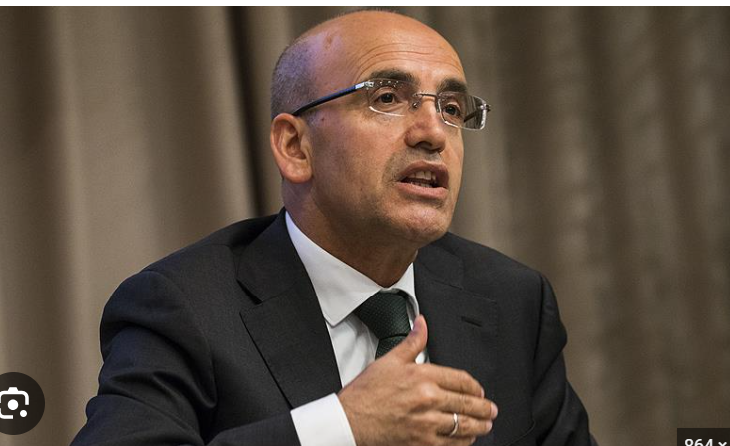
Inflation Report Looms: Markets Brace for a Credibility Test at Turkey’s Central Bank
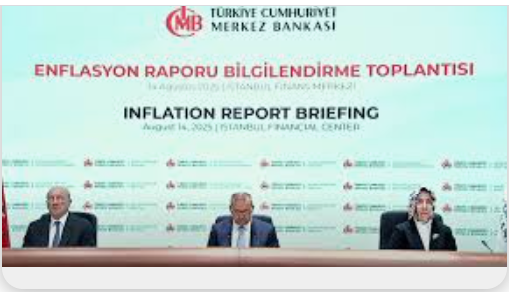 enflasyon raporu
Turkey’s Central Bank (CBRT) will publish its first Inflation Report of the year on Thursday, at a time when credibility, not optimism, is the market’s primary concern. A revised inflation basket, stronger-than-expected January inflation, and persistent services price pressure have raised expectations that the CBRT must deliver a firmer, more hawkish message — even if it avoids immediate policy action.
Turkey’s fiscal stance is expected to provide limited support to monetary policy this year. But that alone will not be sufficient. At a minimum, the Central Bank of the Republic of Türkiye (CBRT) must refrain from cutting interest rates in the first half of the year if it wants to preserve what remains of its credibility.
The key question is whether the CBRT is willing to show that resolve.
That answer will come with Thursday’s Inflation Report presentation. Before turning to forecasts and guidance, however, it is essential to understand how Turkey’s official inflation framework has changed — and why this complicates the central bank’s task.
Turkish Central Bank Flags Food and Services as Primary Inflation Drivers in January
A New Inflation Basket, A Tougher Reality
According to analysis by BBVA Garanti Research, TurkStat has implemented three major changes to the Consumer Price Index (CPI):
-
A revision of the consumption classification structure
-
A shift to National Accounts Household Final Consumption Expenditure data for weighting
-
An update of the CPI base year from 2003 to 2025
With the adoption of the COICOP 2018 classification, the number of main expenditure groups increased from 12 to 13. A new category — Insurance and Financial Services — was added, while the former “Communication” group was expanded and renamed “Information and Communication.” The distinction between goods and services was also clarified, with several items reclassified.
The implications are significant.
Core inflation items now account for 65% of the CPI basket, a four-point increase. Energy’s weight fell by three points to 7%. The rise in core inflation weight is driven almost entirely by services, whose share jumped to 38.4%, up seven percentage points, while the weight of core goods declined.
This new composition may reduce headline volatility. But it comes with a cost: higher services weighting increases inflation persistence and inertia — exactly the type of inflation that monetary policy struggles most to tame.
The CBRT Starts the Match 2–0 Down
With January inflation overshooting expectations and the CPI basket revision tilting the structure toward stickier price dynamics, the CBRT enters this Inflation Report under pressure.
In theory, the Bank could revise its forecast band upward. In practice, doing so without a convincing policy response risks a serious credibility loss.
According to Istanbul Analytics, macroprudential measures such as credit card spending limits are helpful, but insufficient. Domestic demand may be slowing, but not nearly enough to ensure a sustained disinflation path.
In my view, the CBRT should halt any discussion of monetary easing until trend indicators break decisively lower. If needed, additional tightening should not be ruled out.
At the very least, the Inflation Report must reflect a clear shift in tone. That means:
-
Dropping the claim that “domestic demand supports disinflation”
-
Explicitly acknowledging that trend inflation has deviated above target
-
Clearly communicating that further tightening remains an option if February and March data confirm the slippage
This is not about theatrics. It is about restoring a minimum level of policy realism.
Economists Call for a Firmer Stance
Market economists and academics broadly agree that the CBRT can no longer rely on optimistic language.
Former CBRT chief economist Ali Hakan Kara put it bluntly on social media: if the Bank does not revise its inflation projections, “it would be treating the public as if they were fools.”
Filiz Eryılmaz, Chief Economist at Pusula Investment and an academic at Uludağ University, expects a 2–3 percentage point upward revision in the forecast range. She also notes that TurkStat’s methodology change may force adjustments to interim targets.
Economist and columnist Burcu Ünüvar has argued that the CBRT should abandon “cautious” language altogether. Her message is simple: accept the upside risks, explain them in detail, and convince markets that policy will respond forcefully if needed.
A more conservative view comes from Yakup Küçükkale, professor at Karadeniz Technical University, who believes a formal update may be inevitable but premature at this stage.
Why This Inflation Report Matters
This Inflation Report is less about numbers than about communication strategy.
Markets are not demanding an immediate rate hike. What they are demanding is consistency between data, forecasts, and policy language. Any attempt to gloss over services inflation, wage rigidity, or expectation dynamics will be read as a sign that political constraints remain dominant.
In short, this is a credibility checkpoint.
If the CBRT signals that easing is off the table until inflation dynamics genuinely improve — and backs that signal with clear conditional guidance — it may stabilize expectations even without action.
If not, markets will draw their own conclusions.
PA Turkey intends to inform Turkey watchers with diverse views and opinions. Articles on our website may not necessarily represent the view of our editorial board or count as endorsement.
Follow our English YouTube channel (REAL TURKEY):
https://www.youtube.com/channel/UCKpFJB4GFiNkhmpVZQ_d9Rg
Twitter: @AtillaEng
Facebook: Real Turkey Channel – https://www.facebook.com/realturkeychannel/