



Experts Warn Of Large-Scale Market Manipulation In Turkey
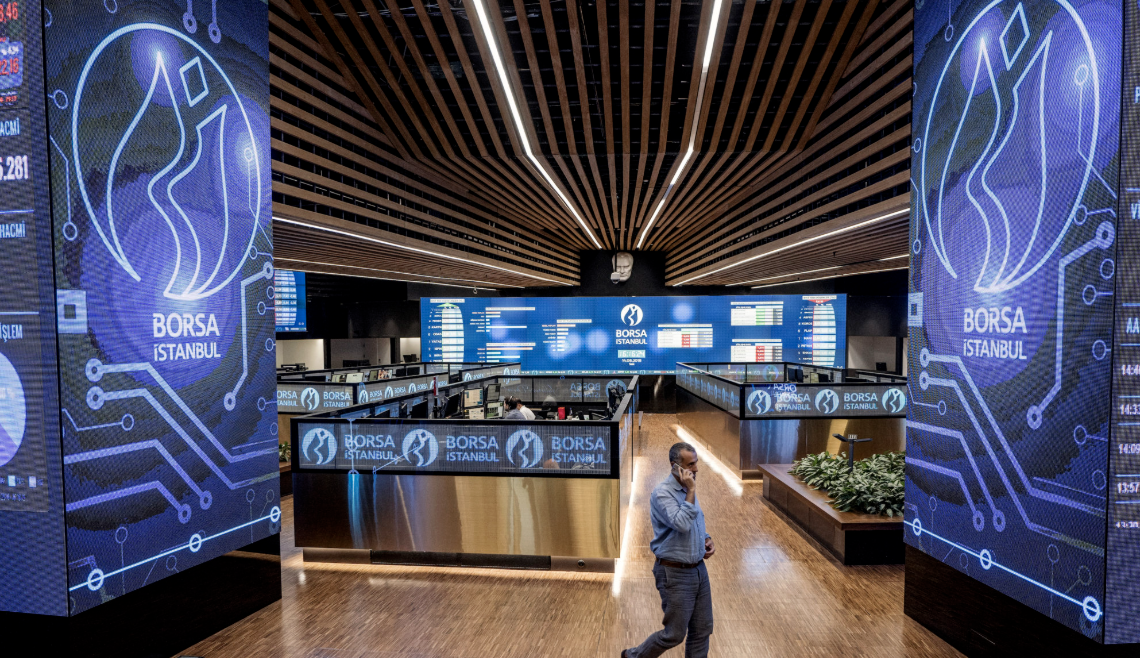 borsa istanbul
Turkey’s capital markets have entered a period of rapid expansion amid a prolonged high-interest-rate environment, with investment funds emerging as one of the fastest-growing segments. However, market experts warn that this growth has also created fertile ground for a new generation of organized market manipulation schemes, whose financial impact could be deeply destructive.
Traditional forms of stock market manipulation, long familiar to regulators and investors alike, are now evolving into more complex and less visible structures. Instead of operating directly on individual stocks, these schemes increasingly rely on investment funds and capital market instruments, giving them a more institutional appearance and allowing much larger sums of money to be mobilized.
Fund Market Growth Masks Rising Risks
The shift has coincided with the implementation of tight monetary policy and elevated interest rates, which have driven a surge in demand for investment funds. According to data from the Central Securities Depository (MKK), the number of fund investors has reached approximately 5.72 million, while the total market value of funds has climbed to nearly 9.33 trillion Turkish lira. Over the past year alone, the portfolio value of investment funds has increased by 82.6 percent.
This rapid expansion has heightened concerns about oversight and transparency. As investor interest intensified, allegations of manipulation through certain funds also multiplied. Treasury and Finance Minister Mehmet Şimşek publicly acknowledged the issue, stating that authorities were aware of manipulative practices conducted via some investment funds.
Similarly, Capital Markets Board (SPK) Chairman İbrahim Gönül announced that regulators would adopt a tougher stance against the “misuse” of funds. He warned that sanctions would not be avoided and emphasized that portfolio management companies and fund managers would be held accountable, including through license revocations if necessary. Despite these statements, critics argue that no concrete preventive measures have been taken.
Manipulation Shifts From Stocks to Funds
Capital markets expert Kenan Gözlemci notes that manipulation has become far more powerful when executed through investment funds rather than individual equities. He argues that the absence of sharp, sudden price collapses on individual stock trading boards makes these schemes harder to detect.
Gözlemci also notes that investors purchasing funds through the TEFAS platform often struggle to understand the underlying structure of the products they are buying. A single fund may hold stakes in other funds, creating layers of opacity that obscure risk and enable financial engineering strategies. He adds that the SPK has remained largely silent on these developments since 2020, further aggravating the problem.
Enforcement Shifts Outside Capital Markets Authority
Since 2024, as market conditions tightened, a wave of stock market operations and arrest decisions has drawn public attention. Notably, many of these actions have not been initiated through SPK complaints but instead through prosecutors’ offices.
Although the alleged activities involve capital-market offenses, investigations are often pursued on charges related to establishing organized criminal groups. This has resulted in a fragmented enforcement landscape, where market manipulation cases proceed largely outside the traditional regulatory framework. Observers describe this as a troubling scenario in which large-scale financial misconduct progresses incrementally without timely intervention by the capital markets regulator.
Anatomy of a New-Generation Market Fraud
Experts identify several recurring mechanisms behind these emerging manipulation models:
In one approach, freely traded funds listed on TEFAS are used to create artificial institutional demand for shares traded on Borsa Istanbul. As stock prices rise, fund values increase accordingly, generating returns well above market realities. Fresh capital from new investors is then used to sustain inflated prices, creating a self-reinforcing cycle.
Another method involves including publicly traded real estate investment funds (GYF) or venture capital investment funds (GSYF) within free funds. When the market prices of these underlying funds are artificially inflated well above their intrinsic value, the parent fund’s net asset value is also distorted. One notable GYF reportedly delivered a one-month return exceeding 3,300 percent and holds an 11-billion-lira weight within a liquid fund with more than 48,000 participants.
A further variation allows manipulators to exit positions without selling directly on the stock exchange. By transferring shares they acquired cheaply into funds purchased by investors unaware of the underlying holdings, manipulators can offload inflated assets discreetly while maintaining the illusion of stable market behavior.
These distorted valuations have also enabled certain publicly traded companies to use inflated share prices as collateral or in repo transactions, extending the systemic impact of manipulation beyond equity markets.
Index Distortions and Foreign Investor Retreat
Artificially inflated market capitalizations have had broader consequences. Because inclusion in Borsa Istanbul indices and international benchmarks, such as MSCI, depends heavily on free-float market capitalization, manipulated companies have entered key indices at the expense of established and reputable firms.
According to Gözlemci, foreign institutional investors rely on these indices when making allocation decisions. Their reluctance to invest in companies with inflated valuations has contributed to a sharp decline in foreign investor participation in the Turkish stock market, falling from around 50 percent to nearly 30 percent.
Wealth Concentration and Regulatory Failure Claims
Gözlemci argues that regulatory passivity since the post-pandemic period has enabled the accumulation of vast wealth among opaque market actors. He recalls that past regulatory interventions, even if delayed, helped contain damage. However, he claims that this approach changed significantly during the tenure of former SPK Chairman Ali Fuat Taşkesenlioğlu and continued under the current leadership.
According to his assessment, loosely structured initial public offerings with limited access, rapid price surges, and questionable capital increases became widespread, allowing previously sanctioned manipulators to re-emerge as major market players, portfolio managers, and even holding company owners.
A Systemic Risk Warning
Gözlemci concludes that the current situation may be larger and more damaging than the banking-sector arbitrage risks observed in September 2022. He asserts that the SPK bears significant responsibility for allowing conditions to deteriorate to this level and warns that without decisive regulatory action, the consequences for institutions and investors could be severe.