Turkey Risks Slipping Back Into the Middle-Income Trap Without Industrial Upgrade, Business Leader Warns
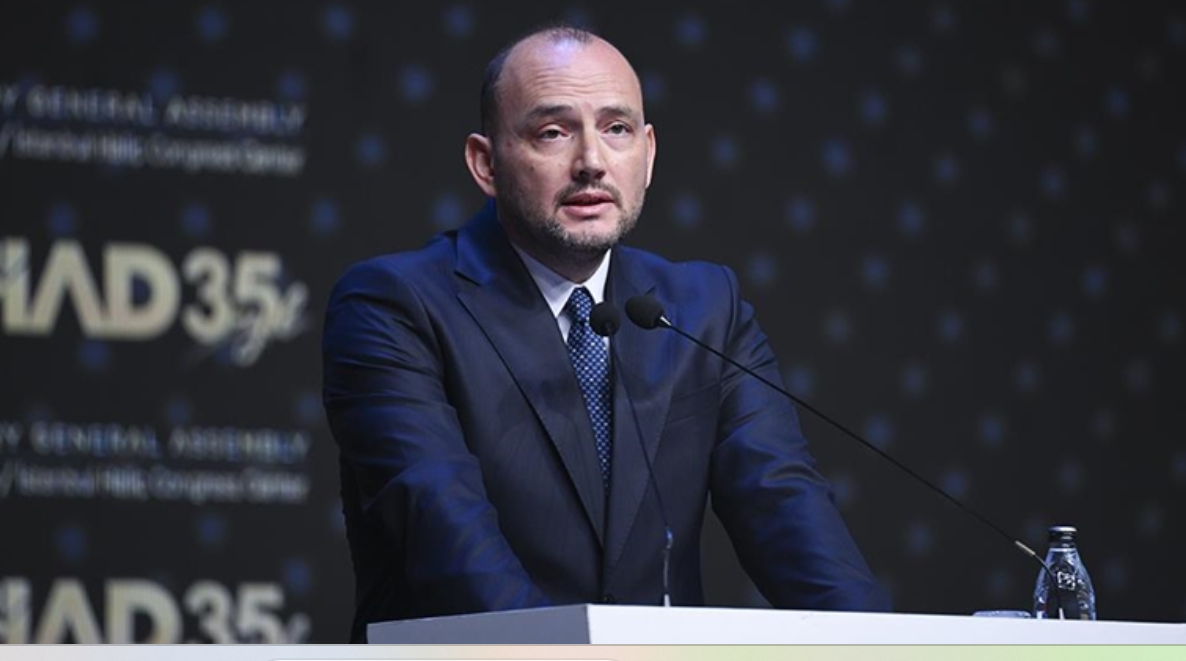 burhan ozdemir musiad
Summary:
Despite entering the World Bank’s “high-income country” category, Turkey risks losing this status unless it upgrades its industrial base, according to the head of a major Turkish business association.
Turkey’s recent promotion into the World Bank’s high-income country category may prove fragile unless the country succeeds in transforming its industrial structure, according to Independent Industrialists’ and Businessmen’s Association (MÜSİAD) President Burhan Özdemir.
Speaking to Dünya newspaper, Özdemir warned that Turkey faces a growing risk of early deindustrialization, a process in which manufacturing weakens before an economy has fully developed the productivity, technology and innovation capacity typical of high-income countries.
“Turkey has reached the high-income threshold in statistical terms,” Özdemir said.
“But the real question is whether our industry is a high-income industry — or whether it is still stuck at the middle-income stage.”
High Income Status, Structural Concerns
According to World Bank data, Turkey’s economy grew by 3.2% in 2024, lifting gross domestic product to $1.32 trillion. Per-capita income rose to $15,463, surpassing the World Bank’s $14,005 threshold for high-income classification.
The World Bank defines countries with per-capita income above this level as high-income economies, while those below fall into upper-middle, lower-middle or low-income categories.
Özdemir cautioned that this classification is based solely on income averages and does not necessarily reflect the quality or sustainability of growth.
“We reached nearly $12,800 per capita income back in 2013 and then stagnated for almost a decade,” he said.
“Only in the past two to three years have we pushed back into high-income territory — but that does not guarantee permanence.”
Warning Signs: Early Deindustrialization
According to Özdemir, Turkey’s industrial ecosystem remains vulnerable. He pointed to data showing that manufacturing capacity utilization averages only 55–60%, meaning factories are operating well below potential.
“We have substantial installed capacity,” he said.
“But roughly half of it is idle. If we fail to address this, we risk repeating last year’s loss of around 140,000 industrial jobs.”
He warned that labor is increasingly shifting away from manufacturing into construction and services, partly due to post-earthquake rebuilding activity.
“If labor leaves industry before manufacturing matures, this leads to early deindustrialization,” Özdemir said.
“That is one of the clearest paths back into the middle-income trap.”
Early deindustrialization, economists note, can limit productivity growth, weaken export competitiveness and reduce long-term income convergence with advanced economies.
Transition Will Take Time
Özdemir stressed that moving from labor-intensive sectors such as textiles and construction toward technology-driven, innovation-based production cannot happen overnight.
“Workers in labor-intensive sectors cannot be instantly redeployed into high-tech fields,” he said.
“This transition will take five to ten years and must be managed step by step.”
Without a managed transition, he warned, Turkey risks losing industrial capacity faster than it can replace it with higher-value production.
Inflation, Wages and Investment Choices
Özdemir also criticized wage policies based on expected inflation, arguing that this approach has undermined household welfare in recent years.
“When wages are adjusted based on inflation forecasts that later prove wrong, real incomes suffer,” he said.
“This has created distributional problems and weakened social cohesion.”
He argued that sustained disinflation requires stronger production, not just tighter monetary policy, and called for incentives that encourage capital to flow into productive investment rather than gold, foreign currency or bank deposits.
Policy Priorities
Looking ahead, Özdemir outlined several priorities:
-
Reducing public borrowing to ease credit conditions
-
Supporting both blue- and white-collar industrial employment
-
Preventing premature shifts away from manufacturing
-
Expanding tax incentives for workers as well as employers
“If Turkey wants to remain a high-income country and permanently escape the middle-income trap,” he said,
“it must stop early deindustrialization and allow its industrial base to fully mature.”
PA Turkey intends to inform Turkey watchers with diverse views and opinions. Articles in our website may not necessarily represent the view of our editorial board or count as endorsement.
Follow our English YouTube channel (REAL TURKEY):
https://www.youtube.com/channel/UCKpFJB4GFiNkhmpVZQ_d9Rg
Twitter: @AtillaEng
Facebook: Real Turkey Channel: https://www.facebook.com/realturkeychannel/