Earthquake Warning: Experts Say the Threat Goes Far Beyond Istanbul
 istanbul-earthquake
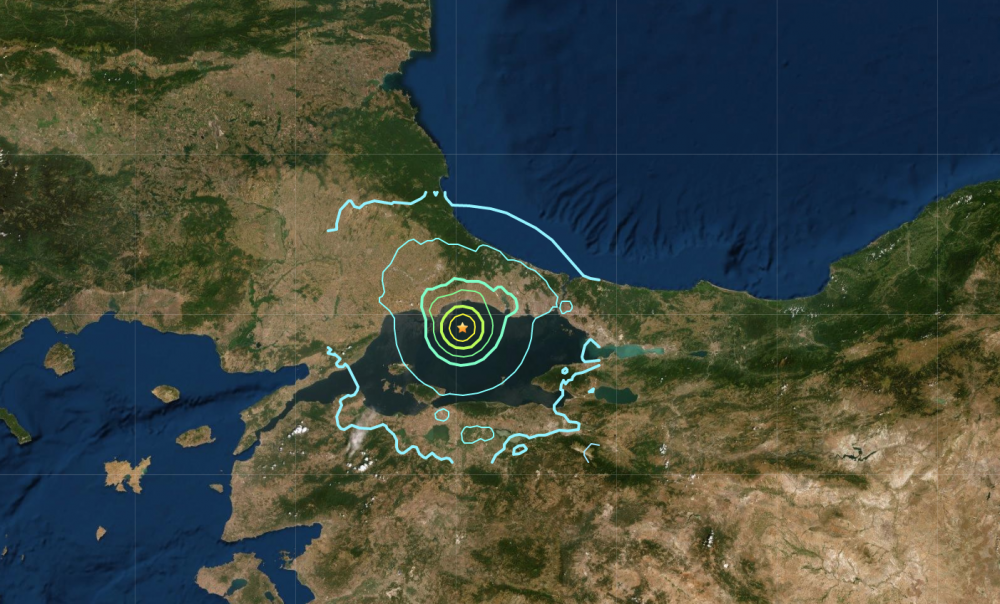
A powerful earthquake expected in the Marmara Sea should not be described as an “Istanbul earthquake,” according to leading Turkish geophysicist Prof. Dr. Haluk Eyidoğan. Speaking at a disaster preparedness workshop in Tekirdağ, Eyidoğan warned that a magnitude 7.0 or stronger earthquake would directly affect at least seven provinces, making it a regional disaster with nationwide consequences rather than a city-specific event.
His remarks were delivered at the “Disaster-Resilient Tekirdağ Workshop,” organized by Tekirdağ Metropolitan Municipality and reported by Anadolu Agency (AA) on February 5, 2026. Eyidoğan’s statements challenge long-standing public narratives and call for a broader, more coordinated approach to earthquake preparedness across the Marmara Region.
“This Is Not an Istanbul Earthquake, It Is a Marmara Earthquake”
One of Eyidoğan’s central arguments focused on correcting what he sees as a misleading public definition. He emphasized that the expected earthquake will not occur within Istanbul itself, but beneath the Marmara Sea, a seismically active area capable of producing highly destructive tremors.
He explained that calling it an “Istanbul earthquake” creates a false sense of geographical limitation. According to Eyidoğan, if a magnitude 7 or higher earthquake occurs in the Marmara Sea, Istanbul would be heavily affected, and between seven and ten provinces along the Marmara coastline would also be affected. For this reason, he emphasized that the event should be described as a “Marmara earthquake,” not an “Istanbul earthquake.”
By reframing the terminology, Eyidoğan argued that authorities and the public can better understand the scale of the threat. Provinces such as Tekirdağ, Kocaeli, Yalova, Bursa, Balıkesir, and Çanakkale are within the zone of serious impact, indicating that preparedness must extend far beyond a single metropolitan area.
A Regional Earthquake With Nationwide Economic Impact
Eyidoğan further warned that the consequences of a major Marmara earthquake would not remain confined to the region. Given Marmara’s central role in industry, trade, and logistics, and its high population density, a large-scale seismic event would have nationwide social and economic repercussions.
He highlighted that disruptions to production facilities, ports, transportation corridors, and energy infrastructure in the Marmara Region would directly affect supply chains across Turkey. In this sense, the anticipated earthquake represents not only a physical disaster but also a systemic economic risk that could trigger long-term instability if preparations remain fragmented.
This perspective places earthquake preparedness firmly within the context of national resilience, rather than local emergency response alone.
“Destruction Cannot Be Explained by Fault Lines Alone”
Another critical point raised by Eyidoğan was the widespread misconception that earthquake damage is determined solely by proximity to fault lines. He rejected this simplified view, stating that earthquake magnitude, ground conditions, and building quality are often far more decisive.
He noted that cities located directly on fault lines suffer limited damage, whereas those far from faults experience severe destruction. The Kahramanmaraş-centered earthquakes provided a clear example of this reality. According to Eyidoğan, those events demonstrated that structural weaknesses and soil conditions can amplify damage regardless of distance from the fault.
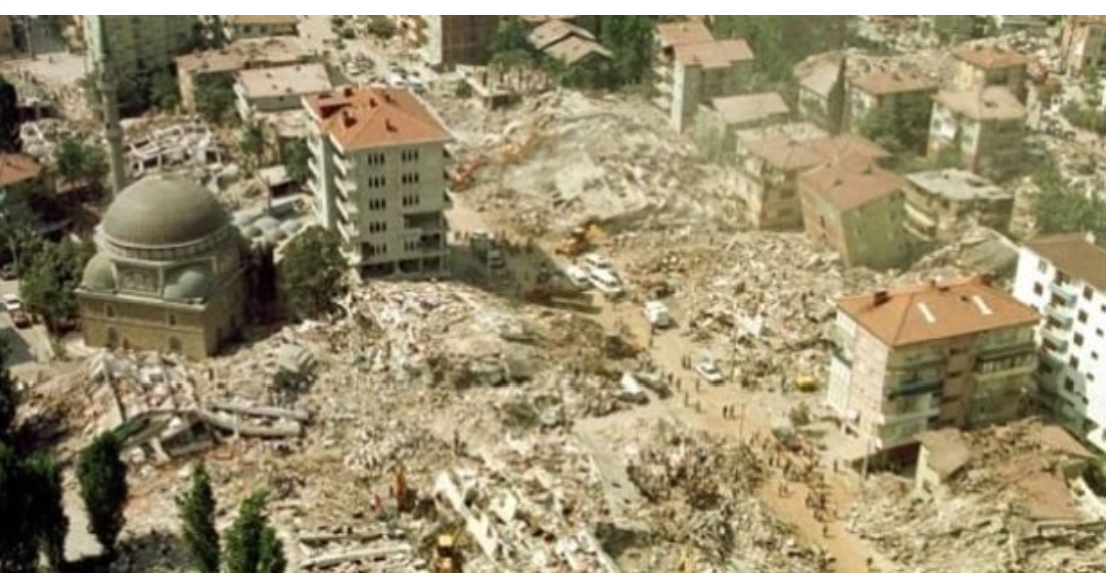
He also cited the August 17, 1999 Gölcük earthquake, noting that districts such as Avcılar—far from the epicenter—experienced extensive collapse. This, he explained, proves that large earthquakes are regional in nature and act as stress tests that expose hidden vulnerabilities in buildings and infrastructure.
In his words, major earthquakes identify and destroy weaknesses wherever they exist, whether in construction quality, soil characteristics, or urban planning decisions.
Poor Planning, Soil Risks, and Construction Failures Increase Damage
Eyidoğan placed strong emphasis on urban planning errors as a major driver of earthquake-related destruction. He identified the practice of building on liquefaction-prone soils, landslide zones, and geologically unsuitable areas as one of the most serious mistakes made by local authorities and developers.
According to him, the first major error is the selection of unsafe land for construction. The second, even more serious mistake, is opening such areas to development at all. He argued that zones with known geological risks should be strictly designated as construction-prohibited areas.
Even in locations with relatively stable soil conditions, Eyidoğan warned that errors during construction, such as poor workmanship, inadequate materials, and insufficient inspections, significantly increase the risk of collapse.
He stated that Turkey still has serious shortcomings in the production of earthquake-resistant buildings. When poor land selection, weak supervision, and construction flaws come together, he warned, survival during a major earthquake becomes unlikely.
Related articles
NYT Warns Istanbul Could Face One of the Worst Humanitarian Disasters in Recent History
Experts Warn: Earthquake Swarm Shifting Toward Kütahya After 5.0 Quake

Marmara Earthquake Warning: Why Turkey Must Act Before It’s Too Late