Reuters Poll: Turkey’s Inflation Set for Sharp January Spike
 turkey-economy-inflation
Turkey is heading into the new year with a familiar inflation paradox: a sharp monthly jump driven by wage hikes and price resets, alongside a continued easing in the annual rate. According to a Reuters poll of economists, January is expected to bring one of the strongest monthly inflation readings in recent months, even as the broader disinflation trend remains intact.
Economists surveyed by Reuters forecast monthly inflation at a median of 4.32% in January, reflecting the immediate impact of new-year price adjustments and a 27% increase in the minimum wage for 2026. Estimates for the monthly figure ranged from 4.2% to 4.64%, underscoring expectations of a volatile start to the year.
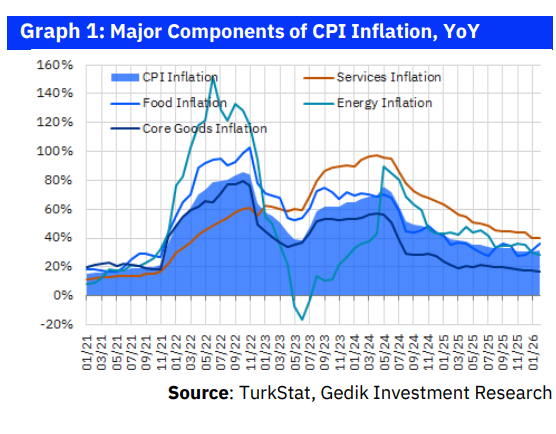
At the same time, the annual inflation rate is expected to fall to 30.0%, down from December’s 30.9%. Forecasts clustered tightly between 29.9% and 30.4%, suggesting broad agreement that base effects and last year’s aggressive tightening policies continue to weigh on headline inflation.
Minimum Wage Hike and Food Prices Drive January Volatility
January inflation in Turkey is traditionally sensitive to administrative price changes, but economists say this year’s reading will be particularly complex. The annual increase in the minimum wage, combined with regulated price updates and seasonal effects, is expected to push consumer prices sharply higher on a monthly basis.
Food prices are another key variable. Economists participating in the poll noted that weather-related pressures on agricultural output could amplify food inflation, which remains one of the most volatile components of Turkey’s consumer price index. These pressures come at a time when service inflation has also shown signs of persistence, limiting the pace of underlying disinflation.
Adding to the uncertainty, the Turkish Statistical Institute (TurkStat) is implementing methodological changes. In line with European standards, the base year for the consumer price index has been shifted from 2003 to 2025. While the institute said the weightings of the main CPI groups will remain unchanged this year, adjustments to smaller basket components will be introduced, complicating short-term forecasts.
Annual Inflation Seen Falling Further by Year-End
Despite the expected January spike, economists remain cautiously optimistic about the medium-term trajectory. The Reuters poll’s median estimate suggests annual inflation could slow to around 23% by the end of the year, although this would still remain well above the central bank’s official forecast of 16%.
This gap highlights lingering skepticism about how quickly inflation expectations can be anchored. While tight policies have delivered results over the past year, structural factors such as pricing behavior, wage indexation, and food volatility continue to pose challenges.
Central Bank Balance Rate Cuts and Inflation Risks
The Central Bank of the Republic of Turkey (CBRT) has already signaled caution. Last week, the bank cut its key policy rate by 100 basis points to 37%, a smaller move than some market participants had expected. The CBRT cited firming inflation, pricing behavior, and expectations that threaten the disinflation process as reasons for its restrained approach.
In its guidance, the bank said leading indicators point to firmer monthly inflation in January, but emphasized that the underlying inflation trend remains limited. This nuanced message reflects the bank’s attempt to balance its gradual easing cycle with the risk of reigniting inflationary pressures.
After a brief policy reversal early last year amid political turmoil, the CBRT resumed its rate-cutting cycle in July with a 300-basis-point reduction, followed by 250 basis points and then 100 points in October, when food prices were rising. Further cuts of 150 basis points in December and 100 points in January brought the policy rate to its current level.
From 75% Peak to Controlled Disinflation
Turkey’s recent inflation history underscores the scale of the adjustment already achieved. Annual inflation peaked at around 75% in 2024, before falling steadily under the weight of tight monetary and fiscal policies. By December, consumer prices rose just 0.89% on a monthly basis, easing the annual rate to 30.9%.
However, economists warn that the calm seen at the end of last year is unlikely to persist in early 2026. A series of new-year price updates, combined with wage increases, means inflation readings from January onward are expected to be volatile, even if the broader trend remains downward.
Morgan Stanley: Disinflation Slowed, But Still on Track
Global investment bank Morgan Stanley recently highlighted the challenges facing Turkey’s inflation outlook. The bank said weather-driven food inflation and sticky service prices have stalled the decline in the underlying inflation trend since May 2025.
Still, the bank remains constructive over the longer term. “We expect gradual disinflation to 21.7% at end-2026, and 17.7% by end-2027. This disinflation path is supported by stable FX, moderate domestic demand, and improving inflation expectations,” Morgan Stanley said.
Key Data Ahead
Markets will soon get clarity on whether January’s inflation spike matches expectations. The Turkish Statistical Institute is scheduled to release inflation data at 07:00 GMT on February 3. The figures will be closely watched by investors and policymakers alike, as they will help shape expectations for the pace of future rate cuts and the credibility of Turkey’s disinflation strategy.
Related articles

The Istanbul Chamber of Commerce has announced that prices in the megacity increased by 5.46 percent in September compared to the previous month while the annual inflation was 73.18 percent.
ANALYSIS: Turkish Inflation Climbs, Geopolitical Risks Force CBRT to Reconsider Rate Cuts

President Erdoğan: Taking necessary steps to protect our people from inflation