Industrialists Warn Customs Union Has Become a “Shackle” on Turkish Industry
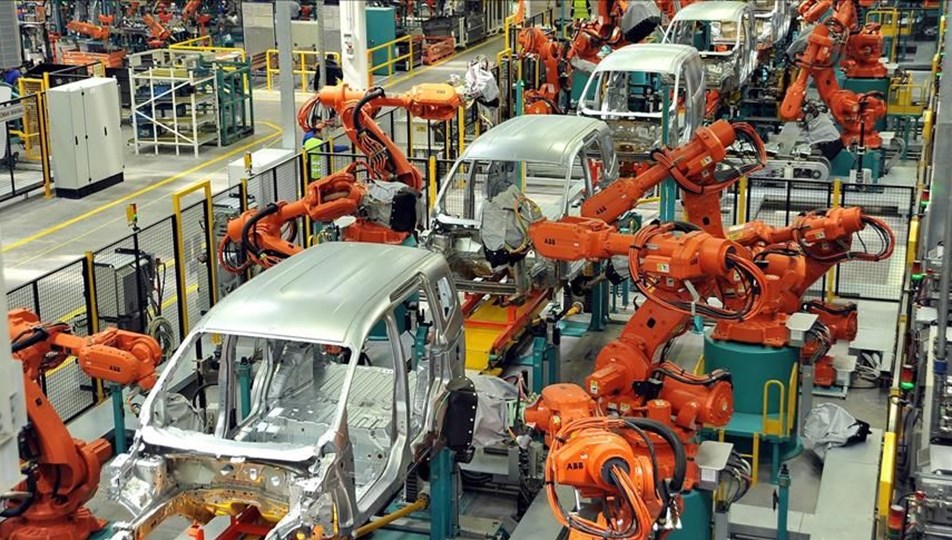 Turkish-industry
Speaking at the Istanbul Chamber of Industry’s (ISO) January 2026 Assembly Meeting, ISO Chairman Erdal Bahçıvan delivered a blunt assessment of the challenges facing Turkish industrialists, describing the EU–Turkey Customs Union as one of the heaviest burdens on competitiveness. Bahçıvan argued that the agreement, now nearly three decades old, no longer reflects global economic realities and has effectively turned into a constraint rather than an advantage for Turkish industry.
The meeting, held at Odakule, offered a cautiously balanced outlook for 2026. While Bahçıvan acknowledged signs of improvement in Turkey’s macro-financial stability, he stressed that long-term recovery for industry depends not on short-term indicators, but on deeper structural reforms, higher-quality production, and an updated legal framework aligned with today’s economic environment.
Customs Union Criticism Takes Center Stage
Bahçıvan’s strongest criticism focused on the Customs Union with the European Union, which he said places Turkish manufacturers at a structural disadvantage. According to him, the problem is not trade with Europe itself, but the asymmetry created by agreements that Turkey is excluded from.
He highlighted that the EU continues to sign Free Trade Agreements (FTAs) with third countries, while Turkey—despite being bound by the Customs Union—does not automatically gain access to those same markets. This, Bahçıvan argued, exposes Turkish industry to unfair competition without offering reciprocal benefits.
“If full EU membership does not appear possible in the short term, then we must now reconsider the Customs Union in all its aspects. This system, which has become a shackle for our industry, should no longer be postponed from being renewed,” Bahçıvan said.
His remarks framed the Customs Union not as an ideological issue, but as a practical one that directly affects cost structures, export competitiveness, and market access for Turkish producers.
New Global Rivals, Growing Pressure
Bahçıvan warned that the competitive landscape is rapidly changing, pointing to new trade agreements signed by the EU that introduce powerful new rivals into global markets. Among the most significant risks he cited were the EU’s agreements with the MERCOSUR bloc, potential trade liberalization with India, and the emerging “Made in Europe” industrial strategy.
According to Bahçıvan, these developments create layered risks for the Turkish industry. MERCOSUR countries such as Brazil and Argentina benefit from cost advantages in both agriculture and industrial goods. A possible EU–India agreement could intensify competition in technology and textiles, while the “Made in Europe” initiative risks sidelining Turkey altogether if its role remains undefined.
In Bahçıvan’s assessment, these trends threaten to erode market share and weaken Turkey’s position unless proactive reforms are implemented.
The “New Normal”: Persistent Uncertainty
Turning to the global economic outlook, Bahçıvan described 2026 as a year shaped by what he called a “new normal” of heightened uncertainty. He noted that ongoing conflicts across the Ukraine-Iran-Syria axis continue to exert pressure on commodity prices and global supply chains.
“Unpredictability has now become a permanent part of economic life,” Bahçıvan said, adding that geopolitical risks are no longer temporary shocks but structural factors influencing production and trade decisions.
Despite these risks, he offered a cautiously optimistic inflation outlook, stating that—barring extraordinary developments—consumer inflation could fall toward the 20 percent range by the end of 2026. However, he was quick to underline that challenges remain, particularly in expectations and pricing behavior.
Domestic Challenges Still Persist
Bahçıvan emphasized that financial tightening alone has not cooled domestic demand as much as expected. Even under restrictive monetary conditions, internal consumption remains relatively strong, complicating disinflation efforts.
At the same time, he noted that a decline in earthquake-related expenditures and signs of budgetary improvement have provided some breathing room for monetary policy. While this creates a more stable macroeconomic backdrop, Bahçıvan warned that stability alone would be insufficient to revive industrial momentum.
Quality Production and Updated Law as the Way Forward
According to Bahçıvan, the true “escape route” for Turkish industry lies in a dual transformation: moving toward high-value, qualified production and modernizing the legal and regulatory framework. He argued that competitiveness can no longer be sustained solely through cost advantages, especially in a technology-driven manufacturing environment.
He pointed to Turkey’s recent successes in the defense industry as proof that targeted investment, technological capability, and strategic planning can yield global competitiveness. However, he stressed that this success must not remain isolated.
Closing the Technology Gap
In Bahçıvan’s view, the most urgent item on Turkey’s structural reform agenda is closing the technology gap across the broader industrial base. While defense manufacturing has shown what is possible, he said a similar transformation is needed throughout all sectors of industry.
This requires not only investment in innovation but also education, legal certainty, and predictable policy frameworks that encourage long-term planning. Without these elements, Bahçıvan warned, Turkish industry risks falling behind as global competition intensifies rather than eases.
Related articles

Turkish industrialists predict surge in foreign investments by 2025

Türkiye’s Export Climate Index Hits 4-Month High on Strong US and Middle East Demand
Prof. Esfender Korkmaz: Türkiye Could Resolve Inflation and FX Crisis in Six Months