Erdoğan Signals Major Opportunities for Turkish Contractors in Syria’s Reconstruction
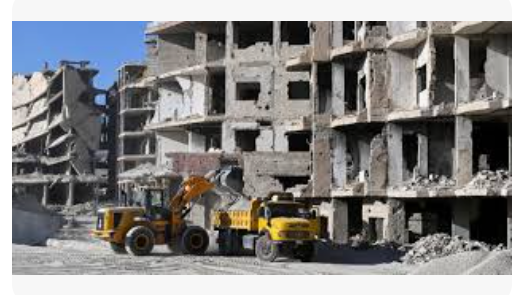 suriye reconsturction
Summary:
President Recep Tayyip Erdoğan has signaled that Syria’s post-war reconstruction could open major commercial opportunities for Turkish construction firms, arguing that Ankara’s long-standing support for Syrians during the civil war will now yield economic and strategic dividends. Speaking at an awards ceremony for overseas contractors in Ankara, Erdoğan said a large-scale rebuilding drive would begin as Syria stabilizes, positioning Turkish firms to play a leading role.
ANALYSIS | As the Syrian Map Shifts, Where Does Turkish Public Opinion Stand?
Erdoğan Links Syria’s “New Era” to Construction Boom
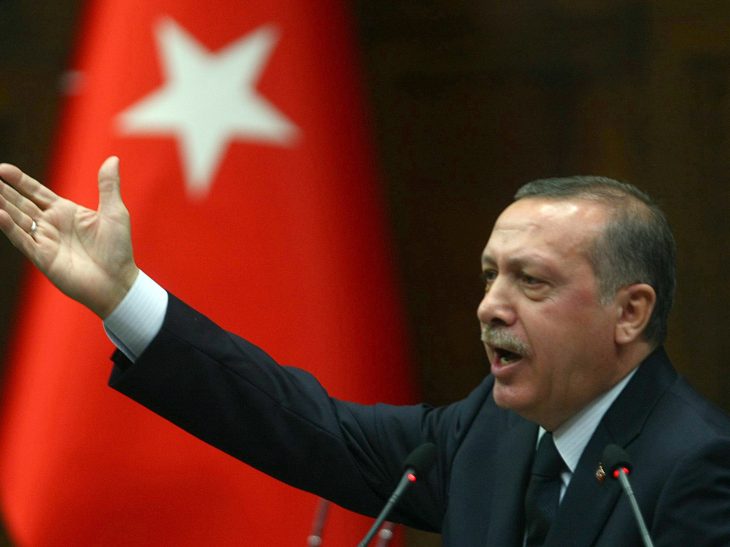
President Recep Tayyip Erdoğan on Monday highlighted what he described as emerging economic and commercial opportunities in Syria, directly addressing Turkish contractors and signaling that a large-scale reconstruction effort could soon be underway across the war-torn country.
Speaking at the Overseas Contracting Services Achievement Awards Ceremony in Ankara, Erdoğan said that as stability and security return to Syria, the effects would be felt not only by Syrians but also by Türkiye and neighboring countries, particularly through increased trade, investment, and construction activity.
“A major campaign of construction and reconstruction will begin across Syria,” Erdoğan said, adding that Turkish firms would be well placed to benefit from the rebuilding process.
“We Will Reap the Rewards of 13.5 Years”
Erdoğan framed Syria’s reconstruction as the political and moral payoff for Türkiye’s long-standing stance during the civil war, which began in 2011 and displaced millions.
“We believe we will reap the rewards—abundantly—of standing by the oppressed in Gaza, of opening our arms to our Syrian brothers and sisters for 13.5 years, and of maintaining a principled, honorable and conscientious position in global politics,” he said.
Türkiye hosts the world’s largest population of Syrian refugees, and Ankara has repeatedly argued that its policies—while costly—were driven by humanitarian responsibility and regional security concerns. Erdoğan’s remarks suggest that the government increasingly sees Syria’s post-conflict phase as an opportunity to translate that political investment into economic gains.
Erdoğan Stresses Ceasefire and Integration Agreements
Turning to recent political developments in Syria, Erdoğan emphasized the importance of implementing ceasefire and “full integration” agreements, warning that previous failures had delayed progress.
He criticized the failure to adhere to the March 10 agreement and said the lack of results from talks held on January 4 represented further missteps. Erdoğan underlined that the ceasefire and integration deal reached on January 18 must be fully implemented.
“Two wrongs do not make a right, and neither do three wrongs,” he said. “The right path for Syria is clear. Repeating the same mistakes will lead nowhere.”
His remarks come amid fragile diplomatic efforts to stabilize Syria politically and economically following the collapse of the Assad-era power structure and the emergence of a transitional leadership backed by regional and international actors.
Reconstruction as Regional Catalyst
Erdoğan argued that Syria’s stabilization would act as a catalyst for the broader region, accelerating trade, tourism, and investment flows.
“As Syria regains stability and security, its positive effects will be directly felt by us first and foremost, and by all neighboring countries,” he said. “Trade will accelerate, investments will rise, and tourism will develop.”
He specifically pointed to cities and towns destroyed by years of bombardment, including areas devastated by barrel bombs under the former regime, saying these regions would be at the center of rebuilding efforts.
Return of Refugees and Economic Integration
Erdoğan cited what he described as tangible progress on the ground, noting that millions of Syrians had returned to their homeland, including approximately 600,000 who had been living in Türkiye.
He added that Syria had begun integrating into the international economic system and that social and political developments were giving rise to cautious optimism.
According to Erdoğan, a recent decree issued by Syrian President Ahmed al-Sharaa guarantees fundamental rights for Kurds who had previously been denied full citizenship under the Assad regime—a move Ankara has welcomed as a step toward inclusive governance.
Turkish Contractors’ Global Track Record
Addressing the audience of construction executives, Erdoğan devoted a significant portion of his speech to highlighting the global reach of Turkish contractors and positioning them as natural leaders in Syria’s reconstruction.
He said Turkish construction firms have undertaken projects in 138 countries since overseas contracting activities began in 1972, securing more than $557 billion in work across 12,816 projects—around 90% of which were completed during AK Party governments.
Despite global economic headwinds, Erdoğan said the sector had maintained strong momentum and international competitiveness.
Rising Presence in Global Rankings
Erdoğan pointed to recent rankings by Engineering News-Record (ENR) as evidence of the sector’s strength. Türkiye ranked second globally by the number of firms listed among the world’s top 250 international contractors, with 45 Turkish companies included this year, up from 43 the previous year.
Eight Turkish firms made it into the top 100, including two in the top 50. In ENR’s ranking of the world’s top 225 design and engineering firms, eight Turkish companies were listed, placing Türkiye sixth globally by firm count—an improvement over the previous year.
“These achievements are a source of pride for our country,” Erdoğan said, congratulating both contractors and technical consultancy firms.
Syria Reconstruction and Türkiye’s Strategic Calculus
Erdoğan’s remarks underscore how Ankara increasingly views Syria’s post-war reconstruction not only as a humanitarian necessity but also as a strategic and economic opportunity. Turkish firms already have extensive experience in infrastructure projects across the Middle East, Africa, Central Asia, and Eastern Europe, and many are expected to seek contracts in housing, transport, energy, and public infrastructure in Syria.
However, analysts note that large-scale reconstruction will depend heavily on political stability, sustained ceasefires, international recognition of Syria’s new leadership, and access to financing—factors that remain uncertain.
Still, Erdoğan’s message to contractors was clear: Türkiye expects to be at the forefront of rebuilding its southern neighbor, and the government sees this phase as the culmination of years of diplomatic, military, and humanitarian engagement.
“New doors are opening before Türkiye,” Erdoğan said. “New windows of opportunity are being unlocked.”
IMPORTANT DISCLOSURE: PA Turkey intends to inform Turkey watchers with diverse views and opinions. Articles on our website may not necessarily represent the view of our editorial board or count as endorsement.
Follow our English YouTube channel (REAL TURKEY):
https://www.youtube.com/channel/UCKpFJB4GFiNkhmpVZQ_d9Rg
Twitter: @AtillaEng
Facebook: Real Turkey Channel: https://www.facebook.com/realturkeychannel/***