Iran Protests Expose a Quiet Realignment in Middle East Geopolitics
 iran reza pehlevi
Summary:
The prospect of a US military strike against Iran during the winter 2025 protests has revealed a subtle but consequential shift in Middle East geopolitics. Long-standing rivals Saudi Arabia and Türkiye, alongside Qatar and Oman, unexpectedly aligned in opposing foreign intervention against Tehran. Their stance reflects shared fears of regional instability, ethnic fragmentation, and a potential geopolitical vacuum that could reshape the balance of power across the Middle East.
Protests That Changed the Regional Calculus
When nationwide protests erupted in Iran on December 28, 2025, few observers expected them to trigger a recalibration of regional diplomacy. Demonstrations spread rapidly across major Iranian cities, prompting a harsh crackdown by security forces and sharp rhetoric from US President Donald Trump, who openly warned that Washington might consider military action in support of protesters.
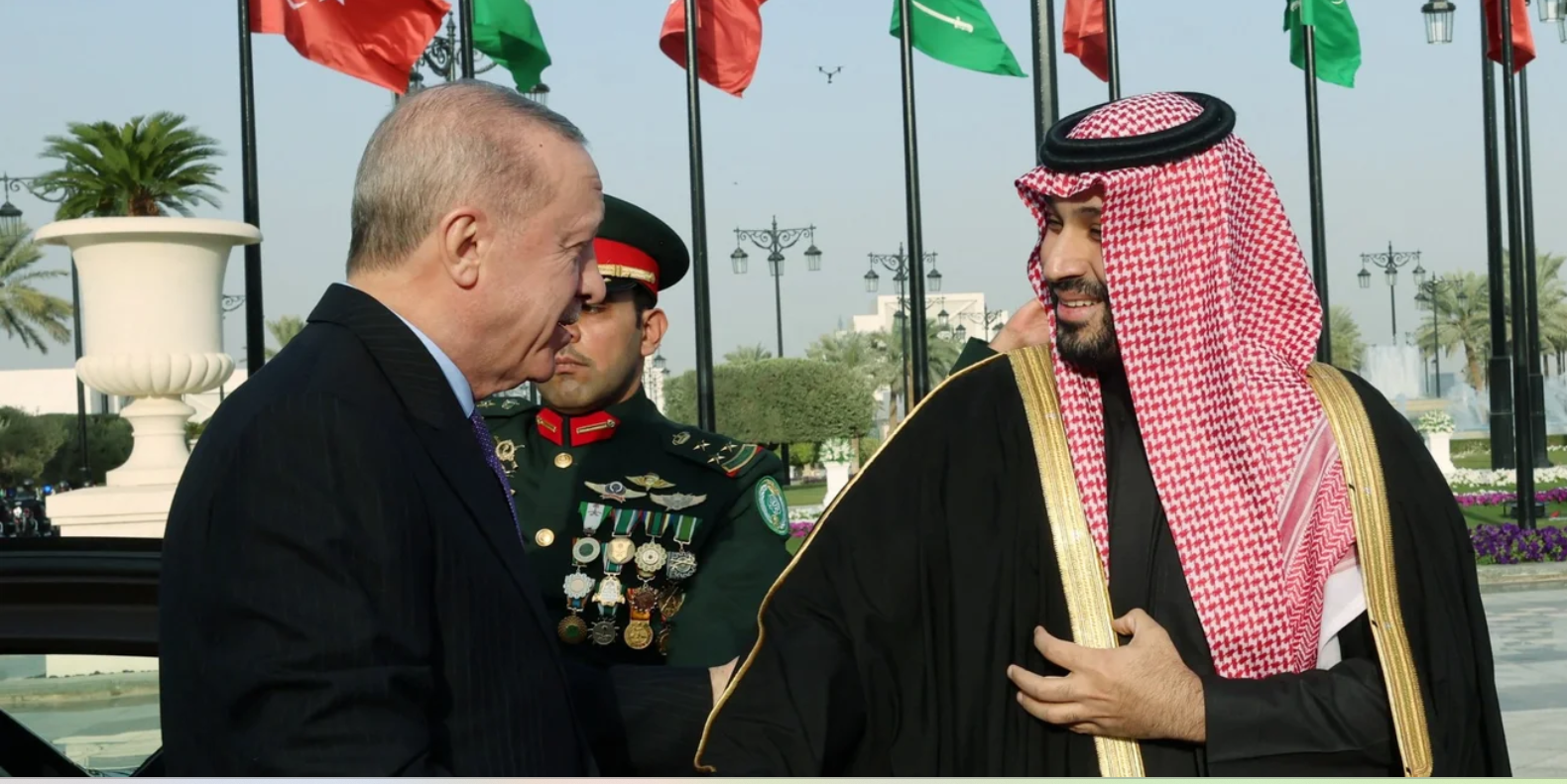
That threat, more than the protests themselves, unsettled regional capitals. Saudi Arabia and Türkiye — historically wary of Iran’s regional ambitions — moved swiftly and quietly to urge restraint in Washington. Qatar and Oman joined them, forming an informal bloc opposed to external military intervention against Tehran.
This alignment marked a striking departure from decades of rivalry. Yet the shift was less about sympathy for Iran’s leadership than about fear of what might follow a regime collapse.
US–Iran Tensions Surge as Aircraft Carrier Deployment Raises War Fears
From Rivalry to Caution
Prior to the protests, relations between Tehran and its regional competitors had been improving. Saudi Arabia was building on the Chinese-brokered normalization agreement reached in 2023, while Türkiye had been preparing for a presidential-level visit aimed at expanding economic and security cooperation.
The protests changed that atmosphere by exposing the vulnerability of Iran’s political order. For Riyadh and Ankara, the sudden possibility of regime collapse raised risks far greater than those posed by a weakened Islamic Republic. Both governments concluded that a destabilized Iran — particularly one reshaped through foreign military intervention — would generate uncontrollable spillover effects across the region.
As a result, they lobbied the Trump administration to avoid military escalation, arguing that intervention would deepen chaos rather than produce a stable outcome.
Israel: The Unspoken Common Concern
Despite their differing perspectives on Iran, Saudi Arabia and Türkiye share a rarely acknowledged anxiety: Israel’s potential influence in a post–Islamic Republic Iran.
Initially, both countries assessed that the protests alone were unlikely to overthrow the regime. That assessment shifted when Reza Pahlavi, the exiled son of Iran’s last shah, emerged as a prominent figurehead. His public appeals between January 8 and 11 drew massive crowds, with monarchist chants calling for the restoration of the Pahlavi dynasty echoing across Iranian cities.
Pahlavi’s long-standing ties with Israel heightened alarm in Riyadh and Ankara. While he remains a deeply polarizing figure inside Iran — unpopular among religious conservatives and non-Persian communities — his sudden visibility raised the prospect that Israel and the United States could gain unprecedented influence should the regime collapse.
Türkiye’s unease was publicly voiced when Foreign Minister Hakan Fidan accused Israel of fomenting unrest in Iran, a claim reflecting Ankara’s broader fears rather than hard evidence. Saudi Arabia, though less vocal, shared similar concerns privately.
Even so, neither Riyadh nor Ankara believed that Pahlavi could realistically consolidate power, a view echoed by Trump himself. The real fear lay elsewhere.
Opening Pandora’s Box of Ethnic Conflict
Beyond concerns over Israel or regime change, the deeper anxiety centered on Iran’s ethnic composition. Iran is a multi-ethnic state with a long history of ethnic repression and unrest. Azerbaijani Turks, Arabs, Baluch, Turkmen, and Kurds have all faced marginalization since the formation of the modern Iranian state in 1925, under both the Pahlavi monarchy and the Islamic Republic.
Notably, some of the region’s earliest modern ethnic political entities emerged within Iran’s borders. Kurdish and Azerbaijani movements first formed in Mahabad and Tabriz, not in today’s Iraqi Kurdistan or the Republic of Azerbaijan. The oil-rich Arab emirate of Arabistan — annexed in 1925 and later renamed Khuzestan — remains another unresolved historical grievance.
The last nationwide ethnic uprising followed the 1979 revolution, when Kurds, Arabs, and Turkmen mobilized politically, only to be violently suppressed by the new Islamic Republic. Since then, Tehran has relied on layered security controls to contain ethnic dissent. Analysts widely agree that those tensions never disappeared; they merely went underground.
A collapse of central authority — whether through regime change or foreign intervention — could reignite ethnic conflict on a scale not seen in decades. Some regional observers warn that Iran could descend into civil war under such conditions.
Türkiye’s Security Red Lines
For Türkiye, instability in Iran presents immediate national security risks. Iran’s Kurdish population is estimated at between 7 million and 15 million people. Any weakening of Tehran’s control could embolden Kurdish movements along Türkiye’s eastern border.
During both the brief Iran–Israel confrontation earlier in 2025 and the subsequent protests, Ankara closely monitored Kurdish activity, coordinating with Tehran to prevent cross-border mobilization from northern Iraq into Iranian Kurdistan.
Beyond the Kurdish issue, Turkish officials fear a refugee influx comparable to those triggered by conflicts in Syria and Afghanistan. Türkiye has already reinforced its eastern border, including the construction of physical barriers, widely seen as preparation for potential instability in Iran.
Saudi Arabia’s Stability First Approach
Saudi Arabia shares concerns over ethnic fragmentation in Iran, though less acutely. Riyadh’s overriding priority is regional stability, particularly as it pursues ambitious economic diversification projects under Vision 2030.
Any disruption along critical energy routes — especially the Strait of Hormuz — poses a strategic risk. Saudi analysts also worry that Iran could either fracture into chaos or emerge under a strongly pro-US government, both scenarios viewed as destabilizing.
At present, Riyadh appears to prefer an Iran weakened by domestic challenges rather than one exporting militias across the region or becoming a platform for rival powers. That preference is quietly shared by Qatar, Oman, Iraq, Egypt, Pakistan, and Türkiye.
The “Elders of the Middle East”
Collectively, these states resemble what some diplomats describe as the “elders of the Middle East” — powers more invested in preserving the regional status quo than accelerating political transformation.
Saudi Arabia signaled this approach in Yemen and, to a lesser extent, Sudan, positioning itself against secession, fragmentation, and abrupt regime change. In Iran’s case, stability — even under an adversarial government — is seen as the lesser of two evils.
However, this bloc may soon face a counterweight. A group of smaller but assertive states — including the United Arab Emirates, Israel, and the Republic of Azerbaijan — share overlapping strategic interests that favor a more transformative approach toward Iran and the wider region.
What Comes Next
For now, President Trump’s decision to dial back threats of military action has helped preserve a fragile equilibrium. Iran’s security forces succeeded in suppressing protests, and regional capitals avoided a crisis that could have rewritten Middle East geopolitics overnight.
Yet analysts caution that the underlying drivers of unrest in Iran — economic distress, political repression, and ethnic grievances — remain unresolved. Should Washington reconsider military options or should Iran’s internal pressures resurface, the region could face a far more profound geopolitical rupture.
Source: Geopolitical Monitor
PA Turkey intends to inform Turkey watchers with diverse views and opinions. Articles on our website may not necessarily represent the view of our editorial board or count as endorsement.
Follow our English YouTube channel (REAL TURKEY):
https://www.youtube.com/channel/UCKpFJB4GFiNkhmpVZQ_d9Rg
Twitter: @AtillaEng
Facebook: Real Turkey Channel: https://www.facebook.com/realturkeychannel/***
Related articles
IEA Chief Backs Iraq–Turkey Oil Pipeline to Bypass Hormuz Risks
OPINION: Türkiye’s Regional Weight Is Quietly Eroding
Turkish Market Outlook: Markets Remain Volatile on US–Iran Headlines as BIST 100 Tests Key Resistance