Four More Mayors Switch Sides as AK Party Expands Local Power Base
 Erdoğan
Turkey’s political landscape witnessed another notable shift as four sitting mayors officially joined the Justice and Development Party (AK Party) during a high-profile gathering in Ankara. The move, announced ahead of the party’s Central Decision and Executive Board (MKYK) meeting, signals a continued realignment in local politics and reinforces AK Party’s influence at the municipal level
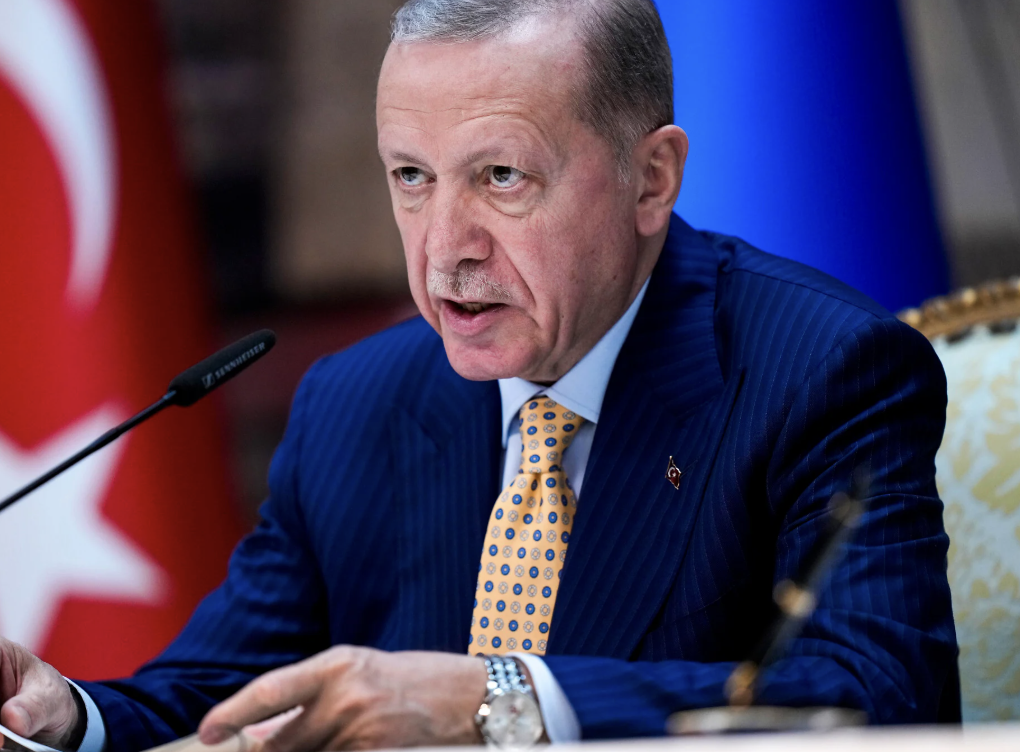
The new additions were formally welcomed at AK Party Headquarters, where a badge ceremony was organized for local leaders who recently decided to align themselves with the ruling party. The ceremony was led by President Recep Tayyip Erdoğan, who personally presented party badges to the mayors and offered his congratulations, wishing them success in their public duties.
This latest development comes at a time when local governance, municipal performance, and political cohesion are playing an increasingly important role in Turkey’s broader political strategy. Party leadership has emphasized that strong local administrations are key to implementing long-term development goals, making such transitions strategically significant.
Which Mayors Joined the AK Party?
During the ceremony, the AK Party officially confirmed the participation of four mayors from across Turkey, reflecting the party’s geographically diverse expansion of its local network.
The mayors who joined AK Party are:
Mehmet Aydın, Mayor of Çumra in Konya
Davut Karadavut, Mayor of Kadışehri in Yozgat
Hasan Turgut, Mayor of Karalar Town in İdil district, Şırnak
Şenol Öncül, Mayor of Aşdağul Town in Ortaköy district, Çorum
Each of these municipalities represents a distinct local context, from Central Anatolia to Southeastern Anatolia, underscoring the AK Party’s aim to strengthen nationwide grassroots representation.
Political observers note that such moves often reflect pragmatic considerations, including alignment with central government policies, access to broader administrative resources, and the desire for smoother coordination between local and national authorities. While party changes by elected officials are not uncommon in Turkish politics, the timing and scale of these transitions continue to attract public attention.
President Erdoğan Leads Badge Ceremony
The badge ceremony was held shortly before the start of the MKYK meeting, one of the party’s most important decision-making gatherings. President Erdoğan’s direct involvement in welcoming the new members highlighted the importance AK Party places on party unity and local leadership.
By personally presenting the badges, Erdoğan sent a clear message about the party’s openness to expanding its ranks and its emphasis on institutional continuity between local administrations and central governance. The ceremony also served as a symbolic moment, reinforcing loyalty and shared political direction ahead of critical strategic discussions.
MKYK Meeting Focuses on Strategy and Policy
Following the badge ceremony, the party leadership moved on to the MKYK meeting chaired by President Erdoğan. According to party sources, the meeting agenda included current domestic and international political developments, as well as evaluations of the AK Party’s future roadmap and organizational strategies.
The participation of newly elected mayors ahead of such a meeting is significant, as it places local governance issues directly within the context of national policy planning. Analysts suggest that AK Party continues to prioritize coordination between municipalities and the central government, particularly in areas such as infrastructure, social services, and economic development.
Why These Transitions Matter
The addition of four mayors may appear modest in numbers, but politically, it reflects a broader trend of consolidation at the local level. Municipal leaders play a key role in shaping voter perceptions, delivering public services, and maintaining daily contact with citizens. Their political affiliations, therefore, carry weight beyond party membership lists.
From an electoral perspective, local administrations often act as testing grounds for policy implementation, making them strategically important for parties seeking long-term stability. The AK Party’s continued focus on local leadership suggests an effort to reinforce its organizational strength ahead of future political milestones.
At the same time, political analysts emphasize the importance of viewing such developments through a neutral and institutional lens. Party changes are legal within Turkey’s political framework and are often influenced by local dynamics rather than purely ideological shifts.
Related articles
IYI Party to decide on local election alliance with CHP on Monday

Tim Ash answers FAQ on Turkish elections

Turkey Warns Black Sea Tensions Could Spill Over as Tanker Strikes Raise Alarm