



Historic Transfer Ruled Illegal: Court Rejects İmamoğlu’s Claim
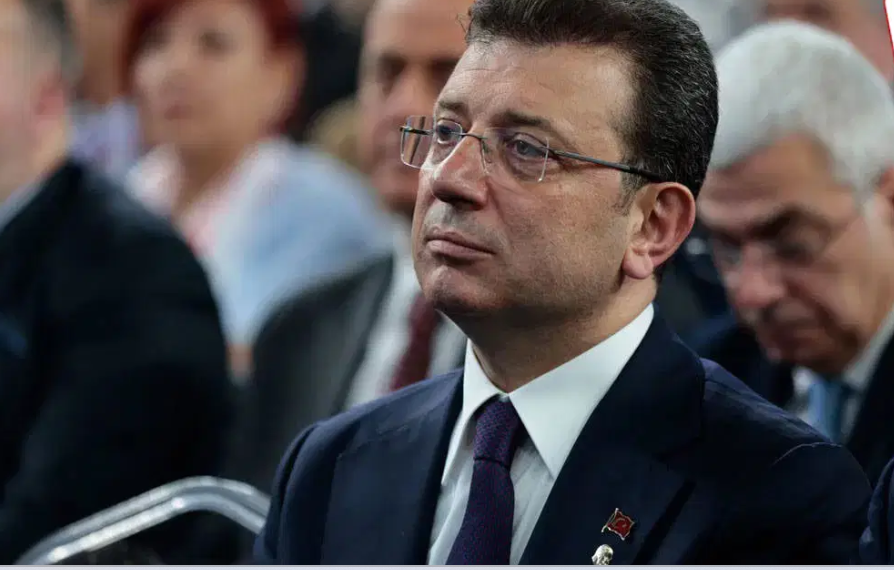 ekrem-imamoglu
A Turkish administrative court has rejected a lawsuit filed by Ekrem İmamoğlu, Istanbul’s mayor and the presidential candidate of the main opposition Republican People’s Party (CHP), challenging the cancellation of his university diploma. The ruling, issued by the Istanbul 5th Administrative Court, concludes that İmamoğlu’s transfer to Istanbul University more than three decades ago was legally invalid and that responsibility ultimately lay with the student, not the institution.
The case centers on İmamoğlu’s 1990 horizontal transfer from Girne American University (GAU) in Northern Cyprus to Istanbul University’s Faculty of Business Administration. The court upheld the decision to annul his diploma, ruling that the transfer violated the core legal requirement of academic equivalence, as GAU was not recognized by Turkey’s Higher Education Council (YÖK) at the time.
Court: Transfer Was “Legally Impossible”
In its detailed reasoning, the court stated that transferring from an unrecognized university to a Turkish state university was “legally impossible” under the regulations in force at the time. According to the ruling, YÖK recognized only Eastern Mediterranean University in Northern Cyprus in 1990, while GAU did not receive official recognition until 1993.
Because institutional equivalence is a mandatory condition for horizontal transfers, the court found that this requirement had been fundamentally breached, rendering the transfer invalid from the outset.
University Error Acknowledged — But Responsibility Assigned to Student
The court acknowledged that Istanbul University committed procedural violations, including increasing transfer quotas in violation of regulations. These actions were described as an “open administrative error.” However, the judges ruled that such errors do not create an acquired right for students who benefit from them.
Crucially, the court concluded that the burden of responsibility rested with İmamoğlu, not the university. It stated that a student applying for a transfer from a foreign institution is expected to know whether that institution is officially recognized.
The ruling went further, declaring that İmamoğlu’s claim that he was unaware of the deficiencies in the transfer process was “not compatible with the ordinary course of life.” In other words, the court found it implausible that the irregularities went unnoticed by the applicant.
Irregular Timing and Quota Manipulation Highlighted
The decision also highlighted how the transfer process was conducted. Although Istanbul University publicly announced a deadline of September 14, 1990, the faculty board finalized transfer decisions on September 12, before the application period had officially ended.
Additionally, the court noted that the originally approved quota of 55 students was later increased to 60 without issuing a new public announcement. Judges described these actions as more than simple clerical mistakes, stating that the pattern of decisions created the impression that they were taken “to achieve a specific outcome.”
Academic Ranking Undermines Eligibility Claim
The court also addressed grade point averages among students who transferred in the same period. According to the ruling, İmamoğlu’s GPA stood at 2.50, while several other students had significantly higher averages. The judges concluded that even if a merit-based ranking had been applied, İmamoğlu would have fallen outside the transfer quota.
This finding further weakened the argument that the transfer complied with academic standards or fairness principles.
Political Implications Loom Large
The ruling comes at a politically sensitive time, as İmamoğlu remains both Istanbul mayor and CHP’s presidential candidate, while also being detained in Silivri in an unrelated case. Although the court framed its decision strictly in administrative and legal terms, the diploma controversy carries major political implications, as educational eligibility is a prerequisite for presidential candidacy under Turkish law.
While the university’s errors were clearly acknowledged, the court’s insistence that the student bears ultimate responsibility marks a decisive legal setback for İmamoğlu and closes one of the most controversial chapters surrounding his academic credentials.