Bilal Erdoğan Speaks on His Father’s Political Legacy, Fuels Succession Speculation
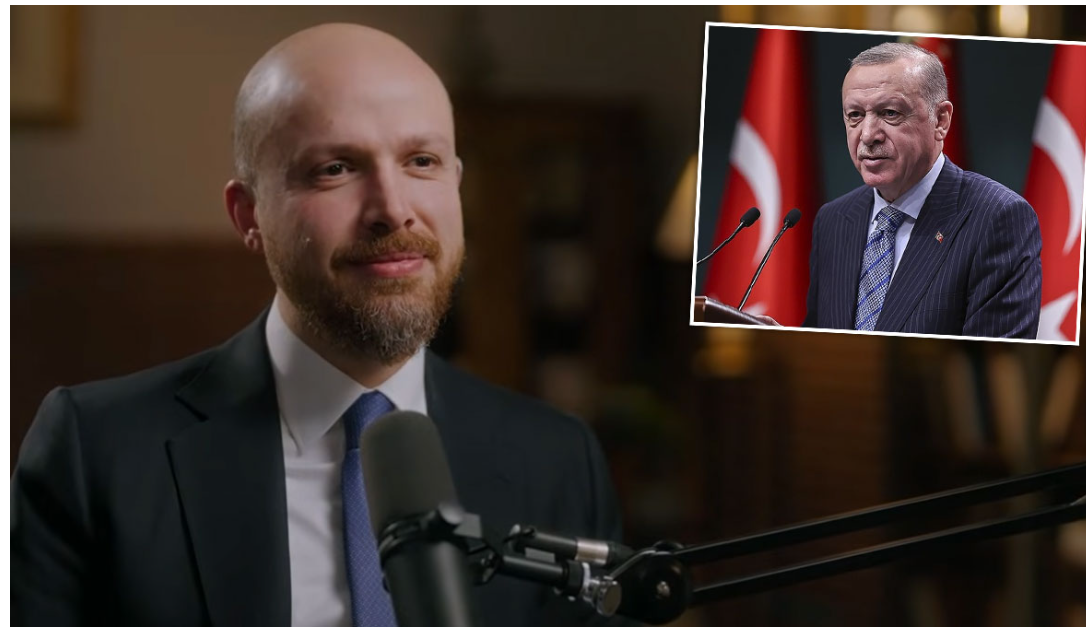 bilal erdogan2
Summary:
Bilal Erdoğan, son of President Recep Tayyip Erdoğan, said those who come after his father must preserve and elevate the political and moral vision he established, remarks that are likely to fuel ongoing speculation about succession within Turkey’s ruling elite.
Bilal Erdoğan, the son of Turkish President Recep Tayyip Erdoğan and chairman of the board of trustees of the Ilim Yayma Foundation, has said that those who follow his father bear a responsibility to carry forward and strengthen the political and moral vision he created.
Speaking on Zû Şan, a program broadcast on Qatar-based media platform Atheer, Erdoğan said that continuity of values mattered more than formal political positions.
“I believe that we — those who come after him — whether in politics, social life, civil society or education, must work to realise and elevate this spirit,” he said.
The remarks come amid persistent debate in Ankara over the future of Turkey’s leadership once President Erdoğan, who has dominated Turkish politics for more than two decades, eventually steps aside.
Broad interview touches on politics, education and Gaza
In the wide-ranging interview, Erdoğan discussed his childhood, civil society work, Turkey’s foreign policy outlook, the failed coup attempt of July 15, 2016, and the war in Gaza.
On Gaza, Erdoğan sharply criticised Western governments, accusing them of double standards on human rights. He said sanctions imposed on Russia after the Ukraine war contrasted with the lack of comparable pressure on Israel.
“If all Muslim countries had halted trade, Israel would have been forced to stop within months,” he said, adding that Israel should bear the cost of Gaza’s reconstruction.
Erdoğan also highlighted Türkiye’s decision to halt trade with Israel, describing it as a significant economic sacrifice.
Emphasis on cultural and educational mission
Erdoğan also spoke extensively about education and identity, citing his own experience as an Imam Hatip graduate during the era of university entrance restrictions.
He referenced his studies at Harvard University and work at the World Bank, while arguing that Türkiye should adopt Western science and technology without surrendering its cultural identity.
Through institutions such as Ibn Haldun University and affiliated arts and music schools, Erdoğan said his aim was to help build a “comparative education model” rooted in Türkiye’s own civilisational values.
Succession debate quietly resurfaces
Although Erdoğan made no explicit claim to political office, his emphasis on “those who come after” President Erdoğan has renewed speculation that he could eventually seek a more formal political role.
Bilal Erdoğan has long been viewed by some observers as a potential heir to his father’s political legacy, particularly among conservative and religious networks aligned with the ruling bloc. He has consistently denied having immediate political ambitions, positioning himself instead within civil society and education.
Nonetheless, analysts note that his visibility, access to international platforms, and symbolic status as the president’s son keep him firmly within the succession conversation.
Comparisons with Hakan Fidan
Any discussion of succession also inevitably invites comparison with Foreign Minister Hakan Fidan, a former intelligence chief widely regarded as one of President Erdoğan’s most trusted and capable lieutenants.
Unlike Bilal Erdoğan, Fidan has accumulated decades of direct experience in statecraft, security policy and diplomacy, making him a leading contender among institutional elites should a transition occur.
While there is no public indication of rivalry, political observers in Ankara describe an implicit contrast between the two figures: Fidan as a technocratic power-broker embedded in the state apparatus, and Bilal Erdoğan as a symbolic carrier of Erdoğan’s ideological and civilisational vision.
Both profiles appeal to different constituencies within the ruling coalition, underscoring the lack of clarity over how succession, when it comes, might unfold.
Carefully calibrated message
For now, Bilal Erdoğan’s remarks appear carefully calibrated — affirming continuity without overtly challenging existing power structures. His insistence that leadership of his father’s legacy can occur across politics, civil society and education allows room for manoeuvre while keeping him firmly in the public conversation.
As Turkey enters a period of heightened political uncertainty, statements such as these are likely to be scrutinised less for what they say explicitly, and more for what they may signal about the future.
PA Turkey intends to inform Turkey watchers with diverse views and opinions. Articles on our website may not necessarily represent the view of our editorial board or count as endorsement.
Follow our English YouTube channel (REAL TURKEY):
https://www.youtube.com/channel/UCKpFJB4GFiNkhmpVZQ_d9Rg
Twitter: @AtillaEng
Facebook: Real Turkey Channel: https://www.facebook.com/realturkeychannel/***