Do Developments in Syria Threaten Türkiye’s “Terror-Free” Initiative?
 tom barrack sdg
Recent developments in Syria have tested the resilience of Türkiye’s long-running “Terror-Free Türkiye” initiative, raising concerns that regional instability could once again derail a fragile political process. Past peace efforts collapsed under similar provocations, making the latest escalation a critical stress test.
While the process has absorbed damage, it has not collapsed. On the contrary, some of the most significant obstacles standing in its way appear to be weakening.
The Syrian Factor as a Structural Obstacle
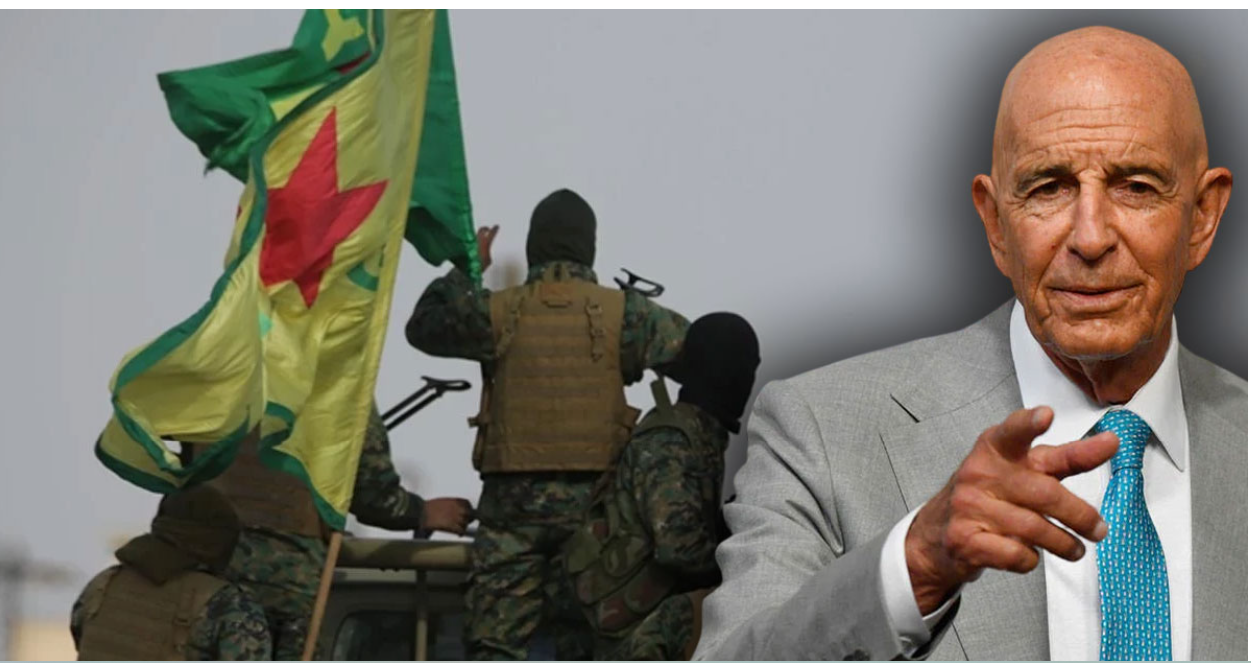
For years, the presence of the Syrian Democratic Forces (SDF) in northern Syria constituted the most serious external challenge to the Terror-Free Türkiye initiative. Armed groups linked to the PKK viewed the Syrian theatre as an alternative power base, undermining domestic disarmament efforts.
During the 2013–2014 peace talks, PKK leadership in Kandil reportedly believed that U.S. backing would enable the creation of a Kurdish statelet in Syria, a calculation that contributed to the collapse of negotiations. A similar approach resurfaced more recently, with efforts to keep the SDF outside the current process and to shift the organization’s operational center from Iraq to Syria.
Attempts to sabotage the initiative through renewed unrest — including efforts to incite large-scale protests — failed. Neither public support nor regional dynamics aligned with these plans.
State Strategy and Shifting Realities
Türkiye’s security establishment moved decisively to prevent the process from being undermined. As a result, the SDF’s strategic position deteriorated rapidly. The group lost control of large swathes of territory in Syria within days, revealing what Ankara views as its limited military and political sustainability without external backing.
This shift has reinforced confidence in the Terror-Free Türkiye process, both within state institutions and among the broader public. The perception that armed groups could be neutralized swiftly if negotiations fail has strengthened Ankara’s negotiating hand and reduced public anxiety.
A New Regional Alignment
Several developments now define the emerging landscape:
-
The United States has aligned its Syria policy more closely with Türkiye.
-
Washington, Ankara, and Damascus increasingly share overlapping security priorities.
-
The SDF, widely viewed as a U.S.-backed project, has lost critical external support.
-
Internal divisions between PKK leadership in Kandil and Abdullah Öcalan have deepened.
-
Public opinion in Türkiye has remained largely resistant to calls for unrest.
-
Both domestic and international conditions have shifted against armed groups.
Pro AKP Columnist: Quo Vadis the Peace Process? Syria, Kandil and the Limits of Control
Barzani’s Re-Emergence and Ankara’s Unease
Developments have also drawn renewed attention to Iraqi Kurdish leader Masoud Barzani. Ankara is closely monitoring Barzani’s efforts to position himself as a central Kurdish figure amid the Syrian transition — a role that Turkish officials view with skepticism.
Barzani previously clashed with Türkiye during the 2017 independence referendum in northern Iraq, which Ankara strongly opposed. More recently, Barzani’s reported advice to SDF leader Mazloum Abdi not to disarm during integration talks with Damascus has further strained relations.
Photographs of Barzani hosting U.S. officials alongside SDF figures reportedly triggered diplomatic concern in Ankara, which interpreted the symbolism as a challenge to its regional strategy.
Toward an Irreversible Moment?
A temporary ceasefire in Syria is now seen by Turkish officials as a final opportunity for armed groups to adapt to the new reality. Ankara believes that continued resistance would result in swift military defeat.
The rapid redrawing of Syria’s control map has bolstered confidence that the Terror-Free Türkiye initiative is no longer vulnerable to external sabotage. Parliamentary work on legal reforms and political normalization is expected to proceed under this strengthened outlook.
Whether all regional actors — including Kandil and Erbil — will accept this new balance remains uncertain. What is clear, Ankara argues, is that no future regional equation can be constructed without Türkiye.
By Abdülkadir Selvi
Hürriyet
PA Turkey intends to inform Turkey watchers with diverse views and opinions. Articles in our website may not necessarily represent the view of our editorial board or count as endorsement.
Follow our English YouTube channel (REAL TURKEY):
https://www.youtube.com/channel/UCKpFJB4GFiNkhmpVZQ_d9Rg
Twitter: @AtillaEng
Facebook: Real Turkey Channel: https://www.facebook.com/realturkeychannel/