



The ‘United S’ Conspiracy: Inside the 10-Ton Cocaine Bust and the Ghost Company of Honduras
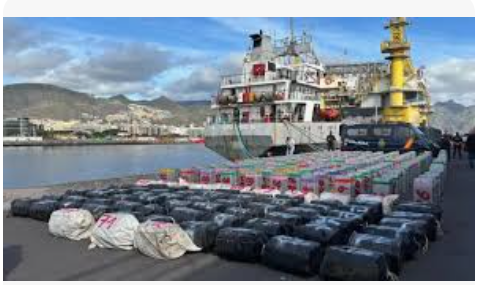 kokain gemisi
ISTANBUL — In what is shaping up to be one of the most complex maritime drug trafficking cases in recent memory, Turkish authorities have arrested ten suspects, including alleged drug kingpin Çetin Gören, following the seizure of 10 tons of cocaine off the Canary Islands.
The investigation, detailed by HalkTV’s İsmail Saymaz, reveals a sophisticated network involving shell companies in Honduras, “ghost” owners, and a high-stakes vessel swap designed to mask the shipment’s true originators.
The Return of the ‘Swamp’ King
Çetin Gören is a name well-known to Turkish law enforcement. In 2020, he was a primary target of “Operation Swamp” (Bataklık), which then-Interior Minister Süleyman Soylu hailed as the “largest narcotics operation in the history of the Republic.” Though Gören spent two years behind bars during that probe, he was ultimately acquitted in 2024.
His freedom was short-lived. On January 7, 2026, Spanish authorities intercepted the cargo ship ‘United S’ in the Atlantic. The discovery of 10 tons of cocaine on board immediately triggered a coordinated strike by the Istanbul Chief Public Prosecutor’s Office.
The Honduras Connection: Copa Maritime Co.
The heart of the prosecution’s case lies in a paper trail leading to Central America. Investigators allege that Gören instructed a former co-defendant from Operation Swamp, Mehmet Murat Buldanlıoğlu, to establish a front company called Copa Maritime Co. in Honduras.
Buldanlıoğlu reportedly admitted to setting up the company using stolen passport data. “I didn’t steal the passports; I received the information via email,” he reportedly told interrogators, confirming he used the identity of a man named İbrahim Yılmaz to register the firm.
Yılmaz, the “paper owner” of the ship, claims total ignorance: “I’ve only been abroad once in my life, and that was during the pandemic,” he testified, highlighting the classic use of “straw men” to shield the true financiers.
The Defense: “Past Mistakes and Slander”
Taking the stand, Çetin Gören vehemently denied the charges, portraying himself as a reformed man being targeted for his past. “I may have made mistakes in my life and I paid the price for them. I have settled in Turkey and made my investments here,” Gören stated.
Gören offered an alternative narrative, claiming he was merely a middleman for a Moroccan associate known as “Baran” whom he met in Dubai. He admitted to inspecting a ship at a shipyard in Tuzla and paying a deposit but claimed the deal fell through due to a dispute with a businessman named Madi.
“I think Buldanlıoğlu is slandering me because of a grudge held since Operation Swamp,” Gören told the prosecutor, attempting to distance himself from the United S and its 10-ton cargo.
The ‘Azra C’ Vessel Swap
The plot thickened as defense lawyers for another suspect, Ahmed Almassri, admitted their client owned the United S until October 2025. They claim Almassri sold the ship just months before the bust in a “swap deal” for another vessel named ‘Azra C’.
According to this defense, the United S was caught while still registered in Almassri’s name only because the new buyers failed to update the maritime records—a common tactic used in the “grey zone” of international shipping to maintain plausible deniability.
Ongoing Investigation
The Turkish court has ordered the pre-trial detention of all ten suspects on charges of forming a criminal organization and international drug trafficking. As Spanish and Turkish authorities share intelligence, the focus has shifted to the four Turkish crew members currently held in Spain and the digital trail of communication between Istanbul, Dubai, and the Caribbean.