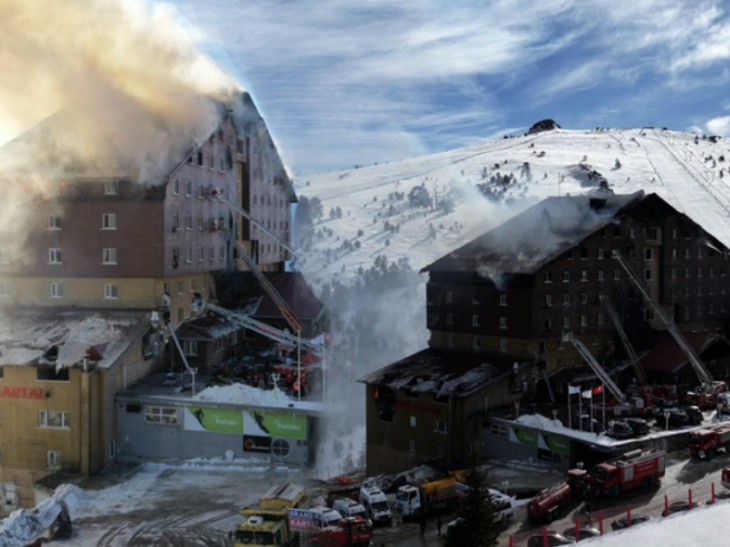
Kartalkaya Fire Sparks Fresh Controversy as Administrative Decision Fuels Outrage
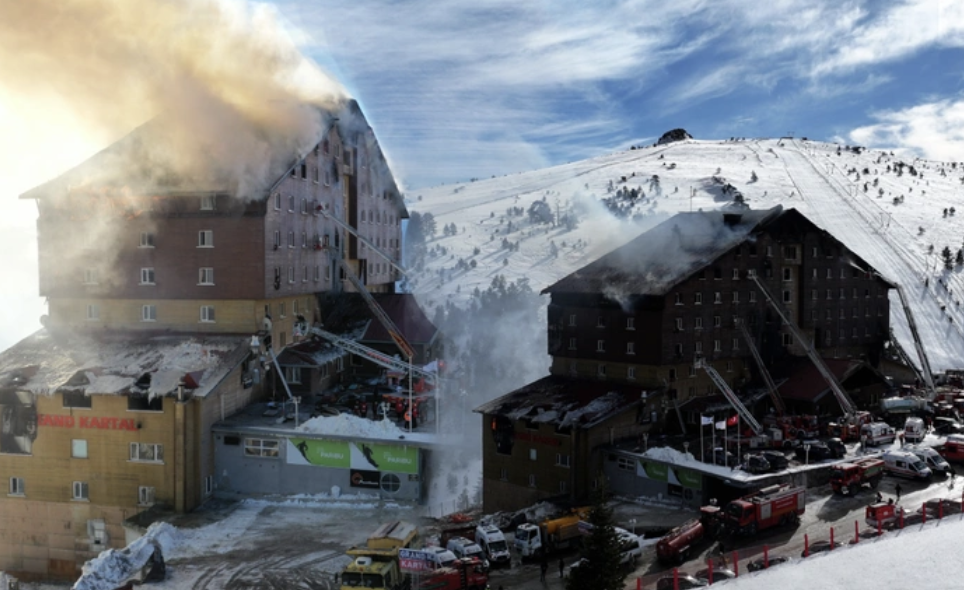 kartalkaya
As the investigation into the deadly Kartalkaya hotel fire continues, a newly published administrative regulation has reignited public controversy, raising serious questions about timing, institutional responsibility, and accountability. The decision, published in Turkey’s Official Gazette, concerns the exact region where the tragedy occurred and was prepared by a ministerial unit whose senior officials are listed as suspects in the ongoing criminal investigation. The move has drawn sharp criticism from victims’ families, legal experts, and parts of the public.
The Ministry of Culture and Tourism issued a regulation narrowing the boundaries of the Köroğlu Mountain Culture and Tourism Protection and Development Zone, which includes Kartalkaya and the site of the Grand Kartal Hotel, where a devastating fire claimed 78 lives, including 34 children, on January 21, 2025. The fact that the regulation entered into force on the first anniversary of the disaster has intensified the backlash.
Decision Published on the Anniversary of the Tragedy
The regulation was published in the Official Gazette with the signature of President Recep Tayyip Erdoğan, formally reducing the boundaries of the protected tourism zone. While administrative changes to tourism regions are not unusual, the timing of this decision has been widely questioned.
For the families of the victims, the publication date is deeply symbolic. One year after the fire, with the investigation still ongoing and accountability unresolved, the decision has been perceived as insensitive at best and provocative at worst. Critics argue that any administrative action affecting the disaster zone should have been postponed until the judicial process is completed.
Unit Linked to Investigation Prepared the Regulation
According to reporting by DW Turkish journalist Alican Uludağ, decisions related to culture and tourism protection and development zones are prepared by the General Directorate of Investments and Enterprises, a body operating under the Ministry of Culture and Tourism. This same directorate also plays a role in determining the timing of publication in the Official Gazette.
The controversy deepens because several senior officials within this directorate are listed as suspects in the Kartalkaya fire investigation. Despite their legal status, these officials remain in office and continue to exercise administrative authority, including over matters directly related to the area where the fire occurred.
Suspect Bureaucrats Remain in Office
Among those named in the investigation are General Director Neşe Ç. and Deputy General Directors Levent K. and Elçin Şimşek Ö. All three are reportedly subject to travel bans as part of the ongoing judicial proceedings.
In addition, the Board of Inspectors, which was responsible for overseeing inspections of the Grand Kartal Hotel prior to the fire, is also structurally tied to the same general directorate. This institutional overlap has fueled concerns that individuals who may bear responsibility for regulatory or oversight failures are still in a position to influence administrative decisions linked to the disaster.
Legal observers note that while being a suspect does not constitute guilt, the continued involvement of these officials raises serious questions about conflict of interest and the appearance of impartiality.
Strong Reaction From Victims’ Families and Lawyers
The regulation has prompted strong reactions from families who lost loved ones in the fire. Onur Fırat Kaynun, a lawyer representing several of the victim families, spoke to DW Turkish and described the timing of the decision as “an open provocation.”
Kaynun criticized the fact that no indictments have been filed against the suspect officials despite a full year having passed since the tragedy. He stressed that individuals listed as suspects should not be involved in administrative decisions concerning the very area where the fire occurred.
“These people think they are untouchable,” Kaynun said, adding:
“Aradan bir yıl geçmesine rağmen haklarında hâlâ dava açılmadı. Oysa dosyada şüpheli konumunda bulunan kişilerin, yangının yaşandığı bölgeyle ilgili herhangi bir idari kararda yer almamaları gerekir. Aldıkları her karar, soruşturmayı etkileme potansiyeli taşıyor. Aynı zamanda mağdur ailelere, ‘Yetki hâlâ bizde, istediğimiz kararı çıkarırız’ mesajı veriliyor. Ancak bunun böyle olmadığını yargı süreci gösterecek. Eninde sonunda hesap verecekler.”
The lawyer’s remarks reflect a broader sentiment among the victims’ families, who believe the regulation sends a message of institutional indifference and reinforces perceptions of impunity.
Accountability and Institutional Trust at Stake
The Kartalkaya case has become a broader test of administrative accountability and public trust. Experts argue that when officials under investigation continue to make decisions related to the subject of that investigation, even lawful actions can undermine confidence in state institutions.
From a governance perspective, critics say the issue is not only about legality, but also about ethical standards and the need to protect the integrity of judicial processes. Administrative neutrality, they argue, is essential in cases involving large-scale loss of life.
An Investigation Still Without Closure
More than a year after one of Turkey’s deadliest hotel fires, the judicial process remains incomplete. While the investigation continues, the absence of indictments against senior bureaucrats has become a source of frustration for victims’ families.
The recent zoning decision has transformed what might have been a technical administrative adjustment into a symbol of unresolved accountability. For many observers, it highlights the tension between bureaucratic continuity and the public’s expectation of justice.
Related articles
President Erdoğan Vows Justice in Deadly Kartalkaya Hotel Fire
Kartalkaya hotel fire deaths linked to lack of basic safety

Over 4,000 Hotels Shut Down Ahead of Tourism Season Over Missing Permits