TEPAV Warns on Inflation Gap: Interest Rate Policy Must Align With Turkey’s 2026 Target
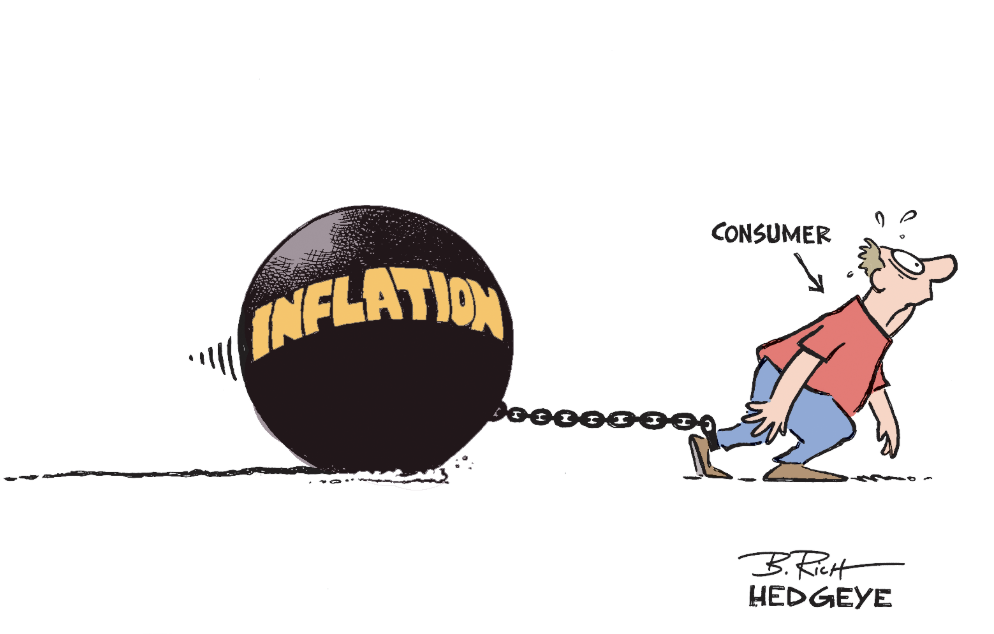 Inflation
The Economic Policy Research Foundation of Turkey (TEPAV) Monetary Policy Working Group has released its January 2026 Monetary Policy Assessment Note, offering a detailed evaluation of Turkey’s inflation outlook, expectations, and macroeconomic risks. The report presents key findings and policy recommendations, stressing that monetary policy decisions must remain firmly anchored to inflation targets to achieve price stability.
Published on 21 January 2026, the assessment arrives at a time when inflation dynamics and credibility challenges continue to shape Turkey’s macroeconomic landscape. The Working Group underlines that recent improvements in monthly inflation figures, while notable, are insufficient to declare success in the fight against inflation.
Turkey Among the Highest Inflation Countries in the G20
According to the report, monthly inflation in December 2025 stood at 0.89%, making Turkey the country with the second-highest monthly inflation rate among G20 members, after Argentina. With this outcome, Turkey closed 2025 as the second-highest inflation country in the G20, highlighting the persistence of price pressures despite ongoing disinflation efforts.
TEPAV emphasizes that this international comparison underscores the scale of Turkey’s inflation challenge and the urgency of maintaining a credible and disciplined monetary policy framework.
Monthly Disinflation Still Inconsistent With Targets
The assessment takes a closer look at seasonally adjusted inflation trends. Between July and October 2025, average monthly inflation stood at 2.47%, before easing to 1.58% in November and December. While this decline signals some moderation, the Working Group cautions that when annualized, these figures still exceed the inflation path required to meet the 2026 year-end target.
In other words, the pace of disinflation observed in recent months remains incompatible with the official inflation objective, suggesting that current conditions do not yet justify a relaxation of monetary policy.
Inflation Expectations Show Severe Divergence
One of the most critical findings of the report concerns the growing gap between official targets and inflation expectations. TEPAV recalls that the official 2026 year-end inflation target is set at 16%. However, expectations across different economic agents diverge sharply from this goal.
Market participants expect inflation to reach 23.2%, while real-sector expectations climb to 34.8%. The Working Group warns that such a wide dispersion in expectations significantly complicates the inflation-fighting process.
This divergence weakens the anchoring of expectations and contributes to persistent inflationary pricing behavior, making disinflation more costly and prolonged.
Country Risk Premium Seen as a Key Vulnerability
The report also highlights Turkey’s country risk premium as a central macroeconomic vulnerability. According to the Working Group, recent domestic and global developments have once again demonstrated that sustainable macroeconomic stability depends on strengthening structural foundations.
A credible stabilization program, TEPAV argues, requires a permanent decline in the risk premium, which would support capital inflows, reduce financing costs, and reinforce the effectiveness of monetary policy. However, ongoing internal and external uncertainties continue to hinder progress in this area.
Two Scenarios for Monetary Policy Direction
TEPAV outlines its monetary policy recommendations under two alternative scenarios, both tied directly to the inflation target framework.
In the first scenario, if the 2026 inflation target of 16% is preserved, the Working Group recommends that the policy interest rate remain unchanged. Given current inflation dynamics and expectation gaps, any premature easing could undermine credibility and further delay disinflation.
In the second scenario, the report considers the implications of a de facto revision of the inflation target. If recent Central Bank practices signal a shift toward an inflation target in the 20–25% range, TEPAV assesses that a 150-basis-point policy rate cut could be justified under these revised assumptions.
However, the Working Group implicitly cautions that revising targets carries reputational risks and could further weaken expectation management.
Call for a Comprehensive Economic Program
In its concluding remarks, the report stresses that monetary policy alone is insufficient to secure lasting price stability. Durable disinflation, TEPAV argues, requires strong coordination with fiscal policy and structural reforms.
The Working Group calls for a comprehensive development and stabilization program that strengthens the rule of law, enhances institutional independence, and is embraced by broad segments of society. Such a framework, it notes, is essential for restoring confidence, lowering risk premia, and ensuring that anti-inflation policies deliver sustainable results.
Credibility and Consistency as the Way Forward
Overall, TEPAV’s January 2026 assessment delivers a clear message: interest rate policy must be firmly aligned with inflation targets, and credibility must remain the cornerstone of economic policymaking. Without consistent targets, anchored expectations, and supportive structural reforms, progress on inflation risks remaining fragile and incomplete.
Related articles
CBRT Warns: Disinflation Loses Momentum as Prices Stay Sticky
Turkey’s Central Bank Delivers Surprise Rate Cut
Şimşek Maps 2027 as Breakthrough Year for Turkish Economy