OPINION: Is It the CHP or the AK Party That Is Collapsing?
 akp chp
Summary:
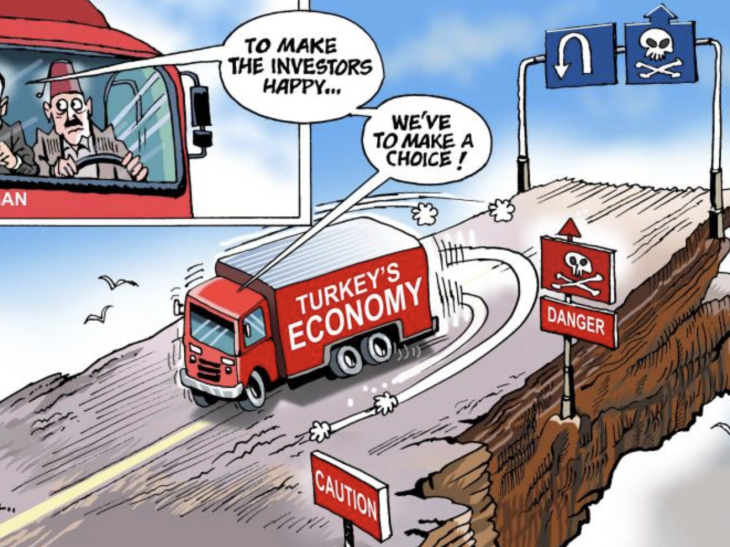
Turkish economist and columnist (Conservative, but anti-AKP) İbrahim Kahveci argues that headline election polls comparing the ruling AK Party and the opposition CHP miss a more troubling reality: a deeper collapse in confidence about who can actually solve Türkiye’s problems. While voter preferences may be shifting toward the opposition, surveys on problem-solving capacity still favor the government. Kahveci warns that both camps risk repeating the same populist mistakes in a country facing worsening income inequality, institutional decay, demographic decline, and long-term impoverishment.
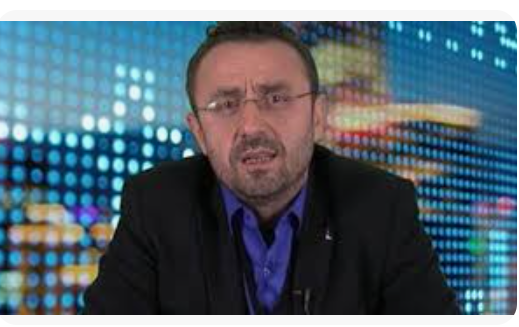
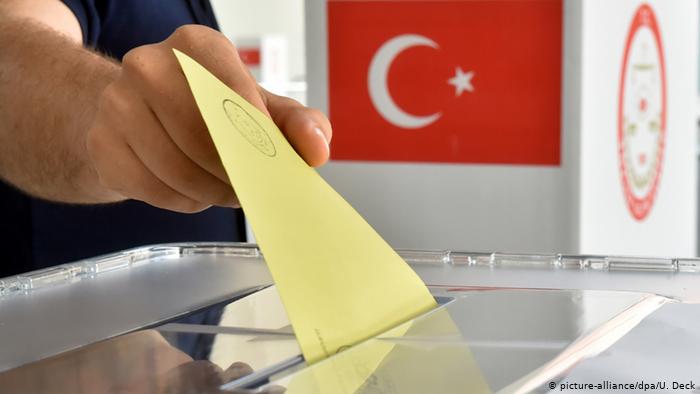
Turkish political debate often revolves around opinion polls, and recent surveys suggest an increasingly tight race between the ruling Justice and Development Party (AK Party) and the main opposition Republican People’s Party (CHP). While many polls show the CHP in the lead, Kahveci notes that the ruling party has not fallen far behind.
The shift itself is notable. The CHP, long stuck in the 21–25% range, now polls closer to 33–35%. The AK Party, once commanding 40–45%, has slipped into the low 30s. On the surface, this appears to signal a dramatic political realignment.
But Kahveci argues that these numbers obscure a more revealing trend.
Who can actually fix the problems?
Beyond voting-intention surveys, Kahveci points to another category of polling that asks a different question: Which political actor is capable of solving the country’s existing and future problems? In these surveys, the AK Party still outperforms the CHP — often by a wide margin.
For Kahveci, this gap is the key issue shaping Türkiye’s political future. Voters may be dissatisfied with the government, but many remain unconvinced that the opposition offers a credible governing alternative.
He illustrates this with an anecdote from a recent conversation with a business executive. The executive, Kahveci recounts, said there was no need to debate how far the current government had mismanaged the country. But he added that the main opposition party appeared focused almost entirely on promises of redistribution rather than on concrete solutions.
“The opposition’s message seems to be about giving more — higher minimum wages, higher pensions,” the executive said. “But we don’t yet see enough clarity on how these problems will actually be solved.”
The executive also drew a historical parallel, recalling former prime minister Süleyman Demirel’s famous 1991 campaign promise to outbid all rivals with higher spending — a strategy widely blamed for contributing to Türkiye’s economic instability in the early 1990s.
Populism has limits
Kahveci partially agrees with this criticism. Redistribution alone, he argues, cannot provide lasting solutions. Raising wages and pensions may offer temporary relief, but what happens once fiscal space is exhausted?
The broader context, he says, is a world descending into disorder. Worsening income inequality has distorted not only wealth distribution but also political judgment. Kahveci describes the current global climate as an era of “madness,” drawing parallels with the post-1929 Great Depression period that gave rise to dictatorships. Today, he argues, the result is the rise of autocratic leaders.
Some countries have reversed this trend — Brazil is one example — while others have moved from left-wing governments toward the far right, as seen in Chile. Türkiye, Kahveci suggests, remains caught between these dynamics without a clear strategy for inclusive, sustainable growth.
Labor, capital, and the wrong debate
At the heart of Kahveci’s critique is the debate over how to fix income distribution and economic stagnation. Should the solution be to tax capital more heavily and transfer income to labor? Or does Türkiye need a fundamentally different approach?
He raises uncomfortable questions. Should the country return to old-style wage unionism, or should it search for new mechanisms better suited to a globalized economy? Monthly data on company formations and closures show thousands of businesses shutting down. Bankruptcy filings and restructuring cases are rising. Factories are closing and relocating abroad, leaving workers behind.
“If capital is doing so well,” Kahveci asks, “why are we seeing so many bankruptcies?”
For him, this underscores the limits of a simplistic “take from A and give to B” logic. Adjusting the balance between labor and capital without addressing structural weaknesses can only go so far. The real question, he says, is whether Türkiye will cling to the old left-right paradigms of the past or find a new path altogether.
A state everyone wants to join
Kahveci also points to the expanding role of the state in Türkiye’s economy. From municipalities to central government institutions, public-sector jobs have become the ultimate aspiration for many citizens — largely because public wages are significantly higher and more secure than those in the private sector.
The average monthly wage in Türkiye stood at around 36,000 lira in 2025. For those unable to secure a public-sector position — often due to patronage networks — the alternatives are increasingly bleak.
This imbalance, Kahveci argues, reflects a deeper failure to create a productive, competitive private sector capable of delivering decent wages without relying on state employment.
Demography: the ignored time bomb
One issue Kahveci says he has raised almost alone for the past decade is Türkiye’s rapidly deteriorating demographic structure. Without urgent corrective action, he warns, the country risks becoming “old and poor” within 10 to 15 years.
Today, pensioners’ struggles dominate public debate. But Kahveci asks what will happen when the population ages further and the ratio of workers to retirees collapses. Without productivity growth and a strong tax base, today’s pension crisis could look mild compared to what lies ahead.
What future is being built?
Kahveci challenges supporters of the government to answer a simple question: in which areas has the AK Party genuinely prepared Türkiye for the future?
He traces the roots of today’s structural damage to trends that began after 2014, accelerated after 2017–18, and turned into what he calls a full-blown disaster after 2021.
He lists three core areas of failure.
First, Türkiye’s technological capacity has stalled. The economy is no longer generating high value-added growth. Persistent poverty has become entrenched, with neither the number of poor citizens nor the rate of chronic poverty showing meaningful decline.
Second, Kahveci argues that public institutions — starting with education — have undergone a profound collapse. Public spending has surged, rising from roughly $150 billion to $330 billion, yet service quality has not improved. Security and justice systems, he says, are visibly deteriorating.
He points to rising violence and brutal crime patterns as evidence of institutional decay. “The way people die tells us what kind of country we have become,” he writes, adding that the justice system appears increasingly incapable of delivering accountability.
Third, Kahveci warns of a “lost generation.” Young people, he argues, are being raised with inadequate skills and poor training. Their future prospects have been compromised, and their qualifications fall short of global standards — whether in law, medicine, or other professions.
A collapsing country, not just parties
Kahveci concludes with a stark warning. For those who genuinely care about Türkiye, the real issue should not be which political party is rising or falling, but whether the country itself is heading toward collapse.
Unless credible alternatives emerge — ones capable of restoring institutions, boosting productivity, and addressing demographic decline — the future looks increasingly bleak. “Otherwise,” Kahveci warns, “the price will be paid by our children.”
PA Turkey intends to inform Turkey watchers with diverse views and opinions. Articles on our website may not necessarily represent the view of our editorial board or count as endorsement.
Follow our English YouTube channel (REAL TURKEY):
https://www.youtube.com/channel/UCKpFJB4GFiNkhmpVZQ_d9Rg
Twitter: @AtillaEng
Facebook: Real Turkey Channel: https://www.facebook.com/realturkeychannel/***