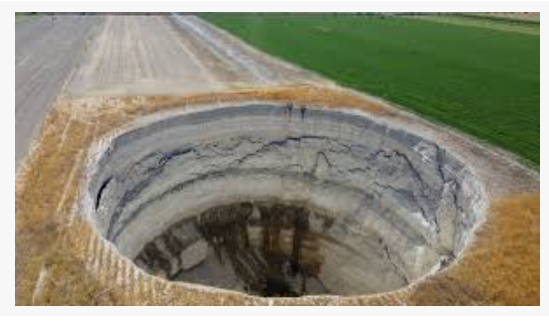
UN Report: The World Is Entering a Global Water Bankruptcy
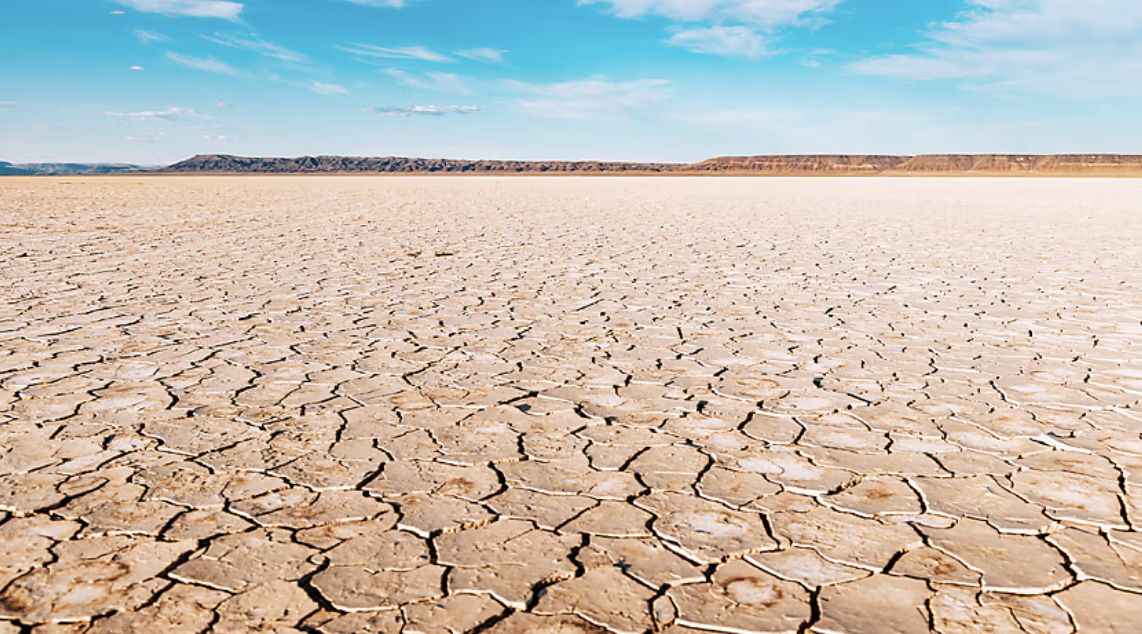 Drought in Turkey
The world is no longer facing a temporary water crisis. According to a newly released United Nations report, humanity has entered what experts now describe as a phase of “global water bankruptcy”—a structural and irreversible breakdown between water supply and consumption. The findings suggest that traditional terms such as water stress or water scarcity fail to capture the scale and permanence of the problem, as the planet is consuming freshwater far faster than natural systems can replenish it.
Published by the United Nations University Institute for Water, Environment and Health, the report presents a stark conclusion: water scarcity is no longer an exception driven by droughts or seasonal shocks, but a new global baseline. Rising temperatures, population growth, unsustainable agriculture, and overexploitation of rivers and aquifers have pushed many regions beyond their hydrological limits.
Not a Crisis, but a New Reality
One of the report’s most striking arguments comes from Kaveh Madani, Director of the UN University Institute for Water, Environment and Health. Madani cautions against labeling the situation as a “crisis,” emphasizing that the word implies something temporary and solvable with short-term fixes.
“This is not a crisis, it is a new reality,” Madani said. “If you keep calling it a crisis, you imply that it is a temporary shock that can be mitigated.”
According to Madani, the world has already crossed a point of no return. The focus must now shift from expecting a return to past conditions toward adapting to a future defined by permanent water constraints. This means rethinking how water is used, shared, priced, and protected—at both national and global levels.
What Does “Water Bankruptcy” Mean?
The report introduces the concept of water bankruptcy as an economic metaphor to explain the imbalance between supply and demand. In this analogy, rainfall and snowfall function as income, while water withdrawals represent spending. For decades, humanity has been overspending—drawing heavily from rivers, lakes, glaciers, and underground aquifers that recharge far too slowly to sustain current levels of use.
Climate change accelerates this imbalance. Higher temperatures increase evaporation, reduce snowpack, shrink glaciers, and intensify droughts, effectively cutting income while expenses continue to rise. As a result, ecosystems and human societies are now operating on water debt, with mounting environmental and social costs.
Global Examples Highlight the Severity
The report outlines several regional case studies that illustrate how water bankruptcy is already reshaping the modern world. Kabul is at risk of becoming the first contemporary capital city to completely run out of water due to uncontrolled groundwater depletion. Mexico City is sinking by nearly 50 centimeters per year as excessive pumping drains the massive aquifer beneath it. In the southwestern United States, prolonged disputes between states over the shrinking Colorado River reveal how water scarcity can fuel political and economic conflict.
These are not isolated incidents. They represent a broader pattern of societies living beyond their hydrological means, often without viable backup options.
Alarming Data from the Report
The scale of global water bankruptcy becomes even clearer when examining the report’s data:
More than 50 percent of the world’s large lakes have experienced significant water loss since 1990
Approximately 70 percent of major groundwater aquifers are in long-term decline
Over the past 50 years, wetlands equivalent in size to the European Union have disappeared
Global glaciers have shrunk by nearly 30 percent since 1970
Nearly 4 billion people experience severe water scarcity for at least one month every year
These trends confirm that water depletion is not limited to arid regions. Even water-rich areas are increasingly vulnerable as demand rises and ecosystems degrade.
Social, Economic, and Environmental Consequences
Water bankruptcy extends far beyond environmental damage. Reduced access to clean drinking water threatens public health, while declining agricultural output endangers food security and livelihoods. The report also warns of increased forced migration, heightened inequality, and the collapse of ecosystems that depend on stable water flows.
Experts emphasize that many regions are now exceeding their hydrological capacity, meaning no level of short-term efficiency gains can fully offset the structural imbalance without deeper reform.
The Call for Long-Term Solutions
Rather than relying on emergency measures, the report urges governments and institutions to adopt long-term, systemic strategies. Key recommendations include transforming agricultural practices—since farming accounts for the majority of global water use—by shifting crop patterns and expanding the use of efficient irrigation technologies.
The report also highlights the role of artificial intelligence and remote sensing tools in more accurately monitoring water systems, enabling policymakers to respond proactively rather than reactively. Protecting wetlands, restoring aquifers, and reducing pollution are identified as essential steps to stabilizing the global water cycle.
Finally, researchers argue that water could serve as a unifying issue in an increasingly fragmented world. Unlike many geopolitical challenges, water security transcends borders and ideologies. Limiting climate change, the report concludes, remains critical to ensuring sufficient water for both human societies and the ecosystems they depend on.