Pro AKP Columnist: Quo Vadis the Peace Process? Syria, Kandil and the Limits of Control
 baris sureci2
Intro
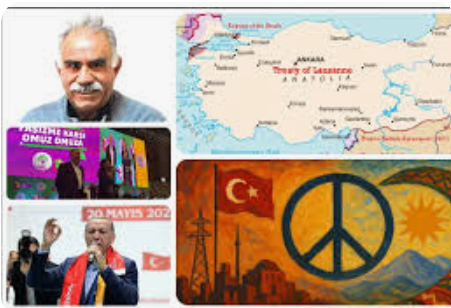
Turkey’s Peace Process with Kurds is tightly linked to developments in Syria. Syrian Kurds, considered long by Turkey as a PKK extensions have capitulated against al Sharaa in a Blitzkrieg that led to occupation of large swaths of land previously under Kurdish control. Kurds will get very little in terms of land and autonomy in the future of Syria. In the article linked below, we covered what the pro-Kurdish DEM Party thinks about the earthquake in Syria. In this article we present AKP’s view through the pen of Mr Abdulkadir Selvi (Hurriyet), considered the most loyal servant of Erdogan in the media:
Summary:
Statements following the İmralı delegation’s latest visit suggest that developments in Syria have become the central fault line threatening Türkiye’s renewed peace initiative. Abdullah Öcalan’s growing concern over escalating tensions highlights a widening gap between his directives and the actions of armed and political actors linked to the PKK ecosystem.


Syria at the Core of the Dispute
In its statement after the İmralı visit, the DEM Party underlined that the primary focus of discussions was the situation in Syria. According to the party, Abdullah Öcalan expressed deep concern over escalating clashes and rising tensions, warning that recent developments were being interpreted as an attempt to sabotage the “Peace and Democratic Society” process.
This framing is significant. On February 27, Öcalan publicly called on all armed groups to disarm and for the PKK to dissolve itself. Despite the inclusive wording of “all groups,” some commentators argued that the call did not apply to the Syrian Democratic Forces (SDF) and its YPG component. That interpretation was quickly rejected by İmralı delegation member Sırrı Süreyya Önder, who stated that the call was “principled and universal,” applying to everyone without exception.
Öcalan’s Letter and the SDF Question
Öcalan’s position had already been clarified in a letter sent on December 29 to Mazlum Abdi, in which he argued that implementation of the March 10 agreement with the Syrian government would ease tensions and accelerate normalization. Despite this, the SDF neither complied with Öcalan’s February 27 call nor implemented the March 10 understanding reached with Damascus.
The divergence between Öcalan’s guidance and the actions of the SDF raises a critical question: why did the Syrian wing of the PKK-linked structure choose defiance over alignment?
Signals from Kandil
Several factors appear to be at play. First is a visible shift in attitudes within Kandil, the PKK’s leadership hub. Second is the role of external actors, including Israeli and Iranian interventions, which are seen as exacerbating regional instability.
More importantly, Öcalan’s latest message is widely interpreted as being directed squarely at Kandil. He reaffirmed his commitment to the peace framework and stressed that the February 27 perspective remains valid. The subtext is unmistakable: delays, obstruction, and actions undermining the process must cease, and concrete steps must be taken to move forward.
Why Syria Matters
Syria is not a peripheral issue in this debate. During the previous peace process, Kandil had cited developments in Syria as justification for abandoning negotiations, arguing that promises had been made regarding the establishment of a Kurdish-controlled entity. That rationale was used to legitimize the continuation of armed struggle.
A similar pattern appears to be emerging. Kandil is accused of using the SDF and Syria as leverage to undermine the current “Terror-Free Türkiye” initiative. Despite local SDF figures showing openness to compromise in Aleppo, Kandil reportedly pushed for confrontation until the final moment, blocking implementation of the March 10 agreement.
Bahçeli’s Intervention and the Question of Authority
This backdrop lends renewed significance to remarks made last week by Devlet Bahçeli, who stated that the sole legitimate interlocutor is “the founding leader of the PKK, and no one else.” Öcalan’s latest position reinforces this claim, underscoring that authority over the process does not lie with Kandil or its political extensions.
Öcalan has repeatedly warned of what he calls a “coup mechanism” operating within the movement. Given the Turkish government’s clear political will, the firm stance of its nationalist partner, the ongoing operational role of İbrahim Kalın, and parliamentary engagement with İmralı, Öcalan’s concern does not appear to be directed at Ankara. Instead, scrutiny turns inward—to Kandil and segments of the DEM Party.
Internal Fractures Exposed
Statements by senior PKK figure Bese Hozat, including her rejection of any amnesty, signaled growing resistance within Kandil. The contrast between her symbolic weapons-burning gesture in July and her confrontational rhetoric months later suggests a power struggle and erosion of alignment with Öcalan’s line.
This internal rupture manifested itself in the SDF’s refusal to implement the March 10 agreement and Kandil’s insistence on confrontation in Aleppo.
Political Extensions and the DEM Party
Similar signals emerged from the political sphere. DEM Party figures such as Gülistan Koçyiğit Kılıç and Tuncer Bakırhan publicly claimed that Öcalan’s call did not include the SDF. These statements are interpreted by critics as reflecting the political wing of the process-resistant bloc within Kandil.
Despite these efforts, the attempt to derail the initiative has so far failed. Instead, continued fragmentation and battlefield setbacks for the SDF-YPG in Syria suggest that defiance has weakened, rather than strengthened, their strategic position.
PA Turkey intends to inform Turkey watchers with diverse views and opinions. Articles on our website may not necessarily represent the view of our editorial board or constitute endorsement.
Follow our English YouTube channel (REAL TURKEY): https://www.youtube.com/channel/UCKpFJB4GFiNkhmpVZQ_d9Rg
Twitter: @AtillaEng
Facebook: Real Turkey Channel: https://www.facebook.com/realturkeychannel/