Turkey Signals Shift on Energy Prices as Officials Court Global Investors
 mehmet simsek4
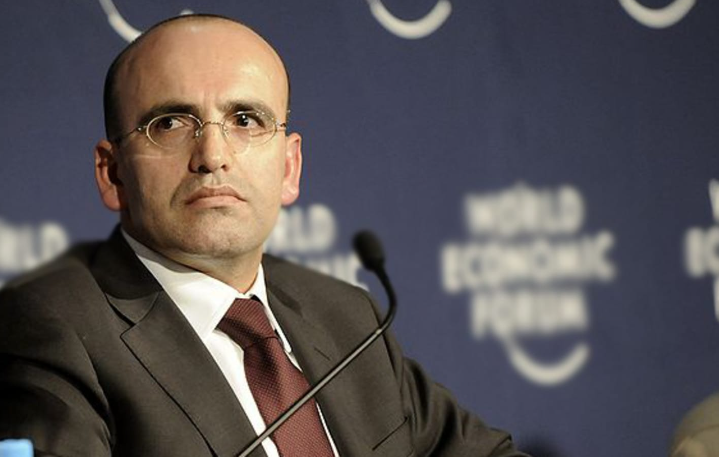
Turkey’s top economic officials have offered international investors a clearer picture of the country’s policy direction, signaling both continuity in tight monetary policy and a potential shift in how key household costs are managed. During high-level meetings held in London and New York on January 13–14, Treasury and Finance Minister Mehmet Şimşek and Central Bank Governor Fatih Karahan outlined Turkey’s roadmap for disinflation, growth balancing, and fiscal discipline.
The investor briefings were part of a broader effort to reinforce confidence in Turkey’s economic program, attract foreign capital inflows, and demonstrate commitment to price stability. The technical presentations delivered behind closed doors also revealed policy nuances that may directly affect households in the coming period.
Energy Subsidies Move Toward “Real Cost” Pricing
One of the most closely watched elements of the presentations was the section addressing inflation risks, particularly under the heading of “administered or guided price increases.” This phrasing, while technical, has significant real-world implications.
Market analysts interpret the emphasis on administered prices as a signal that the government intends to continue scaling back energy subsidies, especially for electricity and natural gas. These prices are largely determined by the state and have long been cushioned by public support mechanisms to shield consumers from volatility.
Experts note that references to “appropriate increases in administered prices” suggest a gradual shift toward passing a greater share of actual costs on to end users. While this approach is often framed as fiscally necessary and supportive of long-term price stability, it also raises concerns that energy bills for middle- and lower-income households could rise, even as inflation is brought under control.
Inflation Outlook: Targeting 30.9% by End-2025
Central Bank Governor Fatih Karahan used the meetings to underscore that Turkey’s inflation trajectory is improving. According to the projections shared with investors, consumer inflation, which closed 2024 at 44.4%, is expected to decline to 30.9% by the end of 2025.
The presentation highlighted that services inflation has begun to play a leading role in the disinflation process, a development policymakers view positively. Moderation in food prices and core goods inflation was also cited as a supporting factor, helping anchor expectations and reduce overall price pressures.
For investors, the message was clear: while inflation remains elevated, the authorities believe the underlying trend is downward and increasingly broad-based.
Rent and Education Costs Seen as Key to Breaking Inflation Inertia
Another focal point of the investor discussions was inflation “stickiness,” particularly in categories that heavily influence household budgets. Rent and education expenditures were singled out as critical areas.
Officials noted that rent inflation continued to slow throughout 2025, reaching its lowest monthly levels since February 2023. This deceleration is seen as a meaningful step toward easing one of the most persistent components of consumer inflation.
In parallel, recent regulatory changes in the education sector were presented as an additional factor that could help reduce price inertia. According to the outlook shared with investors, the combined effect of easing rent pressures and education-related adjustments is expected to support the disinflation process into 2026, helping to prevent inflation from becoming entrenched.
Growth Remains Resilient Despite Tight Financial Conditions
Despite maintaining a restrictive monetary stance, Turkey’s economic management emphasized that growth has remained resilient. Presentations indicated that as of the third quarter of 2025, economic expansion was still ongoing, even though indicators such as industrial production showed a more volatile pattern.
Officials stressed that Turkey is navigating a period where growth and credit expansion coexist with tight financial conditions. This balancing act was portrayed as evidence that the economy is adjusting rather than stalling, a key reassurance for foreign investors wary of hard landings.
The message conveyed was one of controlled normalization: slowing demand enough to curb inflation, without triggering a sharp contraction.
Commitment to a Prolonged Tight Monetary Stance
The meetings concluded with a firm reiteration of policy resolve. The economic team emphasized that tight monetary policy will remain in place until price stability is fully achieved. This stance was framed as non-negotiable, with officials underlining that credibility hinges on persistence.
Moreover, investors were told that any significant deterioration in the inflation outlook would prompt further tightening, if necessary. This conditional commitment was designed to reinforce confidence that policy decisions will remain data-driven rather than politically reactive.
What the Signals Mean Going Forward
Taken together, the London and New York briefings suggest a dual-track strategy: maintaining strict monetary discipline while gradually reducing fiscal distortions such as energy subsidies. For investors, this signals continuity and predictability. For households, however, it raises the prospect that some cost relief mechanisms may be phased out, even as headline inflation slows.
As Turkey continues its disinflation journey, the balance between restoring macroeconomic stability and managing social costs is likely to remain at the center of economic debate in the months ahead.
Related articles
Inflation Expectations Diverge in Turkey as Households Grow More Cautious
Şimşek: Inflation to End 2024 at 20% Range, Record Agricultural Credit Support Planned

Turkey’s Domestic Energy Drive Accelerates: Natural Gas to Reach 17 Million Homes by 2028