



Syrian Army Declares Eastern Aleppo Military Zone, Orders Armed Groups to Withdraw
 syria-military
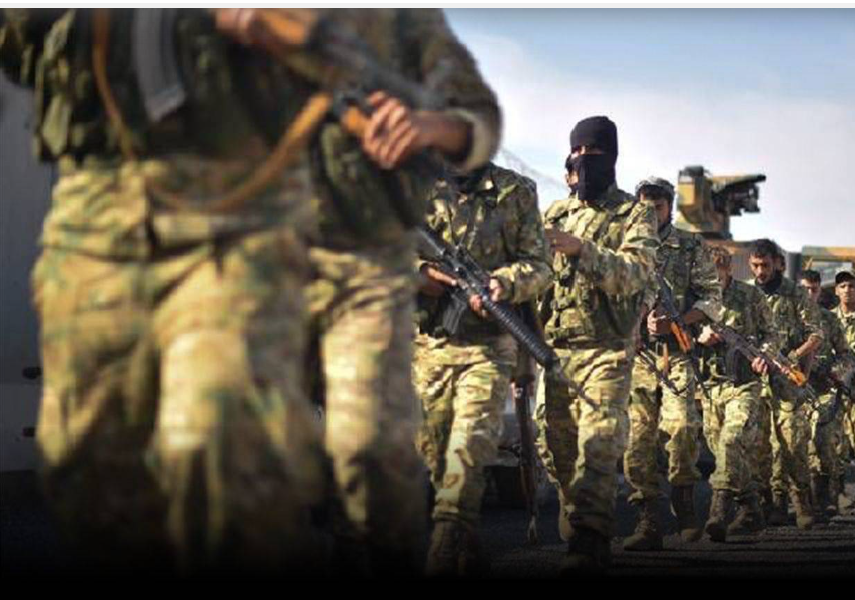
The Syrian Arab Army has announced a significant escalation in security measures around eastern Aleppo, declaring several areas as closed military zones and ordering all armed groups, including the Syrian Democratic Forces (SDF), to withdraw east of the Euphrates River. The move signals a new phase in Damascus’ approach to armed activity near one of Syria’s most strategically sensitive cities and reflects growing concerns over drone attacks and regional instability.
According to an official written statement released by the Operations Directorate of the Syrian Arab Army, the areas of Deir Hafer, Babiri, Qawas, and Maskana have been formally designated as military zones. These locations lie to the east of Aleppo and are considered critical due to their proximity to supply routes, civilian settlements, and alleged launch points for recent attacks. The statement claims that armed movements linked to the SDF, whose main component is the PKK/YPG, have continued in these areas despite repeated warnings.
Military Zones Declared in Eastern Aleppo
The declaration effectively restricts civilian access and authorizes the army to take broader security measures. Officials stated that the decision was taken after intelligence assessments indicated sustained armed activity that posed a direct threat to Aleppo and its surroundings. By classifying these regions as military zones, the Syrian army aims to assert tighter control and prevent their use for hostile operations.
The army’s announcement emphasized that the designation is not symbolic but operational. All armed elements present in the specified zones are required to relocate east of the Euphrates River, an area that has long served as a geographical and political dividing line between different military actors in Syria. Failure to comply, the statement suggested, would be treated as a security violation.
Civilian Warnings and Drone Attack Allegations
A notable aspect of the announcement was the explicit warning directed at civilians. The Syrian army urged residents to stay away from positions and fortifications allegedly used by SDF-linked forces. This warning followed claims that Iran-made kamikaze unmanned aerial vehicles (UAVs) targeting Aleppo were launched from these same areas.
Maps shared alongside the statement reportedly marked the military zones in red, underscoring that these locations would now be considered off-limits. The army stressed that civilian safety was a priority but warned that remaining near armed positions could place non-combatants at serious risk. Such warnings are often seen as precursors to expanded military operations, including surveillance, air activity, or ground deployments.
Defense Ministry Reinforces Withdrawal Demand
The Syrian Ministry of Defense reinforced the army’s message with a separate statement, reiterating that all areas west of the Euphrates River under YPG control are now considered military zones. The ministry formally demanded that all armed groups withdraw to the eastern side of the river without delay.
Local media reports cited by the ministry claimed that YPG and PKK elements, as well as remnants of former regime-aligned militias, have continued to concentrate forces west of the Euphrates. These reports allege that such groups are not only maintaining a presence but also expanding their logistical and operational capabilities in the region.
Alleged Use of Aleppo Countryside for UAV Operations
Central to the military zone decision is the claim that these territories have been used as launch pads for drone attacks aimed at Aleppo. Officials stated that both the buildup of armed personnel and the execution of attacks justified the extraordinary security measures now in place.
The Defense Ministry asserted that allowing these areas to function as bases for UAV operations posed an unacceptable threat to civilian infrastructure and public order. As a result, the army framed its actions as defensive and preventative, designed to neutralize risks before they escalate further.
Maps, Messaging, and Enforcement Measures
In a follow-up communication, the Syrian army shared map-based visuals highlighting Deir Hafer and Maskana alongside other designated zones. These visuals were accompanied by repeated calls for civilians to distance themselves from what were described as “terrorist organization positions.”
The army also stated that it would take all necessary steps to prevent armed groups from using the area as a hub for criminal or militant activities. This language suggests a broad mandate that could include checkpoints, patrols, targeted operations, or expanded surveillance across the newly declared military zones.
Strategic Implications for Northern Syria
The announcement carries wider implications for northern Syria, particularly in the context of ongoing tensions involving state forces, non-state armed groups, and external actors. By insisting on a full withdrawal east of the Euphrates, Damascus is reasserting the river’s role as a critical boundary and signaling zero tolerance for armed activity west of it.
Analysts note that such declarations often precede shifts in military posture or negotiations over control and coordination. Whether the order will be enforced through direct military action or through indirect pressure remains uncertain. However, the language of the statements suggests a readiness to act if compliance is not achieved.