DEİK Chief Warns: Updating the EU Customs Union Is No Longer Optional
 tr-eu
tr-eu
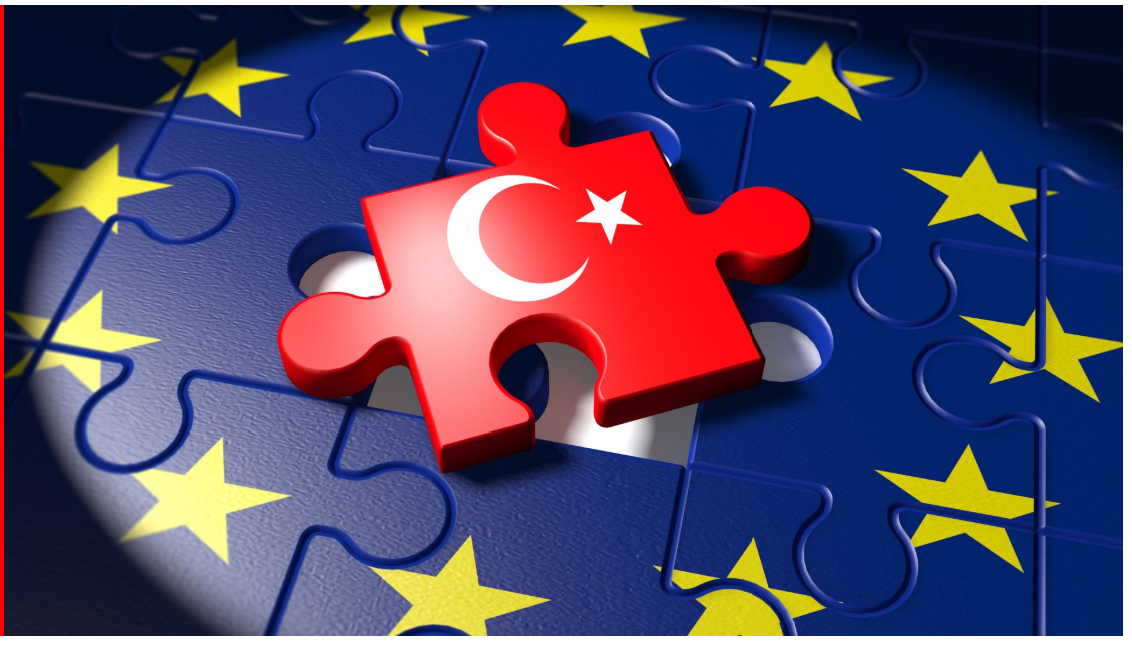
Foreign Economic Relations Board (DEİK) Chairman Nail Olpak has once again emphasized the urgent need to modernize the Customs Union agreement between Türkiye and the European Union, warning that further delays will create economic losses on both sides. Speaking at Anadolu Agency’s Finance Desk program, prepared in collaboration with the Istanbul Finance Center, Olpak shared detailed assessments of global trade, priority sectors, and Türkiye’s economic outlook for 2026 and beyond.
“We are talking about a union that has reached 30 years. In its 30th year, we are still discussing updating it. This is extremely important. If this update is not carried out, as our reports clearly show, not only Türkiye but the EU will also incur losses,” Olpak said, keeping his message clear and direct.
Manufacturing and Energy Remain at the Core
Reviewing sectoral developments in 2025, Olpak noted that manufacturing continues to assert its weight across all sub-sectors, despite persistent challenges. He stressed that energy—particularly renewable energy—remains firmly on the agenda for both Türkiye and the global economy.
Olpak highlighted that the rapid rise of artificial intelligence and the expansion of data centers, which are among the most critical tools supporting AI, have led to an exponential increase in energy demand. As a result, he expects energy to remain a top-priority sector not only in 2026 but for the foreseeable future.
However, Olpak also warned against an unbalanced approach to renewables. While Türkiye’s renewable energy capacity is growing and further expansion efforts are underway, he underlined that renewables come with technical and structural limitations. These constraints must be respected, and energy sources should not fall below certain thresholds to ensure security and continuity.
Finance and Food Security Take Center Stage
Stressing the importance of the financial sector, Olpak stated that production alone is not enough to create economic value. Without proper financing, even productive activity can result in balance sheets ending in losses, rendering efforts economically unsustainable.
Looking ahead to 2026, Olpak expects the food sector to become increasingly prominent. Reflecting on lessons learned since the COVID-19 pandemic, he described food security as one of humanity’s most fundamental priorities.
“Food security is among our absolute essentials. No matter what happens—crises, wars, inflation—humanity will continue to need food. While meeting this need, we must also preserve food security,” he said. Olpak added that investments in agriculture and food technologies, including irrigated and non-irrigated farming methods, are likely to continue rising.
From Green Transition to Green Economy
Olpak made a deliberate terminological distinction, stating that he prefers the term “green economy” rather than “green transition,” and “digital economy” rather than “digital transformation.” According to him, reducing these concepts to environmental sensitivity or basic digitalization reflects a limited perspective.
He explained that green transformation represents a vast economic ecosystem rather than solely environmental responsibility, while digitalization signals the rise of an expansive digital economy. Together, Olpak believes these two areas will remain relevant throughout 2026 and at least the next decade, shaping trade, investment, and production models globally.
Carbon Border Measures and Rising Protectionism
Commenting on the European Union’s Carbon Border Adjustment Mechanism (CBAM), which came into force on January 1, Olpak placed the policy within a broader global shift toward increasing protectionism. He noted that global trade patterns are increasingly favoring trusted and nearby partners, commonly described as near-shoring and friend-shoring.
Given that the EU remains one of Türkiye’s closest and largest markets, Olpak stressed once again that updating the Customs Union is essential. Without modernization, Türkiye risks losing competitiveness, while Europe also stands to lose economic value.
Reiterating his earlier warning, Olpak said:
“We are talking about a union that has reached 30 years… If this update is not carried out, not only will we but the EU lose.”
‘Made in Europe’ Poses New Risks
Olpak also drew attention to Europe’s emerging “Made in Europe” agenda, describing it as one of the most closely watched developments. While the policy is officially framed as a protective measure against competition from the Asia-Pacific region, he warned that its implementation could pose serious risks to Türkiye.
If Türkiye can ensure that products manufactured within the scope of the Customs Union are included in this framework, Olpak said it could create a positive opening. However, if the policy is applied in a way that excludes Türkiye, it could become a significant challenge. He underlined that negotiations have moved quickly and that the outcome remains uncertain.
Gulf Trade Reaches $45 Billion
Turning to regional trade, Olpak stated that trade with Gulf countries, led by Saudi Arabia and the United Arab Emirates, has reached approximately $45 billion over the past three years. He noted renewed momentum in trade with Saudi Arabia and emphasized Türkiye’s strong position in the region.
Although Turkish contractors have seen some slowdown, they continue to take part in major projects across Saudi Arabia. Olpak added that the future direction of the Gulf region remains uncertain, shaped by geopolitical developments.
Syria, Egypt, and Expanding Export Priorities
Olpak highlighted that developments in Syria are of particular importance for Türkiye due to geographic proximity and existing partnerships. Despite limited trade during the civil war, bilateral trade increased by $1.3 billion last year, and further growth is expected as daily economic life resumes.
He also pointed to improving relations with Egypt and emphasized that the business community aims to focus on trade regardless of political tensions. Addressing relations with Greece, Olpak noted that despite recurring rhetoric, bilateral trade stands at around $6 billion, proving that economic ties can remain strong even during political disagreements.
“What we need to focus on is how we can turn our advantages into more positive outcomes and how we can expand the list of priority countries in our exports,” Olpak concluded.