Israel, Somaliland and Türkiye: A New Recognition Battleground in the Horn of Africa
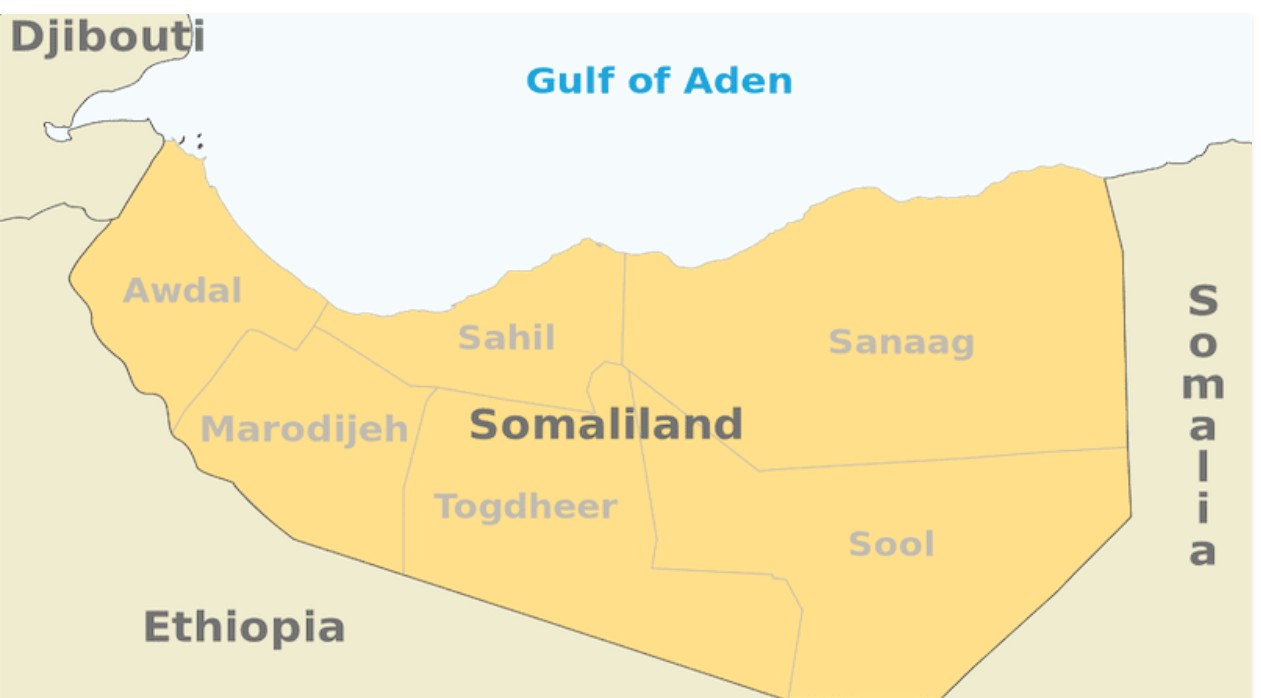 somali land
Summary:
Israel’s decision to recognize Somaliland has transformed a long-frozen territorial dispute into an active geopolitical fault line in the Horn of Africa. The move challenges established norms of territorial integrity, puts Israel on a potential collision course with Türkiye, and exposes competing visions of regional order centered on sovereignty, security, and strategic access to the Red Sea.
Few regions illustrate the fault lines of contemporary geopolitics as clearly as the Horn of Africa. Once seen as peripheral to Middle Eastern power struggles, the region has emerged as a critical junction where maritime security, ideological competition, and post-colonial sovereignty intersect.
Against this backdrop, Israel’s recent diplomatic recalibration in Africa has brought the status of Somaliland back into sharp focus. Long treated as a dormant issue, Somaliland has become an active geopolitical flashpoint, generating friction between Israel and several regional and international actors, including condemnation voiced within the United Nations Security Council.
Israel’s decision on December 26 to recognize the self-declared Republic of Somaliland marks more than a symbolic diplomatic gesture. It represents a strategic shift with implications that extend far beyond northern Somalia, challenging long-standing assumptions about borders, legitimacy, and influence—and placing Israel on a potential collision course with Türkiye.
Somaliland: A simple question with complex consequences
At first glance, the Somaliland issue appears straightforward. Since 1991, Somaliland has operated as a de facto state, complete with its own institutions, elections, security forces, and currency. Yet it remains internationally unrecognized, largely due to the global preference for preserving Somalia’s territorial integrity.
By breaking with this consensus, Israel has transformed a static dispute into an active geopolitical contest. The decision has reignited debates over whether international legitimacy should be anchored in inherited colonial borders or in demonstrated governance capacity.
Recognition as strategy, not symbolism
Diplomatic recognition is often framed as a legal or moral act, but in practice it functions as a strategic instrument. Israel’s engagement with Somaliland is less an endorsement of self-determination than a calculated move shaped by geography, security imperatives, and diplomatic isolation.
The Horn of Africa straddles one of the world’s most sensitive maritime corridors. The Bab al-Mandeb Strait links the Red Sea to the Indian Ocean and serves as a gateway between Europe and Asia. Instability in Yemen and attacks on commercial shipping have turned this passage into a zone of heightened risk. Any actor capable of influencing this corridor gains leverage disproportionate to its size.
From Israel’s perspective, Somaliland offers proximity without entanglement. Unlike Somalia’s federal government, Somaliland is relatively stable, internally cohesive, and less embedded in regional rivalries. Engagement there provides Israel with strategic depth near the Red Sea while avoiding the political complexities of dealing with a fragmented authority in Mogadishu.
This approach aligns with a long-standing pattern in Israeli foreign policy: cultivating peripheral relationships that prioritize access, intelligence, and security cooperation over formal alliances.
Türkiye’s deep stakes in Somalia
If Israel’s interest in Somaliland is strategic, Türkiye’s opposition is geopolitical and existential. Since re-engaging with Somalia in 2011, Ankara has invested heavily in the country, positioning itself as Mogadishu’s most committed external partner. President Recep Tayyip Erdoğan’s visit to Somalia during the 2011 famine symbolized Türkiye’s humanitarian and political commitment at a moment of acute crisis.
Turkish engagement spans infrastructure projects, humanitarian assistance, diplomatic backing, and military training. Somalia is not merely an aid recipient; it is central to Türkiye’s broader ambition to project influence across Africa and the Red Sea basin.
For Ankara, Somalia represents a rare convergence of moral narrative and material interest. Turkish leaders frame their role as solidarity with a Muslim nation emerging from decades of conflict, while simultaneously securing access to ports, trade routes, and a military foothold. This dual framing has allowed Türkiye to build influence without provoking the backlash often associated with overt great-power interventions.
Israel’s recognition of Somaliland threatens to disrupt this model. By undermining the authority of the Somali federal government—Türkiye’s primary partner—it weakens Ankara’s claim to be the principal external guarantor of Somali unity and sovereignty.
Competing visions of regional order
The emerging tension between Israel and Türkiye reflects a deeper clash between two visions of regional order.
Türkiye emphasizes centralized sovereignty, strong state partners, and influence exercised through development and security assistance. Israel, by contrast, favors functional partnerships with actors capable of delivering stability and access, regardless of formal recognition.
Neither model is inherently illegitimate, but they produce different outcomes. Türkiye’s approach seeks to preserve borders as a bulwark against fragmentation. Israel’s approach accepts fragmentation as a reality to be managed. Somaliland has thus become a test case for which vision better reflects political realities in the Horn of Africa.
This divergence is further shaped by broader strategic lenses. For Türkiye, Somalia anchors its presence along the Red Sea and helps counter rivals such as the UAE and Egypt. For Israel, Somaliland offers a way to diversify partnerships at a time when traditional diplomatic support has become more conditional.
Sovereignty, precedent, and Africa’s dilemma
One reason Somaliland has remained unrecognized is fear of precedent. Many African states, shaped by colonial borders that often ignored ethnic and historical realities, resist secessionist claims to avoid opening a Pandora’s box.
Israel’s decision challenges this informal but powerful norm, placing it at odds with Somalia, Türkiye, and much of Africa’s diplomatic establishment. Yet it also exposes a contradiction: Somaliland has outperformed many recognized states in governance and security, while remaining excluded from international institutions. The gap between effectiveness and legitimacy is becoming increasingly difficult to justify.
Israel’s move does not resolve this dilemma, but it forces it into the open—raising questions that resonate far beyond the Horn of Africa.
Diplomatic realignment and the Gaza factor
Timing is critical. Israel’s engagement with Somaliland cannot be separated from its broader international positioning amid scrutiny and strained relations in Europe and the Global South. Seeking partnerships in regions less constrained by domestic politics has become a strategic priority.
Somali President Hassan Sheikh Mohamud has linked Israel’s recognition of Somaliland to alleged plans involving the relocation of Palestinians from Gaza—claims denied by Somaliland authorities, who say there is no agreement to host refugees or Israeli military bases. Even so, the optics complicate Israel’s diplomatic calculus.
Türkiye, already a vocal critic of Israel, views the Somaliland issue as a symbolic confrontation, turning a technical recognition dispute into a broader expression of regional rivalry.
Risks of escalation
Despite its strategic logic, Israel’s move carries risks: diplomatic retaliation, strained relations with African institutions, and potential entanglement in local dynamics it cannot fully control.
Türkiye’s response also carries dangers. By framing recognition as an existential threat to Somali sovereignty, Ankara risks amplifying the dispute and inviting wider external involvement. What began as a bilateral disagreement could evolve into a broader geopolitical flashpoint.
The episode underscores a wider trend: the Horn of Africa is no longer a passive recipient of influence, but an arena of active competition where ports, trade routes, and recognition itself have become tools of power.
Recognition as a signal
Ultimately, Israel’s engagement with Somaliland—and Türkiye’s sharp opposition—reflect more than the legal status of one territory. They reveal a shifting international environment in which norms are increasingly negotiable and strategic advantage often outweighs convention.
Whether Somaliland gains wider recognition remains uncertain. What is already clear is that the debate has reshaped the political landscape of the Horn of Africa, with consequences likely to endure in a region defined by long memories and shifting alliances.
A version of this article was originally published by Geopolitical Monitor.