The aftershocks of Washington’s Venezuela move are far from subsiding. Foreign policy circles increasingly speculate that the United States may be preparing for a far more assertive posture elsewhere — with some Western analysts openly discussing scenarios involving Greenland. Images of Donald Trump posing alongside Lindsey Graham, wearing a black “Make Iran Great Again” cap, have circulated widely, reinforcing perceptions that Washington is entering a new phase of strategic confrontation.
Speculation about NATO’s long-term viability has returned to mainstream political analysis, while British media now regularly publish assessments of how China could stage a large-scale military landing in Taiwan. Barely weeks into 2026, global politics appears to be sliding into what may later be remembered as the most destabilized international environment since the aftermath of World War II — marked by intensifying rule-breaking, rising authoritarianism, and a growing erosion of institutional constraints.
Even if relations between Recep Tayyip Erdoğan and Trump appear tactically cordial, Türkiye finds itself increasingly isolated in a Middle East that is once again gravitating toward Israeli strategic dominance. As NATO’s deterrent credibility weakens, Türkiye’s room for maneuver in Syria is narrowing, while an Israel-US confrontation with Iran appears to be moving closer to reality — leaving Ankara exposed and diplomatically constrained.
Aleppo Burns, Paris Signs: Syria’s New Order Takes Shape Without Türkiye
At first glance, the armed clashes in Aleppo’s Sheikh Maqsoud and Ashrafieh neighborhoods and the Israel-Syria understanding signed in Paris under US mediation may appear unrelated. In reality, together they mark the opening phase of a new Syrian settlement — one that is being constructed largely outside Türkiye’s influence.
The Paris framework represents the most institutionalized contact between Israel and Syria since 1948. Intelligence coordination, military de-escalation, and economic cooperation form the backbone of the agreement, while also significantly enhancing the international legitimacy of Syria’s interim leadership. Washington’s role is central: the US is no longer merely managing crises in Syria, but actively shaping the post-war order.
For Israel, the logic is straightforward. Tel Aviv does not want Syria to collapse into uncontrollable chaos — nor does it want the re-emergence of a strong, centralized state beyond its control. Israeli forces positioned around the Golan Heights and within roughly 15 kilometers of Damascus serve both as leverage and as part of a negotiated security architecture. Israel is pursuing stability without war, securing borders while avoiding direct confrontation.
The Aleppo clashes, meanwhile, function as a counter-signal from Damascus — particularly toward Kurdish forces perceived as having indirect Israeli backing. Declaring Kurdish-majority neighborhoods military zones and triggering civilian displacement is not merely a local security operation, but a broader message to the Syrian Democratic Forces (SDF) and to Syrian Kurds at large. Following the March 10 integration agreement, which failed to resolve key disputes over autonomy and command structures, Damascus appears to be testing coercion as a tool of integration.
Yet this pressure may be backfiring. Rather than marginalizing the SDF, the escalation is restoring its relevance as an international balancing actor. From both Israeli and American perspectives, Syria’s Kurdish forces — secular and firmly opposed to Islamic State-style structures — remain useful instruments for containing Iranian influence and preventing the consolidation of unchecked power in Damascus. A Syria in which Kurds are entirely sidelined is not a scenario currently acceptable at the negotiating table.
Türkiye’s Strategic Miscalculation
The implications for Türkiye are stark. Ankara has long invested in a scenario where Syrian Kurds would be weakened and absorbed into a centralized Syrian state — ideally one over which Türkiye could exert leverage through transitional elites and Islamist-rooted factions. That assumption now appears increasingly detached from reality.
Damascus is aligning its strategic calculations with Washington and Tel Aviv, not Ankara. The SDF, far from being neutralized, is emerging as an indispensable actor in the evolving regional balance. Read together, Aleppo’s violence and the Paris agreement point to a post-war Syria defined not by full sovereignty, but by limited, externally supervised authority — aligned with Israeli security priorities and underwritten by US oversight.
In this configuration, Kurdish autonomy is neither fully recognized nor eradicated. Instead, Kurdish forces are being positioned as controllable, negotiable, and deployable balancing instruments. Türkiye, by contrast, is finding itself increasingly sidelined.
As a result, the likelihood of a large-scale Turkish military operation in Syria — once openly threatened by Foreign Minister Hakan Fidan — is steadily diminishing. These regional shifts are also likely to reshape Ankara’s domestic “Terror-Free Türkiye” narrative within the year, as external constraints narrow policy options.
Who Will Force Whom Into Early Elections?
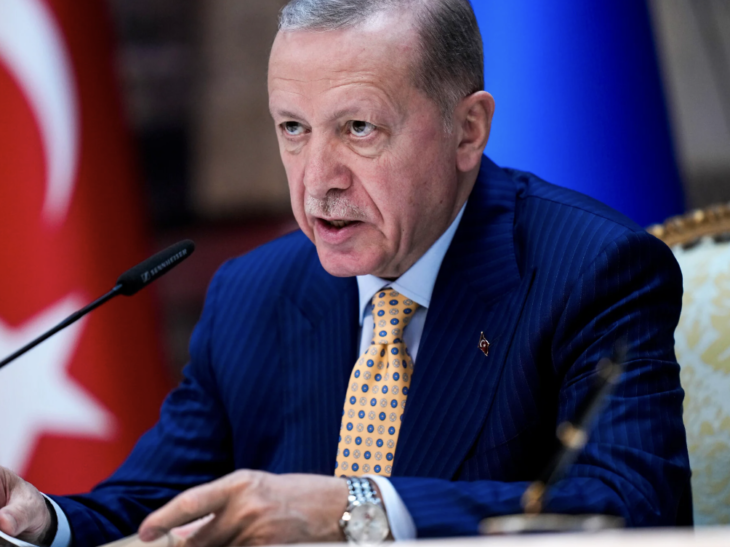
Inside Türkiye, the real political contest is no longer about raw parliamentary arithmetic, but direction. Recent MP defections to the AKP may seem numerically modest, but they underscore Erdoğan’s broader strategy: using parliament not primarily for legislation, but to secure his political future.
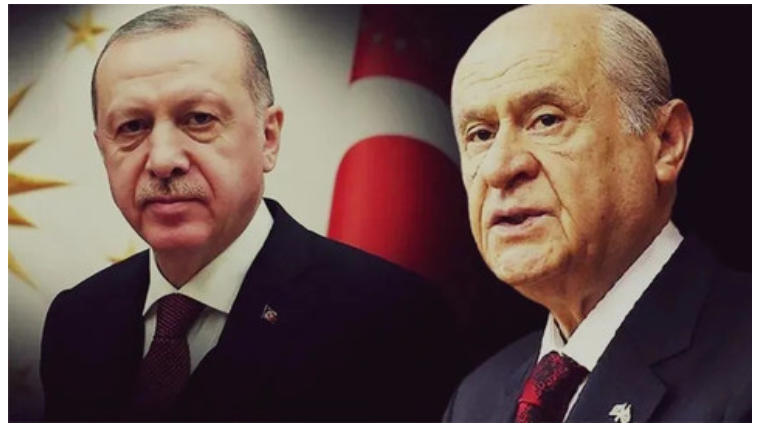
With the latest transfers, the AKP holds 275 seats, while the AKP-MHP bloc controls 322. These figures fall short of both the 360 seats needed for a constitutional referendum and the 400 required for a direct amendment. Yet Erdoğan’s objective is less about reaching those thresholds than about creating the perception that they are attainable — applying pressure on undecided MPs and smaller parties alike.
The hard ceiling remains unchanged. Crossing 360 seats without the DEM Party is mathematically implausible; achieving 400 is virtually impossible. Any reliance on DEM would also carry substantial legitimacy and alliance risks. Consequently, Ankara’s political corridors increasingly point to a referendum-plus-early-election strategy — a combination fraught with uncertainty and limited controllability.
Two dynamics stand out:
First, the fragmentation of smaller opposition parties matters enormously. If the İYİ Party and the Victory Party contest elections separately and fail to cross the threshold, their lost seats would disproportionately benefit the governing bloc. Under such a scenario, the AKP-MHP alliance could approach — or even exceed — 340–350 seats in a new parliament. This outcome is only achievable through early elections, making timing critical.
Second, within the current parliament, Erdoğan’s realistic ceiling through defections likely tops out at 335–340 seats — insufficient for constitutional change. This leaves the president with two parallel tracks: push relentlessly toward the 360 threshold to keep the referendum option alive, or engineer early elections where opposition fragmentation resets the political math.
For the opposition, this is the point of maximum vulnerability. Will it merely react to Erdoğan’s maneuvers, or articulate its own arithmetic and narrative? While the CHP’s emphasis on principles over personalities offers strategic coherence, it risks being misread on the ground. Erdoğan, by contrast, thrives on ambiguity and pressure.
In practical terms, Erdoğan may struggle to reach 400 seats, and 360 remains uncertain. But the political pressure he can generate is substantial. His objective is not necessarily to unlock parliament, but to cast the shadow of early elections and a referendum over the opposition.
As 2026 unfolds, Türkiye’s political center of gravity is shifting away from seat counts toward a more fundamental question: who will force whom into early elections.
IMPORTANT DISCLOSURE: PA Turkey intends to inform Turkey watchers with diverse views and opinions. Articles on our website may not necessarily represent the view of our editorial board or constitute endorsement.
Follow our English-language YouTube channel (REAL TURKEY):
https://www.youtube.com/channel/UCKpFJB4GFiNkhmpVZQ_d9Rg
Twitter: @AtillaEng
Facebook: Real Turkey Channel: https://www.facebook.com/realturkeychannel/




 guldem atabay3