



Turkey’s Income Gap Widens: Wealth Concentrates at the Top as Inequality Persists
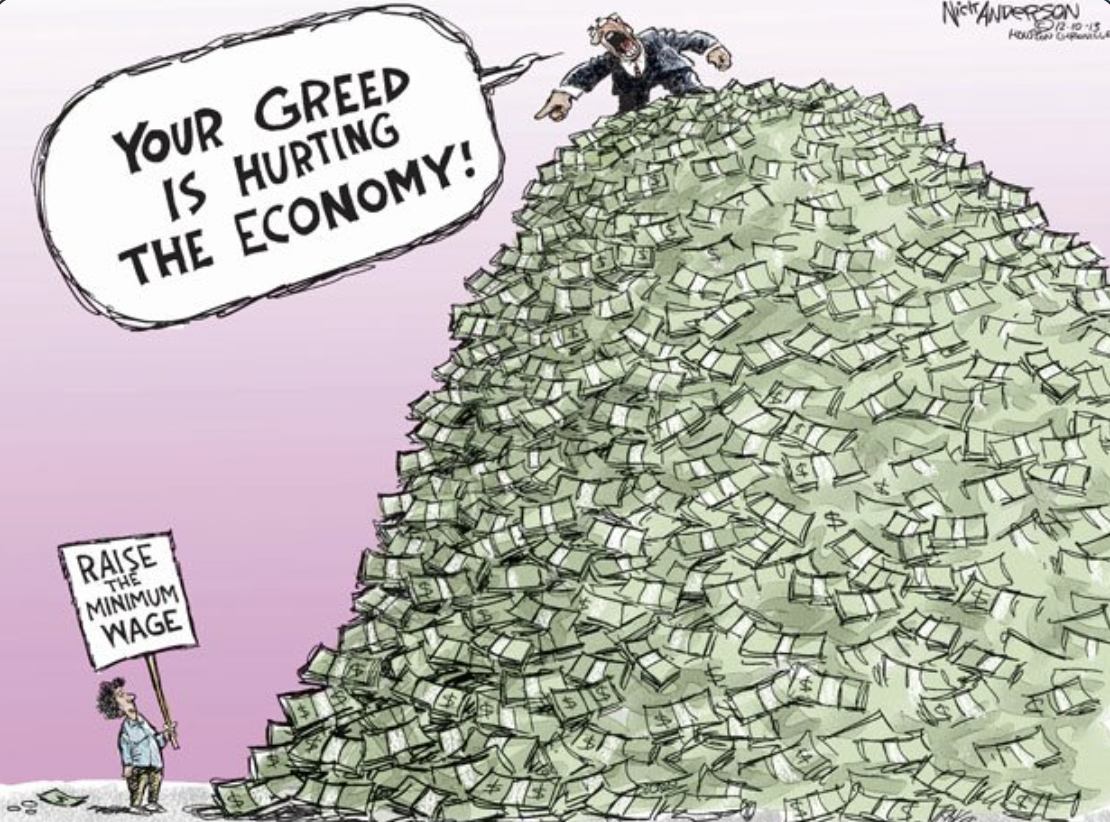 Labor Inequality by by Nick Anderson
Income inequality in Turkey continued to shape economic reality in 2025, with newly released data confirming that wealth remains heavily concentrated among the highest earners. According to the latest Income and Living Conditions Survey published by the Turkish Statistical Institute (TÜİK), the wealthiest 20 percent of the population captured nearly half of the country’s total income, while the poorest segments saw only marginal gains.
The figures reveal a stark imbalance. The top 20 percent received 48 percent of total income, whereas the bottom 20 percent accounted for just 6.4 percent. Despite nominal income growth across the economy, the distribution of that growth remained uneven, reinforcing long-standing concerns about fairness, opportunity, and social cohesion.
Inequality Remains Structurally High
One of the most widely used indicators of income inequality, the Gini coefficient, stood at 0.410 in 2025. While this represents a slight improvement of 0.003 points compared to the previous year, it still signals a high level of inequality by international standards. TÜİK also calculated the Gini coefficient using gross income data for the first time, incorporating tax and social security records. Under this broader measure, inequality rose to 0.422.
When social transfers such as pensions and benefits were excluded, inequality became even more pronounced, with the Gini coefficient climbing to 0.473. This gap underscores the critical role that redistribution mechanisms play in softening disparities, even if they are not sufficient to reverse the overall trend.
Average Incomes Rise, But Gains Are Uneven
On paper, income levels increased sharply. Average annual household disposable income surged by 76.7 percent year-on-year, reaching 662,414 Turkish lira. Per capita equivalent income climbed to 332,882 lira, reflecting both inflationary effects and wage adjustments.
However, household structure played a decisive role. Single-person households recorded an average income of 418,000 lira, while extended households consisting of a nuclear family plus other members fell to just 264,000 lira per person. This disparity highlights how demographic composition influences living standards, even within the same income brackets.
Wages Dominate Total Income
Wages and salaries remained the largest source of income nationwide, accounting for 49.7 percent of total revenue in 2025. This marked a 0.9 percentage point increase compared to the previous year, signaling a growing reliance on paid employment. Entrepreneurial income came in at 18.3 percent, while social transfers accounted for 18.2 percent of total revenue.
Within social transfers, pensions for retirees and survivor benefits for widows and orphans dominated, representing 89.3 percent of all transfer income. This composition reflects Turkey’s aging population and the central role of pensions in household finances.
Education and Sector Shape Earnings
Educational attainment remained one of the strongest determinants of income. Individuals with higher education degrees earned an average of 566,839 lira from their primary job. High school graduates earned 376,000 lira on average, while those with no formal schooling earned just 183,900 lira.
Sectoral differences were equally striking. The services sector delivered the highest average income at 426,000 lira, while agriculture lagged at 237,000 lira. Construction stood out not for income levels but for growth, recording the fastest annual increase at 79 percent, reflecting both labor shortages and rising project costs.
Employers Pull Further Ahead
Income gaps widened further when examined by employment status. Employers reported an average annual income of 1.204 million lira, placing them far above all other groups. Salaried and wage workers earned an average of 379,000 lira, while daily wage laborers remained at the bottom with just 186,000 lira per year.
Notably, the most substantial annual income growth—80.7 percent—was observed among salaried employees, suggesting that formal employment benefited more from wage adjustments than informal or precarious work.
Regional Disparities Remain Striking
Geography continued to shape income outcomes. The highest per capita income was recorded in Ankara at 449,618 lira, followed by Istanbul and Izmir. At the other end of the spectrum, the TRB2 region—comprising Van, Muş, Bitlis, and Hakkari—posted the lowest average income at 172,552 lira.
Inequality within regions also varied. The TR71 region (Kırıkkale, Aksaray, Niğde, Nevşehir, and Kırşehir) recorded the highest internal income inequality, as measured by the Gini index, highlighting that disparities extend beyond east–west divides and also exist within central Anatolia.
Social Mobility Remains Limited
Beyond static income levels, the survey sheds light on social mobility. Among individuals in the lowest income group, 68.1 percent remained in the same bracket the following year. At the top, 58.9 percent of those in the highest 10 percent held their position.
Labor market transitions offered mixed signals. Of those unemployed in 2024, 38.7 percent found work in 2025, while 90.3 percent of those already employed stayed in work. However, only 10.1 percent of individuals who were previously outside the labor force entered it, indicating persistent barriers to participation.