



Lost for 40 Years: Archaeologists Finally Pinpoint Zeus Temple in Ancient Limyra
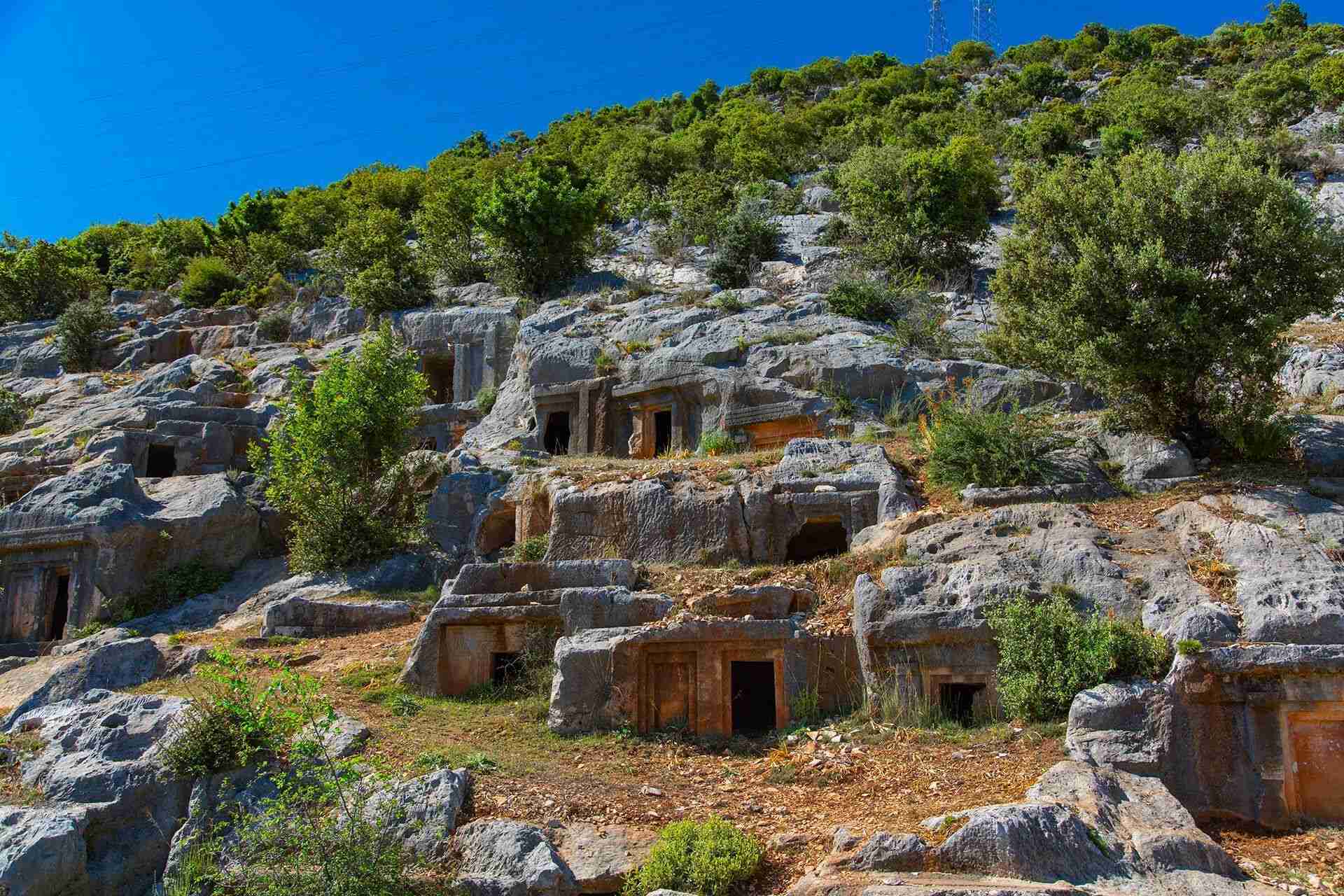 lyimra
For nearly four decades, the precise location of a temple dedicated to Zeus in the ancient city of Limyra puzzled archaeologists. Although historical inscriptions had long hinted at its existence, the sanctuary’s physical remains remained elusive. That uncertainty has now come to an end. Recent archaeological excavations in southern Turkey have uncovered definitive evidence of the long-lost Zeus Temple, marking a major milestone in the study of Lycian and Anatolian antiquity.
Located in Antalya’s Finike district, the discovery emerged during the 2025 excavation season and has already begun reshaping scholarly understanding of Limyra’s religious and urban landscape. The find not only confirms ancient written sources but also provides new insights into how sacred spaces functioned across classical, Hellenistic, and Roman periods.
A Temple Known in Texts but Missing on the Ground
Since 1982, epigraphic sources have referenced a temple dedicated to Zeus in Limyra, indicating that the chief Olympian god played a central role in the city’s religious life. Yet despite years of surveys and excavations, archaeologists were unable to locate the structure itself. This absence created a significant gap between historical texts and material evidence, leaving researchers unsure how to place Zeus worship within the city’s physical layout.
That gap has now been bridged. During systematic excavations conducted by the Austrian Archaeological Institute, archaeologists uncovered architectural elements that closely correspond to descriptions in ancient inscriptions. The remains include the temple’s main entrance and anta walls forming part of its portico, features consistent with classical-period sacred architecture.
Kudret Sezgin, the lead archaeologist of the project, underscored the importance of the discovery by stating, “We have found the temple mentioned in epigraphic sources since 1982, but its location remained unknown for decades. Based on archaeological evidence, we determined that this is likely the Zeus Temple, built during the classical period. Written sources confirm that Zeus remained the city’s chief deity through the Hellenistic and Roman periods. We knew a temple existed, but we did not know where it was.”
Why Zeus Mattered in Limyra
The confirmation of the Zeus Temple is more than a single architectural find; it reinforces Limyra’s religious identity. In ancient Greek belief, Zeus was not merely a god among others but the ultimate authority, associated with law, order, and protection. His prominence in Limyra suggests that civic identity and divine worship were closely intertwined.
Throughout the Hellenistic and Roman eras, Zeus continued to hold his status as the city’s principal deity. This continuity reflects a stable religious tradition that persisted despite political and cultural changes. The temple would have served as both a spiritual center and a symbolic anchor for the city, hosting rituals, ceremonies, and gatherings that reinforced social cohesion.
Limyra’s Place in Lycian History
Limyra occupies a key position in the history of ancient Lycia. Nestled at the foothills of Toçak Mountain, the city once served as the capital of the Lycian League during the reign of King Pericles. Its strategic location and political importance made it a hub of power, culture, and religion.
Archaeological remains throughout the site attest to this significance. Rock-cut tombs line the cliffs, monumental city walls trace its defensive perimeter, and notable structures such as the Pericles Heroon and a Roman bath complex highlight Limyra’s long urban life. The discovery of the Zeus Temple adds a crucial missing element, confirming that the city’s political prominence was matched by its religious stature.
How Excavations Led to the Breakthrough
The breakthrough came through a focused excavation strategy targeting areas with prior indications of monumental construction. Researchers concentrated on the western sector of the city, guided by earlier studies and topographical clues. By combining archaeological findings with careful analysis of ancient texts, the team identified the temple’s sacred precinct.
Among the most significant revelations was the reinterpretation of a monumental gate known as the propylon. Previously believed to be part of a Roman-period avenue, the structure is now understood to have served as the ceremonial entrance to the Zeus Temple during the classical period.
Sezgin explained the shift in interpretation, saying, “For years, a monumental gate called the propylon was identified beneath the Roman Avenue. We now understand that this gate served as the entrance to the temple’s sacred precinct during the classical period. The wall previously thought to belong to the Hellenistic city fortification is now recognized as part of the temple’s protective enclosure.”
Rethinking Limyra’s Urban Design
This reassessment has broader implications for understanding Limyra’s urban planning. The integration of sacred and civic spaces appears to have been more deliberate than previously thought. What were once assumed to be purely defensive or infrastructural elements now emerge as components of a carefully organized religious complex.
The discovery highlights how later Roman construction repurposed and overlaid earlier sacred architecture, a common phenomenon in ancient cities. By identifying these layers more accurately, archaeologists can reconstruct how Limyra evolved over centuries while maintaining continuity in religious practice.
A Discovery That Reshapes the Past
The location of the Zeus Temple in Limyra stands as a reminder of how archaeology continues to refine and sometimes correct historical narratives. After forty years of uncertainty, the physical confirmation of the temple anchors textual evidence in stone and soil, strengthening our understanding of Lycian religious life.
As excavations continue, researchers expect further discoveries that will shed light on ritual practices, architectural phases, and the broader role of Zeus worship in southern Anatolia. For now, the rediscovery of the temple represents a decisive moment, reconnecting Limyra’s present landscape with its ancient spiritual heart.