Power Games in Turkish Politics: Succession Fears and Rising Tensions
 taht oyunları
By Güldem Atabay
Summary:
Türkiye is entering a period of sharper political confrontation, with markets increasingly shaped by power struggles inside the ruling bloc. While the “terror-free Türkiye–Syria” process is intertwined with scenarios for President Recep Tayyip Erdoğan’s continued rule, signals of rivalry over the post-Erdoğan era are becoming more visible. The result is a volatile mix of constitutional engineering, economic fragility and internal succession anxiety.
Author Guldem Atabay

A difficult year ahead for politics and markets
Türkiye stands on the threshold of a challenging year in which politics is hardening and economic dynamics are increasingly overshadowed by political calculations. Developments grouped under the banner of a “terror-free Türkiye–Syria” are emerging as key variables shaping scenarios for President Erdoğan’s political future.
Against this backdrop, two broad political paths appear possible:
-
A constitutional amendment within the current parliament, enabled by support from smaller opposition parties outside the CHP and DEM Party, clearing the way for Erdoğan to run for a fourth term and leading to a “late early election” in the second half of 2027.
-
A more likely scenario in which an early election is combined with a constitutional referendum toward the end of 2026, allowing Erdoğan to seek re-election through a direct popular vote.
As these options remain unresolved, daily political developments are likely to drive speculation and market sentiment.
Bilal Erdoğan’s signal: consolidating the system
From this perspective, remarks delivered over the weekend by Bilal Erdoğan, the president’s son, carried particular weight. His message went beyond retrospective self-criticism and pointed to a forward-looking political call.
The emphasis was on further strengthening the presidential system’s already expansive powers, continuing the Erdoğan era “more strongly,” and even carrying this system into the post-Erdoğan period. References to “another 20 years” suggested not merely an extension of the current leadership, but the institutionalization of the existing model.
Yet the political roadmap for achieving this remains unclear. While Ankara appears to be seeking support from İmralı within the “terror-free Türkiye” framework, uncertainty on the Syrian front weakens the likelihood of pushing a constitutional amendment through parliament.
Economic constraints complicate political engineering
At the same time, the economic and social backdrop is ill-suited to an early election–referendum combination.
-
Progress in fighting inflation remains slow.
-
High real interest rates are placing heavy pressure on the real economy.
-
The cost of disinflation continues to fall disproportionately on fixed-income groups.
-
Rule-of-law debates and trustee appointments are unsettling domestic and foreign investors.
This environment makes political engineering significantly more difficult.
Media crackdown: a new phase or fear of losing control?
Within this tense atmosphere, recent developments in the media — including the detention of Mehmet Akif Ersoy — may appear superficial at first glance, but carry deeper political signals.
An analysis by journalist Ahmet Şık argues that the move reflects shifting balances within the ruling establishment. According to Şık, Ersoy’s long-standing connections — spanning intelligence circles, earlier high-profile investigations, and a career shaped along the SETA–TRT–Diyanet–Habertürk axis — had provided him with political protection for years.
That protection, the argument goes, has now been withdrawn, suggesting that Ersoy has become expendable amid a reconfiguration of power within the state.
Weak legal grounds, strong political message
The reliance on anonymous witness testimony without concrete evidence, the absence of a clearly defined organizational structure, financial trail or sustained communication network, point to a process driven more by politics than by law.
Rather than a conventional criminal investigation, the episode appears to mark another chapter in internal power struggles.
Post-Erdoğan anxiety comes to the surface
Taken together, the message becomes clearer: a warning to the media and the public, coupled with an attempt to weaken power centers associated with figures such as Foreign Minister Hakan Fidan, while reinforcing support around the Erdoğan family.
The key question is why such a political “cleanup” is taking place now, if the goal is simply to continue governing with a strengthened Erdoğan.
This points less to the declaration of a successor than to a growing fear of losing control in the post-Erdoğan era. Even if Erdoğan secures another term, it is widely seen as likely to be his last. The question of who holds power afterward — and how balances between the state, party, capital and media are preserved — is no longer confined to closed-door discussions.
Balancing acts within the AKP
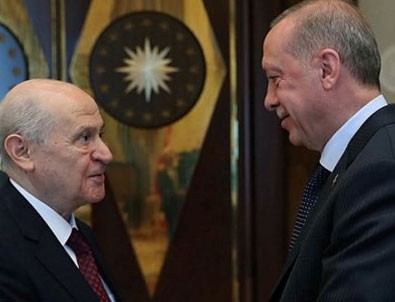
For Devlet Bahçeli and the MHP, these debates remain secondary for now. Continuing alongside Erdoğan appears sufficient from an electoral standpoint. Inside the AKP, however, the picture is far more complex.
The underlying objectives seem to be:
-
Preventing fragmentation within the party
-
Preserving the family’s influence within the state
-
Avoiding uncontrolled clashes between rival factions
In this framework, Bilal Erdoğan is positioned less as a mass political leader and more as a symbolic figure meant to maintain balance on behalf of the family.
This strategy may temporarily suppress tensions, but it is unlikely to resolve them. On the contrary, the coming months are likely to bring more frequent and sharper political confrontations to Türkiye’s already volatile political stage.
Author: Güldem Atabay, economist, Member of CHP’S Administrative Council