



Istanbul Dominates Türkiye’s 2024 GDP as Regional Gaps Widen
 istanbul
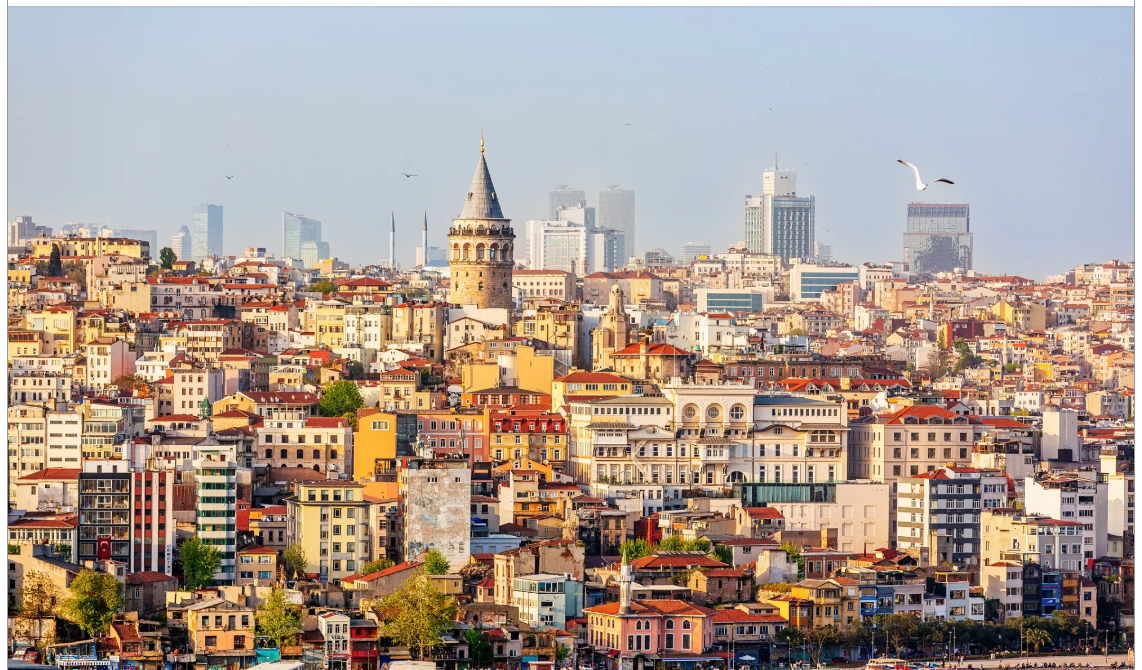
Türkiye’s latest province-level GDP data for 2024 reveals striking regional imbalances, with Istanbul once again emerging as the country’s undeniable economic powerhouse. According to the provincial gross domestic product calculations at current prices, Istanbul generated ₺13.01 trillion, capturing 29.2% of Türkiye’s entire GDP. The scale of this dominance becomes even more visible when compared to the next largest contributors: Ankara followed with ₺4.67 trillion (10.5%), while Izmir ranked third at ₺2.56 trillion (5.7%).
At the opposite end of the spectrum, the provinces with the smallest economic output were Gümüşhane (₺41.8 billion), Ardahan (₺35.5 billion), and Bayburt (₺28.1 billion). Altogether, the top five provinces accounted for 53% of national GDP, highlighting the concentration of economic activity in major metropolitan hubs.
Istanbul Leads Per Capita GDP, Followed by Kocaeli and Ankara
Istanbul also topped the list in per capita GDP, reaching ₺802,669 per person in 2024. Closely behind were Kocaeli (₺788,873) and Ankara (₺788,859). At the lower end, Van, Ağrı, and Şanlıurfa recorded per capita values of ₺203,049, ₺194,660, and ₺188,144 respectively — underscoring Türkiye’s persistent socioeconomic disparities.
Only 11 provinces exceeded the national average in per capita GDP, signaling a pronounced imbalance between industrialized western provinces and the country’s eastern and southeastern regions.
Istanbul Dominates Nearly All Sectors Except Agriculture and “Other Services”
A breakdown of GDP by economic activity shows that Istanbul held the highest share in almost every sector except agriculture, forestry, fishing, and the category of “other service activities.”
Key sectoral shares for Istanbul in 2024 include:
-
Information & communication: 64.0% of national total
-
Finance & insurance: 59.3%
-
Professional, administrative & support services: 39.0%
-
Trade, transportation, accommodation & food services: 39.8%
-
Construction: 27.8%
These figures reaffirm Istanbul’s central role in Türkiye’s most dynamic and high-value sectors. Meanwhile, Konya led the nation in agriculture, forestry and fishing with 5.6%, and Ankara ranked first in “other service activities” at 44.9%.
Within Istanbul’s own economic structure, the largest contributor to provincial GDP was trade, transportation, accommodation and food services, representing 33.9% of the city’s total output. Industry followed with 15.1%, while professional and administrative services accounted for 7.2%.
GDP Growth Outpaces the National Average in 46 Provinces
Türkiye’s real GDP — measured by the chained volume index — grew 3.3% in 2024. Notably, 46 provinces recorded growth rates above this national average.
The provinces with the fastest real growth were:
-
Adıyaman: 31.4%
-
Bayburt: 17.1%
-
Malatya: 17.0%
These exceptional growth rates were driven partly by reconstruction, investment inflows, and structural normalization following earlier disruptions.
Conversely, the provinces with the steepest declines were:
-
Bilecik: –2.4%
-
Kırşehir: –5.7%
-
Erzincan: –7.9%
These figures reflect localized economic challenges, sector-specific contractions, and uneven recovery dynamics across Türkiye.
Istanbul Makes the Largest Contribution to Türkiye’s 2024 GDP Growth
While overall GDP grew by 3.3%, Istanbul provided the largest single contribution, adding 0.62 percentage points to national growth. Ankara contributed 0.44 points, followed by Hatay at 0.16 points.
On the negative side, Erzincan (–0.017 points), Kırşehir (–0.012), and Adana (–0.011) were the provinces that pulled growth down the most.
A Clear Picture: A Country Growing, but Unevenly
The 2024 provincial GDP data illustrates a Türkiye where:
-
Istanbul remains the nation’s economic engine, dominating high-value sectors.
-
Strong regional growth exists but is inconsistent.
-
Income disparities persist, with only 11 provinces exceeding the national per capita average.
-
Post-reconstruction provinces experienced exceptional rebounds, while several regions saw declines.
As Türkiye approaches 2025–2026, the figures highlight both the opportunities and the structural gaps shaping the country’s economic landscape.