



Turkish Consumer Stocks Enter 2026 With Hope
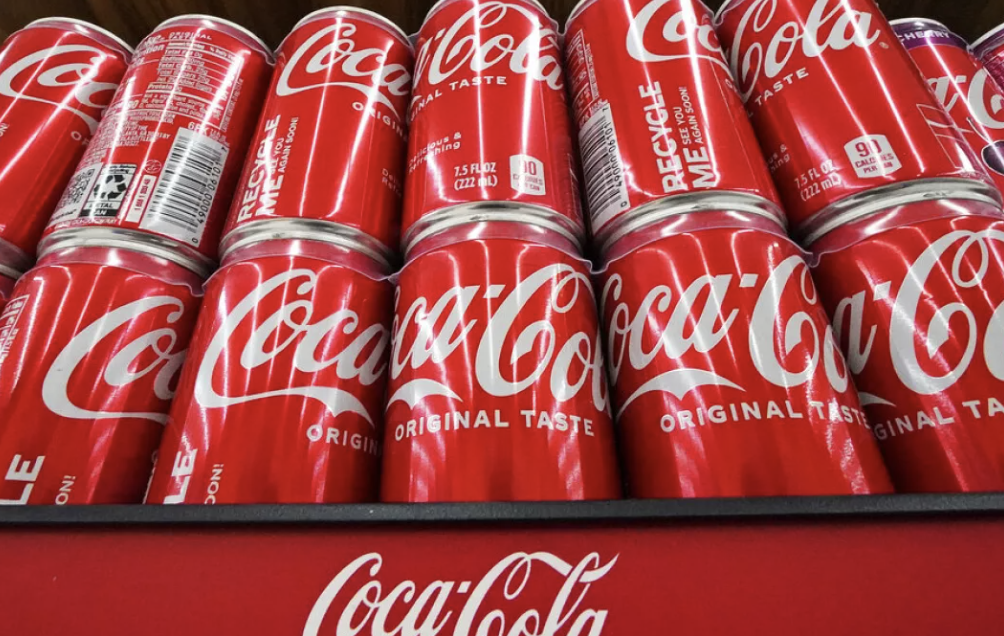 Coca Cola
After a turbulent 2025 that squeezed profits across Türkiye’s consumer landscape, the outlook for 2026 appears cautiously brighter. Yet despite improving macro indicators, analysts warn that the sector’s recovery will depend on benign cost inflation, disinflation, and timely monetary easing. According to market assessments, Turkish consumer companies endured one of their most challenging years recently, as slowing revenue growth and intense price promotions eroded profitability. Real earnings fell nearly 20% amid soft household sentiment and fierce competition—a pattern that defined the sector’s struggles.
As 2026 approaches, projections turn more constructive. JPMorgan’s Macro team anticipates GDP expanding by 4.4% next year, with growth momentum building particularly in the second half. Disinflation is expected to persist—albeit at a slower pace—gradually easing cost pressures on retail and consumer-facing companies. Yet the Turkish consumer remains delicate, suggesting that any earnings rebound will derive more from favorable base effects and cost normalization than a substantial rise in demand.
Food Retailers and Staples Stand Out in Early 2026
Among the listed consumer names, Food Retail and Staples are positioned as the strongest beneficiaries of the improving macro backdrop. Valuations already look attractive: Turkish consumer stocks are trading at roughly 20% below their 10-year averages and at a sizeable ~35% discount to global peers on 12-month forward P/E and EV/EBITDA multiples. Analysts note that monetary easing—once it arrives—will be essential to closing this valuation gap. In the meantime, key catalysts include an anticipated 25% minimum wage increase, aligning with expected 12-month inflation, and continued disinflation, which together could restore positive free cash flows and support a re-rating across the sector.
Top picks in the sector include BIM, Migros, and Coca-Cola Icecek (CCOLA).
• BIM is expected to outperform as inflation converges with the company’s internal cost metrics, improving like-for-like sales and enabling the retailer to regain pricing power that was temporarily eroded by heavy promotions.
• Migros continues to distinguish itself through disciplined cost management and technological modernization. Efficiency initiatives—including self-checkout systems, electronic shelf labels, and renewable energy investments—are projected to expand margins by nearly 1% over the 2025–26 period.
• CCOLA enters 2026 with renewed momentum. Analysts expect faster growth as input cost inflation stabilizes and pricing pressure eases, with the trend becoming more visible from Q4 2025 onward. With projected volume growth of 7.5% in 2025 and 5% in 2026, CCOLA is regaining its status among the world’s fastest-growing bottlers, while still trading at more than a 50% discount to its global counterparts.
Exporters Face Another Difficult Year
Not all segments of Türkiye’s consumer and industrial universe share the same optimism. Export-oriented names such as Arçelik and Ford Otosan continue to encounter headwinds. Arçelik’s expected recovery was slowed by delayed rate cuts in 2025, while increasing Asian competition and market volatility in Europe weigh on margins. Still, synergy gains and cost rationalization should become clearer in 2026, potentially supporting improvements in free cash flow—especially if European market share stabilizes.
Ford Otosan’s export momentum is set to continue, yet profitability remains constrained. European Union regulations governing the EV/ICE sales mix create structural pressure, while domestic auto demand is likely to soften after a particularly strong 2025. As a result, Ford’s investment case remains primarily a valuation story heading into 2026.
Value Opportunities: Turkish Airlines and Koç Holding
Among value plays, Turkish Airlines stands out with compelling metrics: trading at 4.6× 2026E P/E and 4.3× EV/EBITDA, the carrier is poised to benefit from improved long-haul travel as the impact of U.S. tariffs diminishes. Robust free cash flow—estimated at around 8% of revenues in 2026 and 2027—should help narrow the valuation gap to international peers.
Meanwhile, Koç Holding trades at a 39% discount to NAV, a multi-year high. Although upside remains limited in the near term due to exporter challenges and lukewarm global investor appetite, rate-cut expectations and continued disinflation could become powerful catalysts for a rerating.
Sectors Lean Into Cost Optimization and Digital Transformation
Across the market, companies are prioritizing tools that reinforce efficiency and competitiveness.
• Migros, Ford, CCOLA, Turkish Airlines, and Hepsiburada are accelerating digital initiatives involving AI-enhanced analytics, digital twins, and advanced automation.
• Pricing competition remains intense—especially in Food Retail and Automotive—but easing inflation in 2026 may allow leaders such as BIM to regain pricing leverage gradually.
• Staples companies continue to cut distributor margins to support top-line growth, benefiting bottlers such as Coca-Cola Icecek.
• Rising competition from Chinese manufacturers still challenges the home appliance and automotive sectors, pressuring Arçelik and reshaping Türkiye’s passenger car market.
Ultimately, the road to recovery hinges on wage adjustments, the credibility of the disinflation trend, and a more apparent upswing in growth during the second half of 2026.