



Imam Arrested as Authorities Uncover a 45 Million TL Money Trail
 illegal-lending-investigation
Karabük authorities have intensified their efforts to combat illegal lending practices, concluding a major operation that targeted a suspected usury network active in the region. During the sweep conducted on 25 November 2025, police detained four individuals thought to be involved in illicit financial activities. The operation revealed extensive money movements and uncovered evidence suggesting that the group systematically lent money at unlawful interest rates, tracked repayments, and maintained detailed financial records.
According to information provided by the provincial police’s Anti-Smuggling and Organized Crime Division (KOM), investigators identified significant monetary circulation in the bank accounts of the suspects. The financial analysis showed that the group collectively managed 45,496,815 TL worth of transactions, a scale that indicated prolonged and coordinated activity. One of the individuals taken into custody, identified as Z.D., was determined to be serving as an imam, a detail that drew public attention due to the nature of the allegations and the societal role associated with his profession.
Evidence Points to Structured Financial Operations
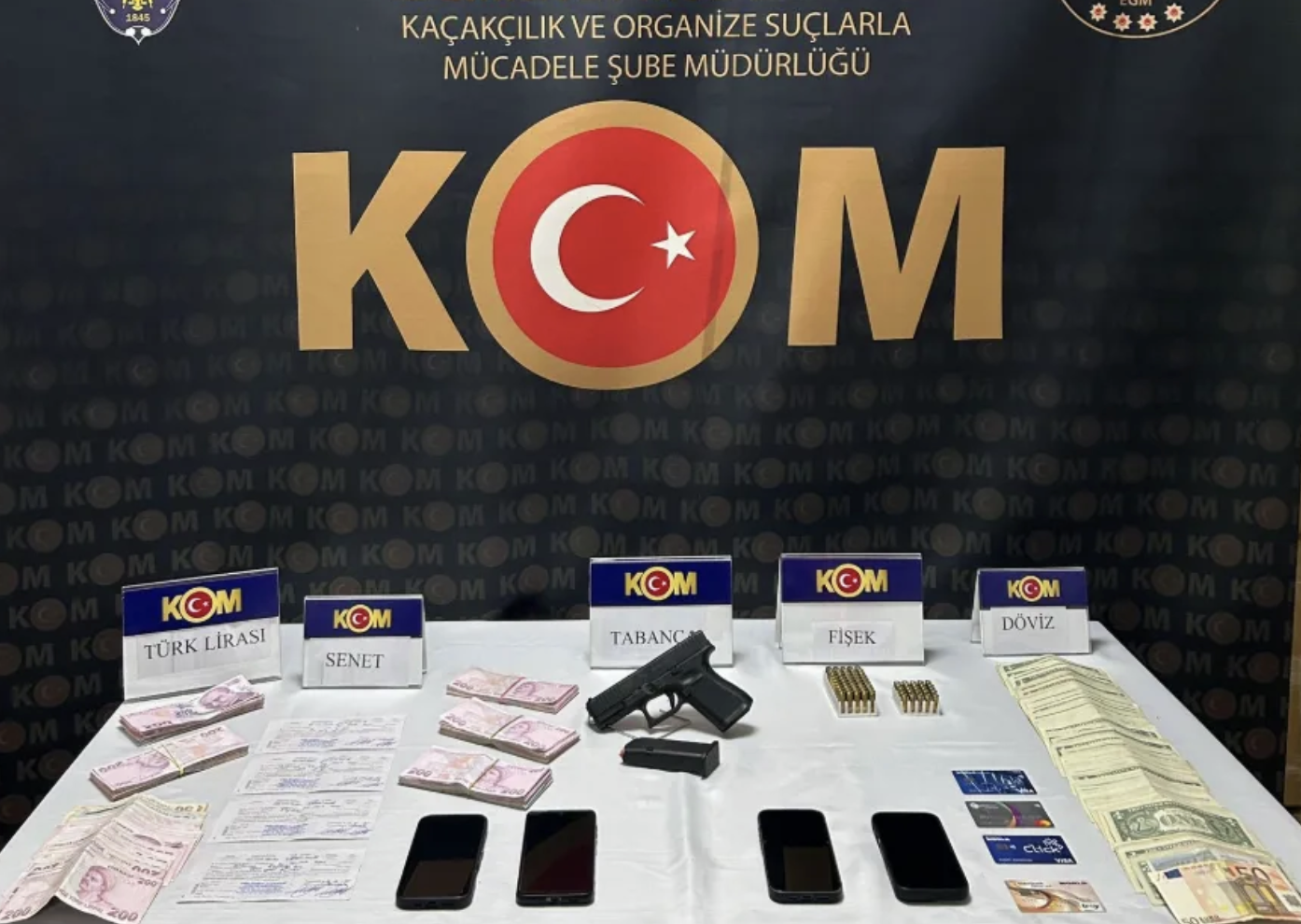
Searches carried out at the residences of the suspects, as well as on their persons, yielded a range of items classified as evidence supporting the usury accusations. Police seized a Glock-brand firearm, 96 rounds of ammunition, and a collection of five promissory notes valued at 2,250,000 TL. Authorities also confiscated 44,000 TL in cash, which they believe to be proceeds of illegal lending, in addition to credit cards belonging to alleged victims.
Perhaps most significant for the investigation were notebooks and agendas containing handwritten repayment schedules, customer information, and notes tracking outstanding balances. These documents suggested that the suspects maintained detailed records of their lending activities, consistent with operations conducted for profit rather than legitimate financial assistance. Such organized bookkeeping is regarded as a hallmark of structured usury schemes, allowing investigators to map relationships between lenders and borrowers and determine the extent of the network.
Judicial Proceedings and Arrest Decisions
After completing the police procedures, all four detainees—Z.D., O.E., A.D., and A.P.—were transferred to the courthouse for further processing. Following a review by judicial authorities, two suspects, O.E. and A.P., were released under judicial control, meaning they are obligated to comply with certain restrictions while the investigation continues.
In contrast, imprisonment orders were issued for Z.D., the imam, and A.D., based on evidence presented by prosecutors. Both were transferred to the Karabük Closed Penal Institution to await trial. Authorities stated that the decisions were made in line with the gravity of the charges and the potential risk of tampering with evidence.
It was also learned that one of the individuals released under judicial control is employed as a muezzin, adding another layer of public interest to the case given the involvement of individuals in religious roles.
Broader Context: Turkey’s Fight Against Usury
The operation reflects ongoing nationwide efforts to clamp down on usury, which remains a persistent issue in Turkey’s informal financial landscape. Individuals facing financial hardship often become vulnerable to illegal lenders who leverage high interest rates and intimidation tactics. Authorities have intensified financial surveillance, increased collaboration between police and prosecutors, and enhanced digital monitoring capabilities in recent years.
In many cases, KOM units rely on digital banking records, suspicious transaction reports, and cross-referenced financial data to identify unusual patterns. The Karabük operation aligns with this broader strategy, demonstrating that law enforcement is increasingly focused on tracing the financial footprint of suspected networks rather than relying solely on complaints.