



Turkey’s Unmanned Fighter Locks Onto F-16 and Scores Deadly Hit
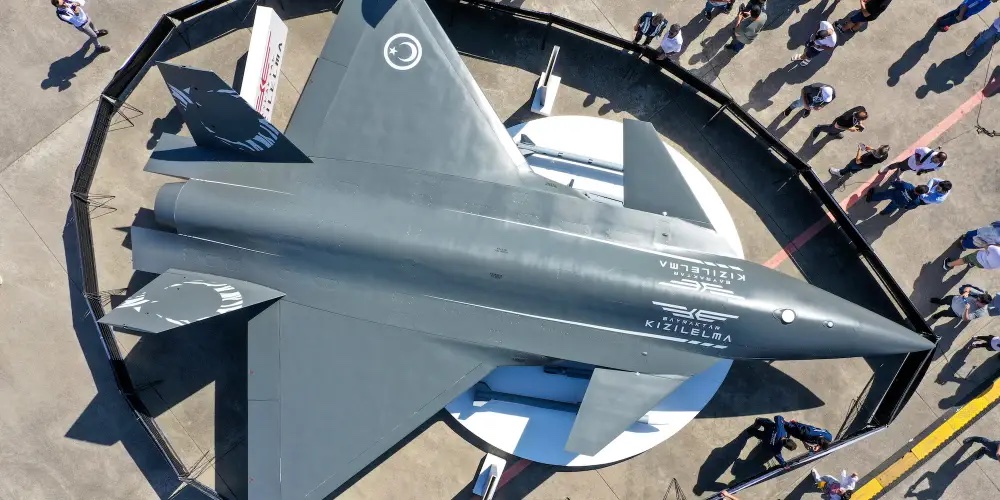 kızılelma-drone
Turkey’s first unmanned fighter jet, Bayraktar KIZILELMA, has completed a dramatic and strategically significant test that marks a turning point in modern aerial warfare. Using ASELSAN’s fully indigenous “MURAD AESA” radar, the aircraft locked onto an F-16 fighter jet and executed a simulated engagement with the national beyond-visual-range air-to-air missile GÖKDOĞAN, striking the simulated target with pinpoint precision.
For the first time, a Turkish unmanned combat platform demonstrated the capability to detect, track, and engage a manned fighter jet—an event captured moment by moment during the test.
A Global First Powered by ASELSAN Technology
Developed by BAYKAR and widely covered by international media, KIZILELMA has reached yet another technological milestone. In this test scenario, the unmanned fighter flew in formation with an F-16 and successfully neutralized it in a simulated combat environment.
What made the scenario truly groundbreaking was the use of ASELSAN’s MURAD AESA radar, a cutting-edge active electronically scanned array system produced by only a handful of countries worldwide. The radar enabled KIZILELMA to detect and engage a high-speed airborne target autonomously—an accomplishment typically reserved for advanced fifth-generation fighters.
Direct Hit: MURAD AESA Radar Delivers Precision Targeting
The highlight of the test was the precision with which KIZILELMA carried out the engagement.
MURAD AESA, often described as the “eyes” of KIZILELMA, detected the F-16, processed the target information, and enabled the unmanned aircraft to lock onto the manned fighter.
Once lock-on was confirmed, KIZILELMA initiated a simulated GÖKDOĞAN missile launch, achieving a direct hit on the virtual target.
This demonstrated that the radar, fire-control algorithms, and missile guidance systems were operating with full synchronization, crucial for air-to-air combat dynamics.
Military Game-Changer: flawless Data Link Performance
Beyond the radar lock, one of the most strategically important aspects of the test was the performance of the data-link system. In modern air warfare, the strength of communication between aircraft, sensors, and munitions determines mission success.
During the engagement, KIZILELMA successfully transmitted:
-
Real-time target information
-
Precise positional data
-
Speed and trajectory updates
directly from the platform to the GÖKDOĞAN missile.
This uninterrupted communication ensures that in a real combat scenario, the missile would stay firmly on track and strike the intended target, even during high-maneuvering engagements.
MURAD AESA Radar: Turkey’s High-Tech Signature
The MURAD AESA radar developed by ASELSAN is among Turkey’s most advanced defense technologies. Its core features include:
100% Indigenous Design: Built entirely by Turkish engineers
GaN (Gallium Nitride) Technology: Offers lighter construction, higher power output, and superior performance compared to traditional modules
Multirole Capability: Can execute both air-to-air and air-to-ground missions simultaneously
This radar is not exclusive to KIZILELMA; it will also equip:
-
F-16s in the ÖZGÜR modernization program
-
The AKINCI high-altitude UCAV
-
Turkey’s national fifth-generation fighter, KAAN
A New Era of Air Power Dominated by Unmanned Fighters
Experts interpret the result as one of the most apparent indications yet that unmanned combat aircraft can now rival manned fighters in operational sophistication.
KIZILELMA’s ability to leverage advanced radar technology, national munitions, and seamless network-centric connectivity represents a new threshold for Turkey’s aerial combat capabilities.
With this successful test, Turkey signals a shift toward a future in which unmanned platforms assume roles once exclusively held by pilots—offering stealth, precision, and risk-free engagement.
KIZILELMA’s achievement opens the door to a new era in air combat dominance, reinforcing Turkey’s position in the global defense landscape and showcasing the strategic power of fully indigenous aerospace technology.