Global Market Shocks and Turkey’s Structural Crisis: The View from Dr. Cüneyt Akman
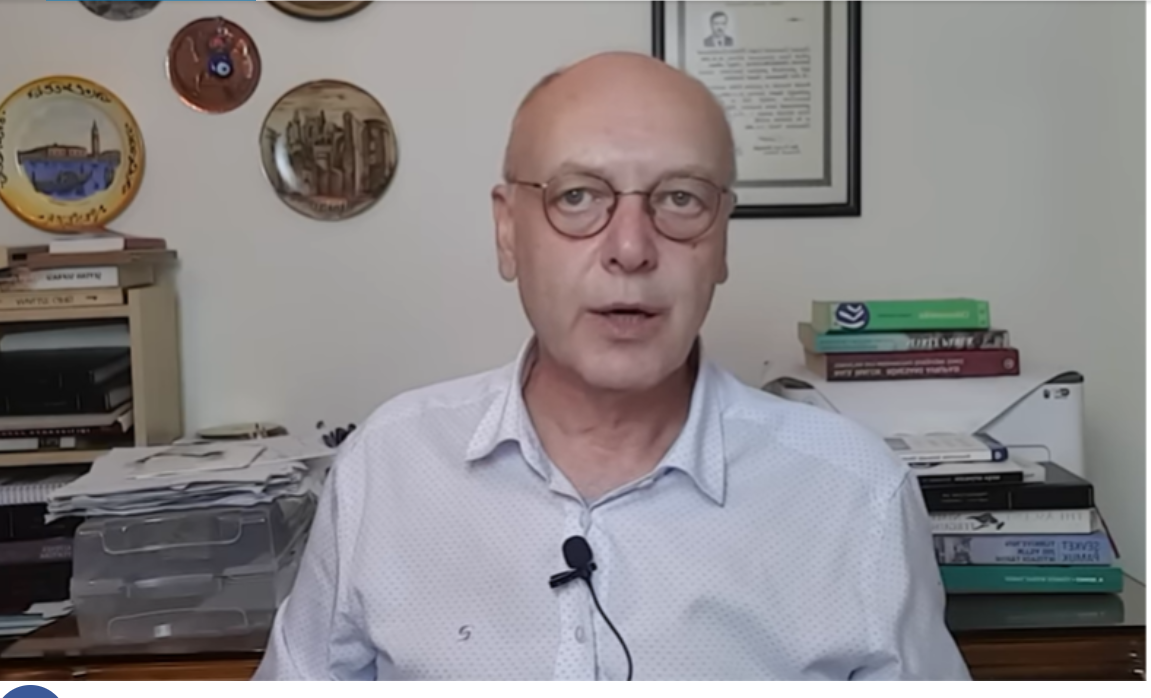 cuneyt akman2
In a comprehensive market analysis, Dr. Cüneyt Akman engaged with Zeynep Ece Ulukaya to dissect the recent turmoil in global finance, arguing that the fluctuations in asset prices are not merely economic but reflect deep political and structural conflicts. He warned that alongside the risk of a global market crash, the Turkish economy is confronting critical long-term challenges in competitiveness, foreign policy, and domestic productivity, particularly in the agricultural sector.
1. Cracks in the Global Technology Bubble
The discussion began with the volatility observed across major asset classes, noting concurrent rises and falls in technology stocks and gold. Dr. Akman pointed out that the global equity markets, particularly in the U.S., are resting on an increasingly fragile foundation.
He highlighted that the Nasdaq and even the broader S&P 500 index are being sustained by a small handful of mega-cap technology companies. Beneath this surface strength, specific tech giants are already showing signs of distress. For instance, companies like Oracle have recently suffered significant value losses. Akman noted that many of these firms are burdened with severe debt, which, when combined with their excessively high stock market valuations, creates a highly unstable environment.
Referring to the recent period around mid-November, he noted that although the value loss in the tech sector—around 3.5% over three to five days—might seem small, it represents “small heart attacks” or stumbles in what had been a relentless, frenzied ascent. The pace of any future decline, he warned, could be just as swift as the rise.
This sentiment of market incomprehension was underscored by the mention of renowned investor Michael Burry (whose actions during the 2008 crisis were chronicled in “The Big Short”), who recently indicated his intention to step back, suggesting that even seasoned professionals can no longer confidently predict the market’s trajectory. This ambiguity, where neither short-position nor long-position holders have clear visibility, characterizes the current global financial climate.
2. The Gold-Dollar Conflict and Geopolitics
Parallel to the tech stock volatility, the gold market is also experiencing erratic movements. After peaking around 4,300, gold retracted significantly before stabilizing, exhibiting a high degree of volatility, recently closing around 3% lower.
Dr. Akman emphasized that gold’s role transcends simple economic dynamics; it is central to the international hegemony struggle between major powers, particularly the U.S. and China. With the Chinese Yuan not yet established as a viable alternative to the U.S. Dollar, China—and other central banks—are actively accumulating gold. This collective shift is positioning gold as a geopolitical alternative to the Dollar, with some claims suggesting China is engaging in secret gold purchases beyond publicly reported figures. This dynamic demonstrates that many seemingly economic movements are in fact the product of large-scale political and diplomatic conflicts.
The discussion also briefly touched on silver (the “grey metal”), which generally moves in correlation with gold, but remains significantly more volatile, making its price swings faster and more severe.
3. Domestic Turbulence: A “First Warning Flare”
Turning to the domestic Turkish market, Dr. Akman raised a critical concern from the previous week: the late payment difficulty experienced by some high-performing Turkish investment funds. These funds had previously delivered exceptionally high returns (some in the thousands of percent). The settlement issues prompted Borsa Istanbul to extend the payment deadline by an hour.
Dr. Akman described this as an “initial warning flare,” suggesting that payment difficulties in ultra-high-return funds hint at underlying complications or potentially complex financial arrangements. When such incidents are widely discussed, the mere suspicion of trouble can become more damaging than the event itself—a concept he referred to by the Turkish saying, “şuyu vukuundan beterdir” (the rumor is worse than the event). The increasing frequency of “bubble” discussions, even regarding the U.S. markets, is creating a self-fulfilling prophecy of fear.
4. Turkey’s Crippling Loss of Global Competitiveness
Dr. Akman then transitioned to the long-term structural problems that prevent Turkey from achieving sustainable growth. He highlighted the country’s alarming decline in global rankings, specifically referencing the World Competitiveness Index (WCI).
He reported that Turkey has dropped a staggering 13 places in the WCI among 69 countries. After being ranked 47th in 2023, Turkey has fallen to a near-bottom ranking, placing it just above only three other nations: Nigeria, Namibia, and Venezuela. He stressed that a failure to raise its competitiveness is the single greatest impediment to the country’s economic future.
5. Exclusion from European Defense Cooperation
Another major structural challenge stems from Turkey’s complex relationship with the European Union. While European countries, led by Germany, seek greater military and defense cooperation with Turkey, the nation’s institutional entry into key European programs remains blocked.
Akman detailed the incident where Greece and the Greek Cypriot Administration vetoed Turkey’s participation in a significant European defense industry development program (SAFE)—a fund valued in the region of €150 billion. He argued that this exclusion is a critical political and financial blow. Although Turkey boasts a strong domestic defense industry with growing exports, it needs external financial support or collaborative backing to sustain its high investment rate. The fact that the EU could not guarantee Turkey’s inclusion in a program meant to foster military collaboration—due to a single member’s veto—sends a powerful symbolic message that undermines the credibility of any bilateral military or economic engagement.
6. The Neglected Crisis in Agriculture
Finally, Dr. Akman pointed to the systemic, decades-long neglect of Turkish agriculture as a foundational crisis. Despite the fact that the world is on the cusp of an agricultural revolution driven by Artificial Intelligence (AI) and the promise of enormous efficiency gains, Turkey’s agricultural base is being destroyed.
He lamented that:
- Fertile farmland is being consistently sacrificed for construction, tourism, and mining projects.
- Water sources are often polluted, and water is utilized inefficiently, worsening the country’s severe drought.
- Financial support provided to the agricultural sector is minimal compared to international standards, and legal requirements for support are often unmet.
Akman concluded that while financial maneuvers are important, the bedrock of any successful economy must be agriculture, industry, and high-quality services. Without a significant reversal in the destruction of the agricultural sector, the Turkish economy can never achieve genuine, value-added growth.
Investor Outlook and Caution
In light of the combined global and domestic risks, Dr. Akman offered strong cautionary advice to investors:
- Be Disciplined: The next month—and specifically the next two weeks—will be critical in revealing market direction.
- Increase Cash Position: Investors should consider holding a higher proportion of cash (nakit).
- Hold Solid Stocks: Focus investments on strong, stable companies.
- Observe and Wait: While the potential for technology stocks to continue rising exists, there is no need to rush. It is a time for patience, observation, and waiting for clarity on market direction.
Related articles

Erdonomics: Perfect recipe for economical disaster
Turkey’s Voters See AKP’s Economic Performance Plummet, ASAL Survey Shows
Dr Özge Öner: The Economic Cost Will Become More Visible — and Harsher — in 2026