Prof. İzzettin Önder: Turkey Faces a “Multiple Institutional Collapse”
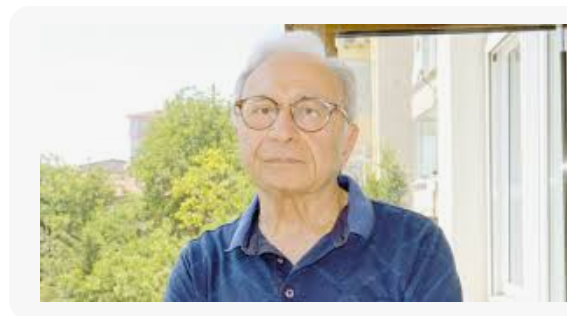 izzettin onder
Summary:
In a powerful critique of Turkey’s governance and social fabric, economist Prof. İzzettin Önder describes what he calls a “multiple institutional collapse,” arguing that the country’s justice system, education, media, and bureaucracy have all deteriorated simultaneously. He warns that while Turkey pours vast resources into defense projects, its internal institutions are crumbling — undermining both national morale and the very foundations of the state.
Parallel Decline Across All Institutions
According to Prof. Önder, societies function as integrated organisms where all institutions interact — much like “connected vessels.” Yet, instead of evolving, Turkey’s institutions are regressing together.
-
The justice system has lost credibility.
-
Education has been hollowed out, operating as a rote “fill-and-empty” system.
-
The media, which should act as a public sphere in the Habermasian sense, has become a political tool used to manipulate and suppress society rather than inform it.
-
The bureaucracy has been stripped of autonomy and turned into a secretariat serving the leader.
The result, Önder says, is not just institutional fatigue but a comprehensive breakdown — a “multiple collapse” that reflects a deep sociological and political crisis.
A Strong Defense Industry, a Weak State
Turkey’s efforts to build a robust defense industry are, on the surface, commendable. Yet Önder questions the logic of defending a country whose internal governance is collapsing:
“If the administrative cadres are corroding the state from within, what value remains in defending it against external threats?”
He argues that the erosion of public trust and institutional integrity saps national morale, leaving a disillusioned generation that sees no future. “We are building weapons,” he writes, “but what are we truly defending if the institutions that define our nation are disintegrating?”
Lessons From History
Önder draws a historical parallel with the British strategy during the Lausanne negotiations, when colonial planners sought to weaken the nascent Turkish Republic through religious manipulation. Fake clerics spread reactionary ideas, urging uprisings against the new secular order.
“We are now repeating history,” he warns. “While we build a defense industry with great sacrifice, we simultaneously erode the very institutions that sustain our internal strength and collective consciousness.”
The Roots of the Collapse: Two Interconnected Causes
Prof. Önder identifies two interlinked structural forces behind the ongoing institutional decay:
-
Post–Cold War Imperial Dynamics
After the collapse of the Soviet Union, the capitalist-imperialist center — now unchallenged — began to exert stronger control over peripheral economies. Strategic countries like Turkey were drawn into tighter dependence under the guise of partnership, sometimes through symbolic political titles such as ‘presidency’ or ‘co-chairmanship’, and at other times through endorsement from power centers like the White House.To maintain this influence, foreign powers encourage local regimes to:
-
Weaken parliamentary oversight,
-
Neutralize the bureaucracy,
-
Capture the media,
-
Subordinate academia,
-
Politicize education,
-
Undermine judicial independence.
This produces a system where foreign interests can operate smoothly — their “commands implemented without disturbing domestic tranquility.”
-
-
The Political Elite’s Economic Dependency
The real economy in question, Önder says, is not the national economy but the personal economy of the ruling elite.
Economic privileges obtained “with the knowledge and consent of the imperial center” do not translate into sovereignty — they represent fees for service, not power.Once the elite’s financial well-being is secured, they become the regime’s most reliable defenders. Opposition voices are reduced to background noise, and even budget debates become theatrical rituals.
“In Capitalism, Everything Is Ultimately About Economics”
Önder concludes that the moral and institutional erosion of Turkish society cannot be separated from its economic dependencies:
“In a capitalist system, everything rests on the economy — religion, faith, morality, even conscience.”
He portrays today’s Turkey as a state where institutional decay, economic subservience, and social despair reinforce one another, driving the country deeper into systemic dysfunction.