



Findings Emerge After Turkish C-130 Crash: No External Impact, Structural Factors Under Review
 c130
c130
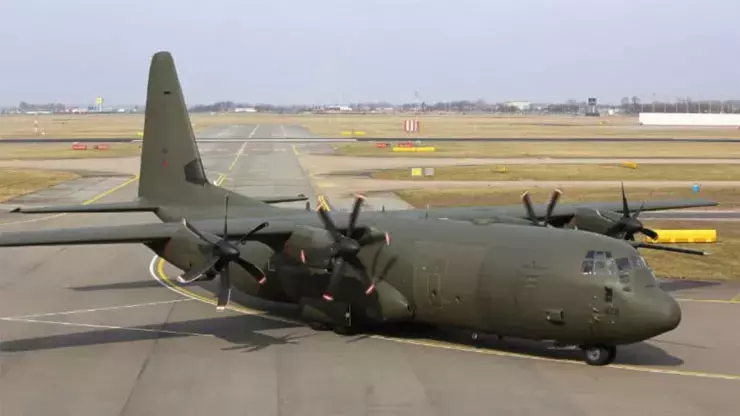
Preliminary information regarding the Turkish Air Force C-130 military cargo aircraft that crashed in Georgia on 11 November has begun to surface through Azerbaijani media reports, offering the first technical clues about what may have occurred. According to AzeMedia’s coverage, investigators found no traces of an external strike, no burn marks, and no perforations on the fuselage that would suggest a missile hit or similar hostile action. These early findings align with Ankara’s initial statements, reinforcing that the aircraft did not carry explosives or ammunition but instead was transporting equipment.
The aircraft, according to Azerbaijani sources, had just concluded a mission supporting the Turkish F-16 fleet deployed for Azerbaijan’s Victory Day ceremonies. The returning flight reportedly carried nearly six tons of F-16 spare parts and associated equipment, a detail later confirmed by Agenzia Nova, which clarified that the cargo consisted solely of parts, with no ammunition onboard. The Turkish Ministry of National Defense reaffirmed this, noting that the load contained no explosive materials.
Focus Turns to Structural Weakness or Cargo Shift
The initial technical report suggests that the tail section separated from the aircraft first, a detail that narrows the scope of possible causes. Specialists examining the crash highlight two main scenarios.
The first relates to the aircraft’s advanced age and long service history. C-130s are renowned for their durability and extended operational lifespans, but their structural components remain vulnerable to corrosion after decades of use. Experts note that even minor degradation in a key structural joint could lead to catastrophic failure during flight.
The second scenario centers on cargo stability. Investigators are considering whether the load may not have been fully secured, potentially shifting mid-flight. In a cargo aircraft, such displacement can alter the center of gravity, create in-flight imbalance, and place abnormal stress on the fuselage—particularly near the tail.
In both scenarios, specialists emphasize that the evaluation teams have categorically ruled out sabotage. The absence of external impact marks strongly supports this conclusion.
Turkish Ministry Confirms Maintenance Record and Halts C-130 Flights
Following developments in the investigation, the Turkish Ministry of National Defense released an extensive statement through Spokesperson Rear Admiral Zeki Aktürk. He confirmed that the aircraft had been acquired from Saudi Arabia and had undergone the Erciyes Avionics Modernization Program, a significant upgrade initiative designed to extend the operational life and digital capabilities of Turkey’s C-130 fleet.
Aktürk also revealed that the aircraft had recently completed all required structural and mechanical inspections. Its most recent maintenance—covering the airframe, engines, and propellers—was carried out between 11 September and 12 October 2025, with no deficiencies reported.
However, as a precautionary measure, the ministry announced that all C-130 flights were suspended as of 12 November 2025. Once the technical investigation concludes and any necessary verifications are completed, aircraft cleared by the engineering teams will gradually return to service.
Safety Review and Fleet Implications
The fleet-wide suspension suggests a comprehensive safety reassessment is underway, particularly because the C-130 is a core platform relied upon by the Turkish Air Force for logistics, emergency missions, medical evacuation, and international operations. Aviation analysts note that grounding an entire class of aircraft—while rare—is a typical response when an accident involves potential systemic structural vulnerabilities.
The Erciyes modernization, while extensive, does not replace the aircraft’s original structural components, meaning age-related stresses remain a critical variable. If corrosion proves to be the primary cause, the Air Force may accelerate long-planned procurement efforts or intensify inspections on older aircraft.
If cargo instability is confirmed, the investigation could lead to updated loading protocols, enhanced training, or the implementation of additional automated weight-distribution systems to mitigate future risks.
A Developing Case with Regional Attention
Given the aircraft’s mission in Azerbaijan and the cross-border nature of the crash site in Georgia, the incident continues to draw regional attention. Both allied nations, alongside Turkey, are contributing logistical support to ensure a transparent and technically rigorous process.
As the investigation proceeds, the emphasis remains on verifying the structural sequence leading to the failure, ensuring fleet safety, and clarifying the final moments of the aircraft involved. While early indicators suggest that sabotage or external impact is unlikely, the precise mechanical root cause may take several weeks to establish fully.