Iraq Elections: Sudani’s Shia Alliance Wins 45 Seats, Kurds Retain Strength
 irak secim
Prime Minister Mohammed Shia al-Sudani’s “Construction and Development Alliance” secures first place with 45 seats, while Kurdish parties hold 58 amid steady regional balance
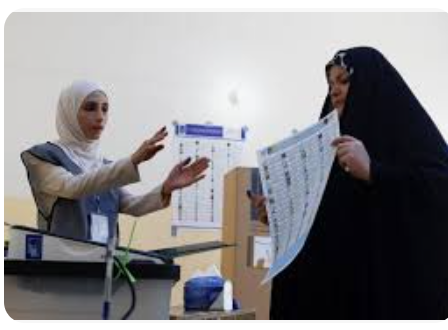
Iraq’s Independent High Election Commission has announced the official results of the 2025 parliamentary elections, confirming that Prime Minister Mohammed Shia al-Sudani’s Construction and Development Alliance won the largest share of seats nationwide, securing 45 of 329 parliamentary seats.
Kurdish parties maintained their overall strength, winning a combined 58 seats across the Kurdistan Region and disputed territories.
Sudani’s bloc — which drew support from both Shia-majority southern provinces and segments of the Sunni electorate — finished first, followed by the Sunni Takaddum Party of former Speaker Mohammed al-Halbusi, and the State of Law Coalition led by former Prime Minister Nouri al-Maliki.
The State Forces Alliance under Ammar al-Hakim ranked fourth, while Qais al-Khazali’s Sadikun List, aligned with Asaib Ahl al-Haq, placed fifth.
Kurdish parties maintain influence, reshuffling local balances
In the north, Kurdish parties preserved their parliamentary presence, though results varied by province.
The Kurdistan Democratic Party (KDP) won 27 seats, dominating Erbil and Duhok, while the Patriotic Union of Kurdistan (PUK) captured 18 seats, retaining control of Sulaymaniyah but losing one seat in Kirkuk after a recount.
Smaller Kurdish parties performed modestly:
-
Helwest Movement (Ali Hama Salih): 5 seats
-
Kurdistan Islamic Union (Yekgirtu) (Salahaddin Bahaddin): 4 seats
-
New Generation Movement (Shaswar Abdulwahid): 3 seats, down from 9
-
Kurdistan Justice Group (Komel) (Ali Bapir): 1 seat
In Mosul, the KDP emerged first, followed by the Takaddum Party and Sudani’s Construction and Development Coalition.
Sudani dominates Shia regions, Sunnis and minorities gain representation
Sudani’s alliance took first place in Baghdad, Najaf, Karbala, Muthanna, Maysan, Dhi Qar, Babil, and Qadisiyyah, consolidating dominance across Shia-majority provinces.
In Basra, the Tasmim Coalition, led by provincial governor Asaad al-Idani, topped the vote.
The Takaddum Party prevailed in Anbar and Salahaddin, while the PUK held first place in Kirkuk, followed by Takaddum, the United Iraqi Turkmen Front, and the KDP.
In Diyala, Hadi al-Amiri’s Badr Organization took the lead.
Several smaller groups — including Arab Alliance, Qiyam, Diyala First, Sabitun, Idrak, Tecemmu (Unity), Sharakatuna (Our Partnership), Salahaddin Muwahhid, Arab Project, Huwwiyet (Identity), and Kaziyya (Cause) — each secured one seat, broadening parliamentary representation.
Minority quotas and representation
Seats reserved for minorities brought additional representation:
-
Nineveh for the People: 3 seats
-
Jamahir (Popular Masses): 3 seats
-
Anbar Hewiyetuna (Our Identity): 3 seats
-
Tefawoq: 2 seats
-
Sumeriyyun: 2 seats
-
Turkmen Front Alliance: 2 seats
In total, nine seats were allocated to Christian, Yazidi, Shabak, and other minority groups under Iraq’s constitutional quota system.
Sudani’s first message: “Iraq first, cooperation for the next phase”
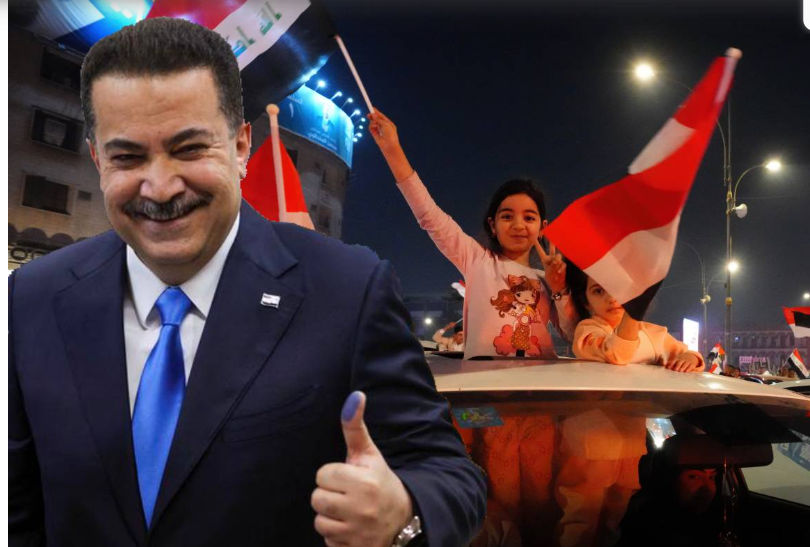
Following the announcement of his coalition’s victory, Prime Minister Sudani hailed the results as a mandate for continuity and reconstruction, while calling for the formation of a new inclusive government.
“We thank the Election Commission for ensuring a successful process, and we express our gratitude to the Supreme Religious Authority for its guidance,” he said in a statement.
Sudani urged all political parties to “prioritize national interests and respect the will of the electorate,” adding that his coalition remains open to cooperation “with all sides, without exception.”
“Our Construction and Development Alliance is victorious because we believe in the principle of ‘Iraq first.’ With the determination of its loyal sons and daughters, Iraq will always remain our priority,” Sudani declared.
Parliamentary composition (329 seats total)
-
Construction and Development Alliance (Sudani) – 45
-
State of Law Coalition (al-Maliki) – 30
-
Takaddum Party (al-Halbusi) – 27
-
Sadikun/Asaib Ahl al-Haq (al-Khazali) – 26
-
Badr Organization (al-Amiri) – 19
-
State Forces Alliance (al-Hakim) – 18
-
Azim Alliance (al-Samarrai) – 16
-
Siyada (Sovereignty) Alliance (Khamis al-Khanjar) – 9
-
Ishraqat Qanun (Tishreen movement) – 8
-
Asas Coalition (Mohsin al-Mandalawi) – 7
-
Tasmim Coalition (al-Idani) – 7
-
Huqooq Coalition (Hezbollah-aligned) – 6
-
Hasm al-Watani (Sabit Abbasi) – 6
-
Services Alliance (Shibl al-Zaidi) – 5
-
Abshir Ya Iraq (Hussein Hammoudi) – 4
-
Wasit Ajmal (Beautiful Wasit) – 4
Analysis: Stability and coalition bargaining ahead
The results reaffirm Iraq’s fragmented political landscape but also strengthen Sudani’s position as a consensus leader capable of bridging sectarian lines.
His bloc’s cooperation with both Shia and Sunni figures positions him well to form the next cabinet.
However, no alliance holds a majority, meaning government formation will depend on prolonged coalition negotiations among Shia factions and Kurdish partners.
Kurdish unity in Baghdad remains a pivotal factor, as the KDP and PUK together retain leverage over budget and oil policy decisions.
Sudani’s victory speech emphasizing inclusiveness suggests continuity, but power-sharing talks — particularly over the speakership and presidency — will determine the stability of Iraq’s next administration.