U.S. Sanctions Seven Turkish Companies Over Iran Drone Supply Network
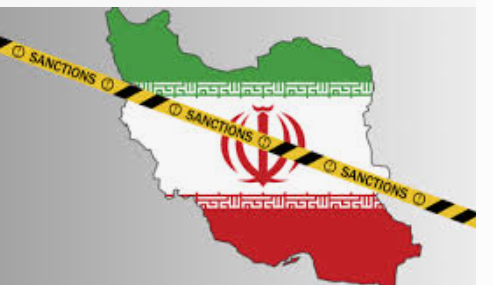 sanctions
Treasury Department says the entities helped sustain Tehran’s missile and UAV programs, posing “serious threats” to U.S. and allied forces
The United States on Thursday imposed sanctions on 32 individuals and entities, including seven based in Turkey, accusing them of helping Iran procure components for its ballistic missile and drone (UAV) programs.
The U.S. Treasury Department said the networks targeted spanned Turkey, Iran, the United Arab Emirates, China, Hong Kong, India, Germany, and Ukraine, forming a transnational chain that “enabled Tehran’s destabilizing weapons development.”
“These networks pose a serious threat to U.S. and allied personnel in the Middle East and to commercial shipping in the Red Sea,” the department said in a statement.
Turkish firms accused of facilitating Iranian drone engine payments
According to Treasury documents, two Hong Kong-based firms — Qian Xi Long and Hin Yun — were part of the supply chain for Mado, an Iranian company that manufactures engines used in Shahed-131 and Shahed-136 drones.
The U.S. alleges these drones have been widely deployed by Russia in Ukraine and by Iranian-backed groups in Yemen, Syria, and Lebanon.
The Hong Kong companies reportedly received hundreds of thousands of dollars in payments from several Turkey-based firms.
Among those listed were Arkedya Gıda, Intro Oto Yedek Parça, Own Uçar Gıda, Royal Yapı İnşaat, Loris Turizm, Özkam Nakliyat, and Artaş Gümrükleme — all of which were added to the Treasury’s sanctions list.
Washington: “Iran’s partners will face consequences”
Brian E. Nelson, Under Secretary for Terrorism and Financial Intelligence, said the sanctions demonstrate Washington’s determination to “disrupt Iran’s weapons procurement networks worldwide.”
“The United States will continue to take action against entities — including those operating in Turkey — that enable Iran’s UAV and missile production, directly threatening regional and global stability,” Nelson said.
The new designations freeze any U.S.-based assets belonging to the listed individuals and companies and prohibit American entities from engaging in transactions with them.
A pattern of U.S. scrutiny toward Turkish intermediaries
The move marks the third major U.S. sanctions package this year to include Turkish companies accused of aiding Iran, Russia, or North Korea in circumventing global export controls.
In March 2025, Washington sanctioned several Turkish logistics and electronics firms for allegedly supplying dual-use goods to Russia’s military-industrial base.
In June, additional entities in Istanbul and Mersin were blacklisted for facilitating Iranian petrochemical exports and drone parts shipments to the Gulf region.
Analysts say the latest measures reflect mounting U.S. frustration over Turkey’s enforcement gaps in monitoring cross-border trade, even as Ankara officially supports Western sanctions regimes under NATO commitments.
“Turkey’s geographic and commercial networks make it a recurring transit hub for sanctioned goods — especially between East Asia, the Gulf, and Eastern Europe,” said one Western diplomat quoted by PA Turkey.
“Washington is increasingly signaling that Turkish intermediaries will face direct consequences unless oversight improves.”
Broader implications for Turkish exporters
Economists warn that repeated sanctions could complicate Turkey’s export-driven recovery strategy and further strain its financial relations with Western partners.
While Ankara has avoided direct confrontation with the U.S., officials privately acknowledge that secondary sanctions risk disrupting legitimate trade flows in logistics, metals, and electronics sectors.
Still, Turkey continues to balance between maintaining commercial access to markets like Iran and Russia and preserving financial stability through Western investment and IMF channels.
The latest action by the Treasury underscores how this balancing act is becoming increasingly difficult as Washington tightens global compliance standards.
PA Turkey intends to inform Turkey watchers with diverse views and opinions. Articles in our website may not necessarily represent the view of our editorial board or count as endorsement.
Follow our English language YouTube videos @ REAL TURKEY: https://www.youtube.com/channel/UCKpFJB4GFiNkhmpVZQ_d9Rg
And content at Twitter: @AtillaEng
Facebook: Real Turkey Channel: https://www.facebook.com/realturkeychannel/
Related articles
Video commentary: Our election predictions; and what comes after

Polls: Turks distrust political parties, Religious Affairs Directorate, support for EU membership, NATO rises
Turkey to begin supplying national grid with Black Sea gas on April