



ADB President Kanda’s First Official Visit Marks New Phase in Turkey’s Partnership
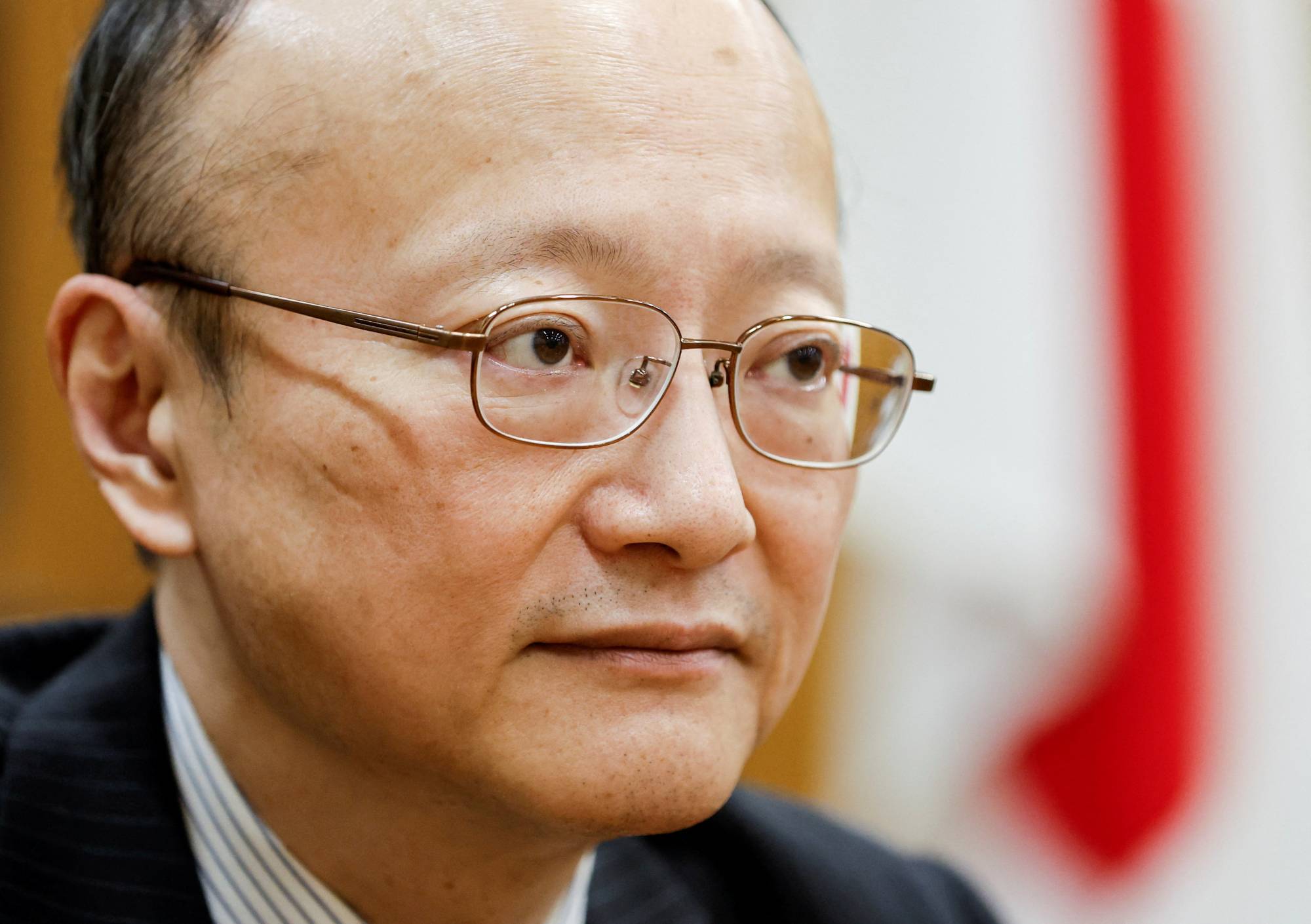 FILE PHOTO: Japan’s vice minister of finance for international affairs, Masato Kanda, attends an interview with Reuters at the Finance Ministry in Tokyo
The relationship between Turkey and the Asian Development Bank (ADB) entered a renewed and strategically important phase as ADB President Masato Kanda made his first official visit to Turkey on 12–13 November 2025. During this visit, he held a meeting with Türkiye’s Minister of Treasury and Finance Mehmet Şimşek on 12 November, discussing expanded cooperation, financing opportunities, and long-term development strategies.
Turkey’s Transition to Regional Member Status Unlocks New Opportunities
A key topic in the meeting was Turkey’s upgraded position within the ADB. Turkey, a member since 1991, became a regional member in 2024, unlocking broader collaboration with the Bank. This transition now allows both public institutions and private sector entities in Turkey to access the Bank’s concessional financing, technical support, and capacity-building initiatives.
ADB Presents 2025–2027 Interim Country Partnership Strategy
During the visit, the ADB introduced its Interim Country Partnership Strategy (ICPS) for 2025–2027, a guiding framework aligned with Turkey’s national development priorities. This strategy outlines several critical thematic areas intended to support Turkey’s economic and structural transformation during the upcoming period.
Reconstruction and Resilience at the Forefront
One of the most urgent priorities of the ICPS is the continuation of post-earthquake reconstruction efforts. The ADB aims to back Turkey’s efforts to rebuild affected regions by helping develop disaster-resilient infrastructure, representing an essential step for long-term safety and economic stability.
Strengthening Human Capital for Sustainable Growth
Human capital development is another cornerstone of the strategy. ADB plans to support initiatives that expand access to education, improve workforce capabilities, and strengthen productivity. Enhancing human capital is positioned as a long-term investment in Turkey’s social and economic future.
Improving Water, Food, and Energy Security
The ICPS devotes considerable attention to enhancing water, food, and energy security in Turkey—three sectors that are increasingly vulnerable to climate risks and global supply chain disruptions. The ADB will support development projects that promote sustainable agriculture, modern water management systems, and energy transformation.
Supporting Turkey’s Ambition as a Regional Transport and Digital Hub
Another major pillar of the strategy focuses on reinforcing Turkey’s role as a regional center for transportation, energy, and digital integration. The ICPS aligns with Turkey’s Middle Corridor Initiative, aiming to strengthen east–west connectivity through enhanced logistics infrastructures, modern digital networks, and cross-border energy systems.
ADB’s Multi-Year Financing Package for Turkey
Financial commitments under the strategy are substantial. ADB plans to provide $1 billion in financing by the end of 2025, followed by $3 billion annually in 2026 and 2027. These funds will be directed at both public and private sector projects, fueling long-term development and infrastructure modernization.
Turkey Strengthens Its Standing as a Trusted Development Partner
According to the Ministry, Turkey’s strong cooperation with multilateral development banks has positioned it as a reliable and preferred partner in global development. Today, Turkey’s active project portfolio with major institutions, including the World Bank, EBRD, IFC, AIIB, IsDB, CEB, BSTDB, and ECO TDB, has reached approximately $40 billion.
This extensive portfolio serves as a clear indicator of international confidence in Turkey’s economic program and its consistent reform-oriented approach.