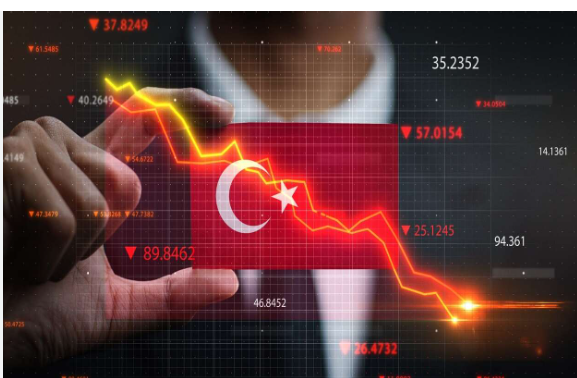
Turkey’s Banks Record Historic Profit Surge: Coming From Customers’ Pockets
 banks
banks
Turkey’s banking sector is enjoying an unprecedented profit boom in 2025 — yet critics say it’s not real banking that’s driving the gains. According to the Banking Regulation and Supervision Agency (BDDK), Turkish banks’ net profits jumped 45.5% year-on-year in the first nine months of 2025, reaching nearly 670 billion lira, marking the highest profit in the country’s banking history.
But behind these record-breaking figures lies a deeper issue. Economists and financial experts warn that banks are not earning from lending or investment, but from fees, commissions, and customer charges — a business model that increasingly shifts financial pressure onto ordinary citizens.
Record Profits, Shrinking Trust
The BDDK’s “Non-Consolidated Main Indicators of the Turkish Banking Sector” report for September 2025 reveals a sector expanding across the board:
-
Total assets: 43.57 trillion lira (up 10.9 trillion from last year)
-
Loans: 21.24 trillion lira
-
Securities portfolio: 6.79 trillion lira
-
Deposits: 24.85 trillion lira (up 31.5%)
-
Equity capital: 3.7 trillion lira (up 27.9%)
-
Capital adequacy ratio: 18.55%
Despite these strong financials, industry observers question whether this growth benefits the wider economy.
“Banks Are Feeding on the Customer, Not Banking”
Finance academic Prof. Dr. Soner Gökten argues that Turkish banks have shifted their profit engines away from traditional interest income toward what he calls “micro deductions from every customer transaction.”
“When real credit margins are crushed by regulation and inflation,” Gökten said, “banks start scraping value from every customer action — from EFT transfers to POS payments, from card fees to loan allocations. Banks aren’t feeding on interest; they’re feeding on the citizen’s pocket.”
He describes this as a structural deformation of the banking model, where profitability comes not from credit intermediation but from financial friction costs — the hidden fees that quietly pile up.
According to Gökten, non-interest income at the four major listed private banks reached record highs in 2025. This includes:
-
EFT and wire transfer fees
-
Credit card annual charges
-
Loan allocation and processing fees
-
POS transaction cuts
-
File and account maintenance charges
“Today in Turkey,” he added, “it’s not the loan-deposit margin that defines profitability — it’s what the bank cuts from the customer. The day net interest income surpasses net fees and commissions, we’ll be doing real banking again. Until then, banks are earning without lending.”
Public vs. Private vs. Foreign Banks
Economist Şenol Babuşcu provided further breakdowns of the profit surge:
-
Public banks: Profit rose 77.8%, reaching 266.45 billion lira
-
Private Turkish banks: Up 31.2% to 162.53 billion lira
-
Foreign banks: Up 28.9%, totaling 240.68 billion lira
Foreign-owned banks, notably, outperformed domestic private lenders in terms of net profit growth.
Profits That Don’t Trickle Down
Both Gökten and Babuşcu warn that these profits aren’t flowing back into the real economy. Instead, they say, the gains from fees and commissions are fattening executive pay packages and bonus pools, while small businesses and consumers continue to face tight credit conditions and rising borrowing costs.
“Every commission, every ATM charge, every lira from card fees turns into executive bonuses and stock-based compensation,” Gökten wrote. “The banking system is writing nominal profits while citizens struggle under inflation.”
The Bigger Picture: Inflation and Inequality
While Turkey’s monetary tightening policies have stabilized the lira and slowed headline inflation, living costs remain painfully high. The widening gap between bank profits and household financial stress has become a growing point of social tension.
Experts say that banks’ record earnings illustrate an economy where financial intermediation has turned extractive — profiting from citizens rather than empowering them.
In the words of one analyst, Turkey’s 2025 banking boom shows “strong balance sheets, weak wallets.”