Is the AKP–MHP Alliance Reaching a Breaking Point? A Structural Analysis of Turkey’s Ruling Bloc
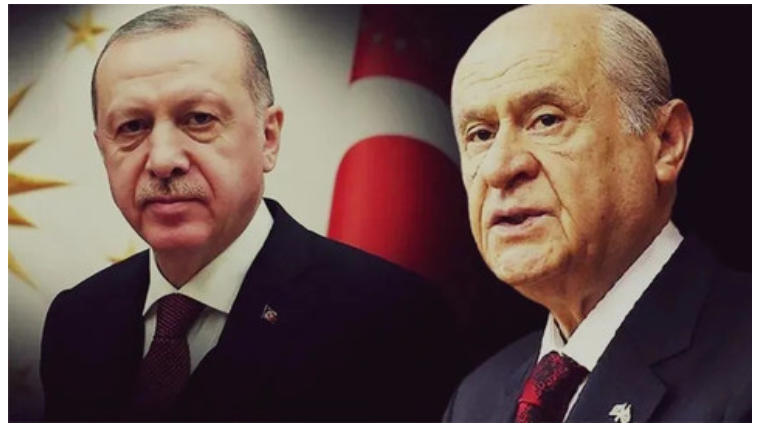 bahceli rte
Turkey’s political debate has intensified around whether the long-standing alliance between President Recep Tayyip Erdoğan’s ruling Justice and Development Party (AKP) and the Nationalist Movement Party (MHP) is weakening. Recent disagreements on sensitive topics — including legal actions targeting opposition mayors, Kurdish peace process signals, and policy differences on regional geopolitics — have fueled speculation that the partnership may be reaching a crossroads. However, analysts note that the alliance is rooted in deeper structural and strategic interests that go beyond short-term political frictions.
A strategic alliance shaped by security, power consolidation, and regional ambitions
The AKP–MHP alliance, formalized as the “People’s Alliance” (Cumhur İttifakı), differs from previous coalition governments in Turkey. Unlike the loose, temporary coalitions of the 1990s, this partnership is based on long-term strategic goals related to:
-
State security and centralized power,
-
Hardline policies toward the Kurdish issue,
-
Expanding regional influence and limiting Kurdish autonomy in Syria and Iraq,
-
Reshaping state institutions, including the judiciary, bureaucracy, and security apparatus.
The turning point was not merely the official formation of the alliance in early 2018 but the political environment created after the failed coup attempt on July 15, 2016. Following the coup, the AKP relied heavily on support from nationalist and military bureaucratic networks aligned with MHP. This cooperation facilitated:
-
The transition to an executive presidential system,
-
Emergency rule and mass purges in the state bureaucracy,
-
A broader consolidation of power around Erdoğan.
The roots go back to 2015: coalition collapse and end of the “peace process”
The strategic convergence emerged after the June 7, 2015 elections, when the AKP lost its parliamentary majority for the first time in 13 years. MHP leader Devlet Bahçeli rejected coalition talks, effectively paving the way for new elections and a renewed partnership with the AKP.
At the same time, the Kurdish peace process collapsed. The alliance shifted into a “security-first” doctrine, prioritizing military operations against Kurdish forces both domestically and across borders. Syria’s shifting dynamics and fears of a de facto Kurdish state strengthened nationalist pressure on foreign and domestic policy.
Post-2016: Alliance evolves into a system of shared power
After the failed coup attempt:
-
The alliance expanded to include nationalist factions within the military and judiciary.
-
Institutional control tightened via emergency decrees (OHAL).
-
Labor strikes were limited, and business-friendly monetary policies were pursued.
Economists describe the post-2016 period as a “redistribution shock”, where capital gained significantly at labor’s expense. Erdoğan openly stated that emergency rule was used to prevent strikes, securing support from business groups aligned with the government.
A changing geopolitical reality disrupts the alliance
Multiple geopolitical shifts have weakened the conditions that once held the alliance together:
-
Russia–Ukraine war (2022)
-
Israel–Hamas conflict and regional escalation (2023–2024)
-
Donald Trump’s return to the White House (2024) and push for a new Middle East plan
These developments have exposed differences in how AKP and MHP perceive regional strategy, especially regarding:
-
Iran’s regional role,
-
U.S.-led plans involving Kurdish actors in Syria and Iraq,
-
The potential emergence of a wider Kurdish political entity.
MHP and nationalist bureaucratic circles oppose any geopolitical configuration that includes “external Kurds,” particularly PYD/YPG. The AKP, motivated by economic pressures and shrinking electoral support, is seen as more open to tactical flexibility.
Internal fragmentation: “External Kurds” vs. “Domestic legitimacy”
Recent topics that highlighted tensions:
-
Discussions around potential visits to Imralı prison (Abdullah Öcalan),
-
Political messaging about Selahattin Demirtaş,
-
The differing tone in how each party approaches local government investigations.
Analysts say these tensions do not necessarily signal a breakup, but rather a recalibration of power within the alliance.
Conclusion: Friction does not equal collapse — but the alliance is entering a critical phase
While disagreements are now more visible, the alliance is held together by:
-
Shared control over state institutions,
-
A mutual dependency in sustaining the presidential system,
-
Lack of an alternative governing coalition.
A dramatic breakup — or a “divorce” — is not the most likely scenario. However, the structural conditions that created the alliance are shifting, and both parties are adapting to a rapidly changing geopolitical environment.
By Hakki Ozdal, Evrensel Gazette
PA Turkey intends to inform Turkey watchers with diverse views and opinions. Articles may not represent the editorial board’s stance.
Follow our English-language YouTube videos @ REAL TURKEY and @AtillaEng on X.