New Turkish Quake Alert Detected Tremor 37 Seconds Early
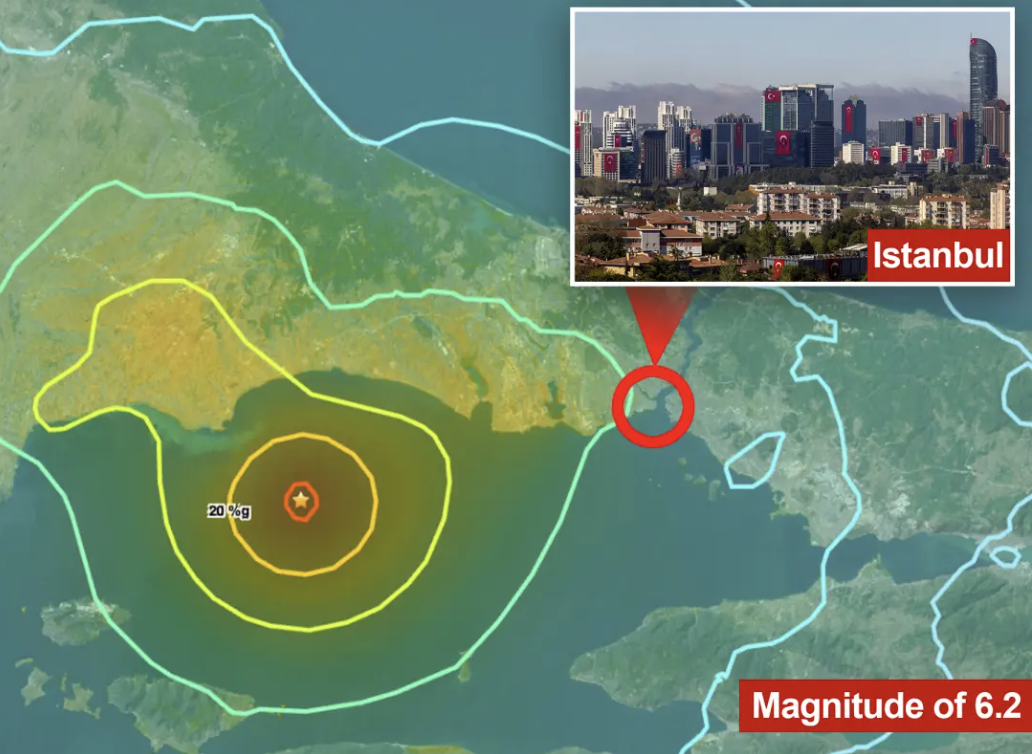 istanbul earthquake
Prof. Dr. Nurcan Meral Özel, Director of the Kandilli Observatory, announced that Turkey’s new earthquake early warning system — still in the testing phase — worked flawlessly during the recent 6.1-magnitude earthquake in Balıkesir’s Sındırgı district.
Özel said the system detected the earthquake 37 seconds before it was felt in Istanbul and successfully sent an alert signal, describing the event as a significant success for Turkish seismology.
“The system is currently being tested with a limited group of users, but it worked perfectly during this earthquake,” Özel said. “It sent a signal to users in Istanbul 37 seconds in advance.”
She added that their ultimate goal is to expand this early warning network nationwide, giving both citizens and institutions the ability to take life-saving precautions seconds before major tremors strike.
Early Warning Network Expanding Across Turkey
Özel explained that the Kandilli Observatory has been testing the system for about three and a half months and is now working to expand the network of seismic stations to extend the warning time.
“We are modernizing the infrastructure to increase warning times,” she noted. “Once the system reaches full capacity, people and organizations will have precious seconds to take protective actions.”
The new network aims to integrate hundreds of sensors across Turkey, allowing automatic alerts to be sent to power plants, hospitals, and public transportation systems — minimizing casualties and infrastructure damage.
Marmara and Western Anatolia Faults Have Different Mechanisms
Addressing questions about whether the Sındırgı earthquake could trigger movement along the North Anatolian Fault Zone in the Marmara region, Özel clarified that the fault lines in Sındırgı, Simav, and Balıkesir operate under different tectonic mechanisms.
“It is not possible for these faults to directly trigger each other,” she said. “However, stress transfer can increase tension in nearby regions.”
She emphasized that Marmara and Western Anatolia have distinct fault systems and that each must be monitored separately to understand potential risks.
Monitoring the Sea Floor and Tsunami Risks
Prof. Özel also highlighted Kandilli’s cooperation with Japanese researchers to monitor seismic activity beneath the Marmara Sea. She said that nine seafloor seismometers have been installed to detect and analyze micro-earthquakes in real time.
“We can now analyze even very small earthquakes retroactively thanks to these devices,” she explained.
On the subject of tsunamis, Özel said that while Marmara is a closed basin — meaning large waves are unlikely — even minor sea-level changes could be dangerous:
“A 30-centimeter rise in sea level could cause serious damage,” she warned, noting that flood risk maps have been prepared, especially for the Tekirdağ coastline.
A System to Save Lives in Seconds
Once fully operational, Turkey’s early warning system aims to dramatically reduce loss of life and property in future earthquakes by providing advance alerts — giving critical seconds for people to take cover and for systems like gas lines or high-speed trains to shut down automatically.
“Our goal is to establish this network across all of Turkey,” Özel said. “Each additional second of warning means more lives saved.”