Turkey’s Push for F-16 Block-70s: A High-Stakes Deal for Sovereignty
 F16
F16
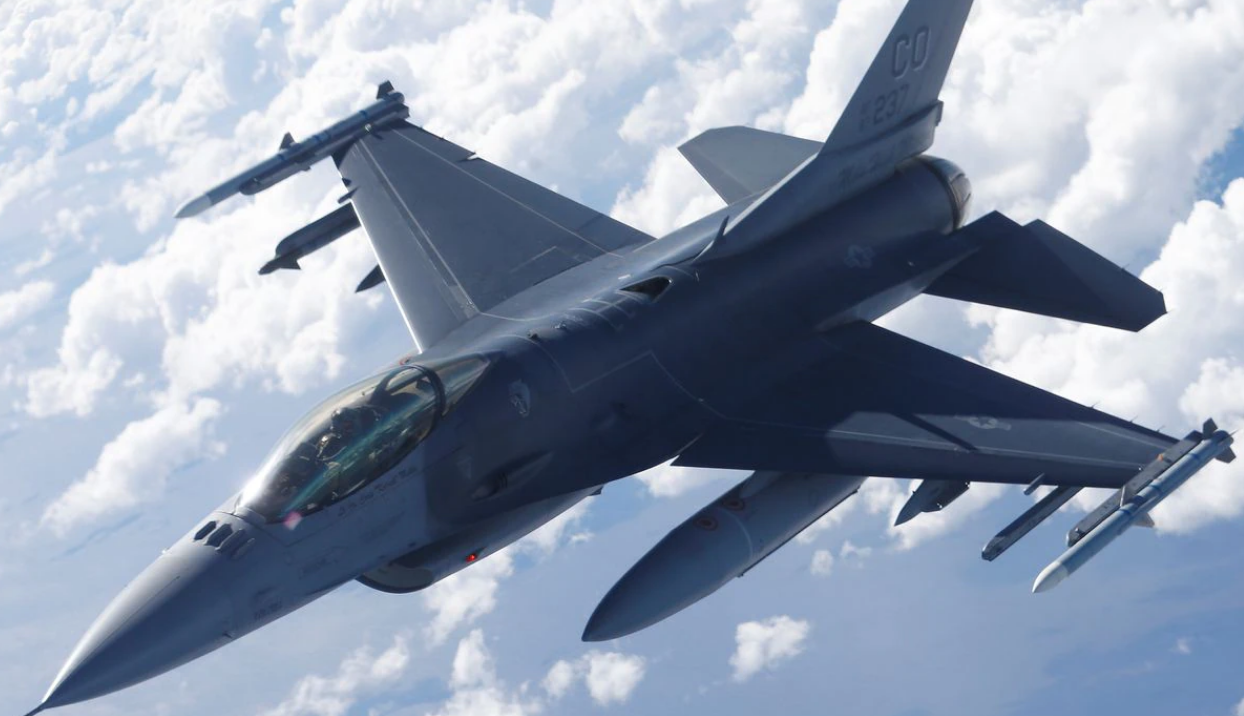
Turkey is moving forward with efforts to bring 40 of the latest F-16 Block-70 fighter jets — also known as “Vipers” — into its Air Force inventory, while seeking to integrate domestically produced radar and electronic systems and gain access to parts of the aircraft’s source code. According to Bloomberg News, Turkish government officials will hold a new round of talks with U.S. manufacturer Lockheed Martin to resolve ongoing disputes that have delayed the sale.
Although the U.S. Congress approved the deal in February, Washington has so far rejected Turkey’s request to install Turkish-made systems and to receive the aircraft’s source codes, preventing finalization of the agreement. The report also states that President Recep Tayyip Erdoğan raised the issue directly with then-U.S. President Donald Trump during a meeting in September.
The F-16, which first flew in 1976, continues to evolve through new versions, with the Block-70 representing the most advanced configuration — equipped with state-of-the-art digital avionics and the APG-83 AESA radar.
Turkey’s Objective: Integrating Its Own Systems
Retired Air Force Lieutenant General Erdoğan Karakuş has assessed the latest developments in the F-16 Block-70 sale. He explained that the package includes 40 new F-16 Block-70 aircraft, 79 modernization kits, spare engines, and various munitions, with a total estimated cost of $23 billion.
According to Karakuş, Turkey wants to install its own systems and munitions on these aircraft to reduce costs and ensure data security.
“Turkey wants to integrate its own systems and munitions into these aircraft both to reduce costs and to ensure data security,” he said.
He listed the items included in the deal as follows:
-
40 F-16 Block-70 aircraft with 40 engines,
-
79 modernization kits,
-
81 spare engines for other F-16s,
-
149 APG-83 AESA radars,
-
858 guided missiles and 129 launchers,
-
952 AIM-120C8 AMRAAM medium-range air-to-air missiles,
-
864 GBU-39 bunker-busting bombs,
-
401 Sidewinder AIM-9 Block-2 missiles,
-
96 AGM-88B high-speed anti-radiation missiles, and
-
96 advanced AGM-88 anti-radiation missiles.
Karakuş emphasized that the weapons systems alone account for approximately $7–8 billion of the deal’s value.
“We already made an agreement for 100 AMRAAM missiles and paid $300 million,” he said. “Of course, we have to buy some of these weapons, but we also want to use our own national munitions to lower the cost.”
He pointed out that a single Sidewinder missile costs over $1 million, while an anti-radiation missile exceeds $4 million.
Domestic Weapons and Radar: A Move for Security and Independence
Turkey has been demanding the F-16 source codes from the U.S. for years to integrate its own weapons systems. Meanwhile, Roketsan has completed tests of the Gökdoğan and Bozdoğan air-to-air missiles under the Göktuğ Project.
Karakuş added that the Turkish Armed Forces intend to replace U.S.-made radars on the F-16s with ASELSAN’s MURAD AESA radar.
“We want to integrate our own radar and electronic systems into the F-16s so that enemy forces cannot jam or interfere with them,” he explained.
He said this initiative is motivated by both cost-efficiency and national security.
“We also want to carry out these modernizations ourselves by obtaining the rights to the aircraft,” he added. “As a result, I estimate the $23 billion total could drop to around $12–13 billion.”
Will the U.S. Eventually Approve the Sale?
Karakuş believes that the United States will eventually permit both the sale and modernization of the aircraft.
“The U.S. has realized that Turkey is moving toward buying Eurofighters. Washington can’t tell the U.K. not to sell planes to Turkey,” he said. “Both the U.K. and Germany need industrial employment, and Europe’s security also depends on this. Therefore, the U.S. will want to sell its own product too.”
Solving the KAAN Engine Problem
Karakuş also stated that this deal could help solve the engine issue for Turkey’s indigenous fifth-generation fighter, KAAN.
“With this agreement, the KAAN’s engine problem will also be resolved. Until a domestic engine is produced, the first KAANs will use American-made engines,” he said.
He argued that this agreement might also reopen the door to the F-35 program, from which Turkey was previously removed.
“Some people ask, ‘Why are we returning to the F-35 when we are building KAAN?’ But we have already paid $1.4 billion for the F-35 program, and six aircraft we purchased are ready and waiting,” he explained.
“Turkish companies were supposed to produce $11 billion worth of parts for the project, and the maintenance hub in Eskişehir was expected to service F-35s from other countries worth $16 billion. We would have effectively received the F-35s for free. Should all this preparation go to waste?”
Modernization of the Current Fleet
Turkey already possesses 37 F-16 Block 30s, which are being upgraded to Block 70 standards under the Özgür-2 Project. Recently, an F-16 equipped with the ASELSAN MURAD radar successfully conducted a Gökdoğan missile test.
If the U.S. authorizes the sale and modernization kits, 79 more aircraft will be upgraded, bringing the total number of Block-70-standard F-16s in Turkey’s inventory to 116.
A Projection for 2035: 350–400 Aircraft
Karakuş provided an overview of the long-term plans for the Turkish Air Force:
“We currently have about 243 F-16s. If we buy 40 more, that number will rise to 283. By 2035, with the addition of Eurofighters and KAANs, I estimate we’ll have between 350 and 400 aircraft in service,” he said.
“At that point, no country in our region would dare challenge us. Contrary to some claims, Greece will not have a larger fleet than Turkey by 2035. The Turkish Air Force will never fall behind.”
He added that strong air power is crucial, especially against countries where land operations are not possible:
“We must always keep our armed forces ready against military powers in our neighborhood such as Russia, Iran, Israel, and Greece.”
Turkey’s F-16 Block-70 negotiations are about far more than aircraft acquisition — they represent a push for technological sovereignty and strategic autonomy within NATO’s defense framework. By integrating domestic radar, avionics, and munitions, Turkey aims to reduce its dependency on foreign systems, lower costs, and enhance security.
For the U.S., the challenge lies in balancing export-control safeguards with the strategic need to keep Turkey, a key NATO ally, aligned within Western defense ecosystems.
As Karakuş summed up:
“We want to modernize our aircraft with our own systems and use our own weapons. If the U.S. cooperates, both sides win — and Turkey becomes stronger, more independent, and more secure.”