SDG says talks with Damascus have stalled; warns of renewed conflict
 syria-kurds
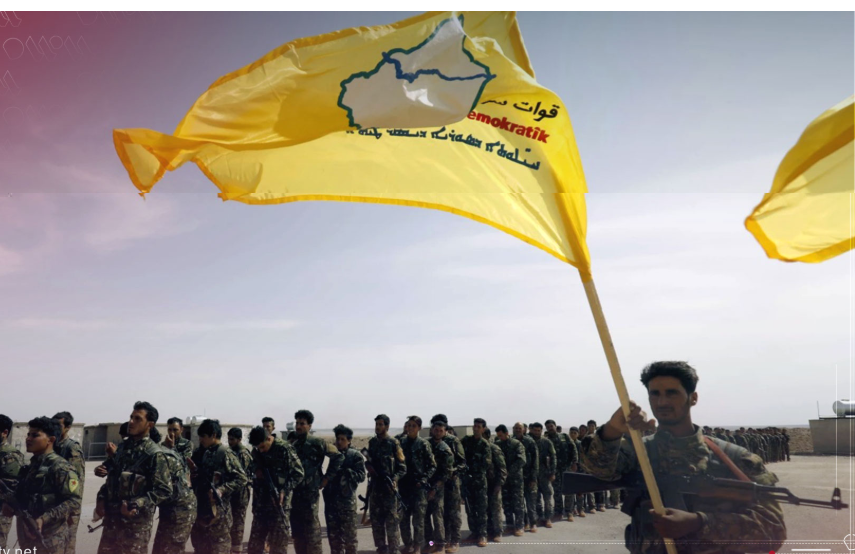
Senior commanders of the U.S.-backed Syrian Democratic Forces (SDG) say negotiations with the Syrian government have reached an impasse, raising the risk of renewed clashes in northern Syria. Sipan Hemo, a leading SDG figure, told Al-Monitor that Damascus refuses genuine integration and continues to reject Kurdish political autonomy within Syria’s territorial integrity.
Talks stalled: “No progress, conflict remains on the table”
In a rare public warning, Sipan Hemo, one of the top commanders of the U.S.-backed Syrian Democratic Forces (SDG) — whose backbone consists of the YPG militia — said negotiations with the Assad government have hit a dead end and that renewed armed conflict remains a possible outcome.
Speaking to Al-Monitor, Hemo said that without a political settlement, the current low-intensity clashes could evolve into a broader confrontation:
“As long as no agreement is reached, the risk of a large-scale war remains. SDG is preparing for that possibility.”
According to Hemo, while the SDG is seeking a formula to be integrated into the Syrian state and assume responsibility across the entire country, Damascus rejects any model that preserves the force’s autonomous structure.
“We want to be part of Syria and assume responsibility across the entire country. This is our strategy and our goal. Contrary to what some say, we do not have a separatist agenda, nor do we want to establish a separate state.”
Competing definitions of “integration”
Hemo said the core disagreement lies in how the two sides interpret integration.
-
For Damascus, Hemo said, integration means dissolving the SDG’s current structures and placing them under the full command and identity of the regime.
-
For the SDG, integration means preserving their political and ethnic identity within a decentralized, democratic framework.
“For them, integration means erasing your identity — ceasing to exist. For us, democratic integration means protecting our identity and will, and joining the state on that basis.”
The SDG have long advocated a form of autonomous regional governance, similar to the Kurdish regional administration in northern Iraq, but without calling for statehood.
Damascus, however, insists on full administrative and military control across Syrian territory.
Rumored “three-division deal”: Uncertain and not binding
Reports circulated in regional media in October that the SDG and the Syrian Army had reached a preliminary understanding to establish three special military divisions that would remain under SDG control but operate under the Syrian Army’s formal structure.
Hemo confirmed that such a proposal had been discussed:
“I attended a meeting in Damascus in mid-October. The atmosphere was positive, but nothing was written down or formalized. There was talk of forming three special brigades. We said that SDG already operates like a regular army and can undertake national defense responsibilities. But everything remained verbal.”
The commander stressed that no binding agreement exists and any statements suggesting otherwise were premature.
Ankara reacts: “A direct threat to national security”
The rumored formation of divisions under SDG control has triggered a sharp reaction in Turkey.
Turkish officials view the SDG and YPG as extensions of the PKK, designated as a terrorist organization by Turkey, the U.S. and the EU.
On Tuesday, Devlet Bahçeli, the leader of Turkey’s Nationalist Movement Party (MHP), denounced the reports during a parliamentary group speech:
“Any attempt to form separate military divisions under this terrorist organization during integration talks with Damascus is a direct threat to our national security.”
Bahçeli argued that the SDG’s transformation under Damascus would create a new “hybrid PKK structure,” contradicting Turkey’s stated goal of a “Terror-Free Turkey, Terror-Free Region.”
U.S. and Syria send conflicting signals
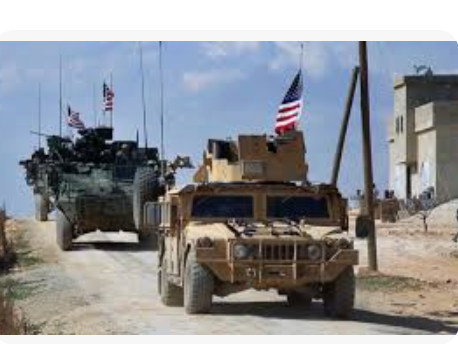
Washington maintains tactical military support for SDG forces as part of its counter-ISIS mission in northern Syria, while simultaneously encouraging a political settlement between the SDG and Damascus.
According to reports, the talks have been facilitated with U.S. awareness and involvement.
-
U.S. Ambassador to Ankara and Syria special representative Tom Barrack has avoided giving a clear assessment, saying only that the discussions are “ongoing.”
-
Syrian Foreign Minister Esad Şeybani, however, contradicted that view earlier this week:
“So far, no positive or practical step has been taken.”
The negotiations were originally expected to produce a framework by December, following an agreement signed in March addressing the unification of military forces and administrative institutions. That deadline now looks unlikely.
Mutual accusations: two narratives, no convergence
Both sides accuse the other of blocking progress.
-
Damascus accuses the SDG of “maximalism” — demanding political authority beyond their current territory.
-
The SDG accuses the Syrian government of lacking a sincere negotiating posture and of waiting for a regional shift that would enable Assad to restore control over the entire country.
Analysts note that the SDG’s bargaining power depends heavily on:
-
Continued U.S. military presence in Syria,
-
A fragile regional balance involving Turkey, Iran, and Russia,
-
The unresolved future of northern Syria.
Any shift — including a potential U.S. troop withdrawal — could dramatically change the SDG’s leverage.
The risk of renewed conflict
The SDG has warned repeatedly that if negotiations fail, they will defend their territory.
Hemo stated that preparations are already underway:
“We are ready for every scenario.”
Analysts say clashes could escalate if:
-
Damascus attempts to retake SDG-held areas by force,
-
Turkey increases cross-border pressure on SDG positions,
-
U.S. troops reduce their presence or shift their mission.
The region remains highly volatile, with several actors pursuing conflicting objectives on the same territory.
Related articles
Erdoğan: “Trilateral mechanism should be established with Russia and Syria”
Is Bahçeli Now Proposing More Democracy?
Close ties with Syrian regime is crucial: Foreign Minister