Private Schools in Turkey Struggle as Falling Birth Rates Shrink Numbers
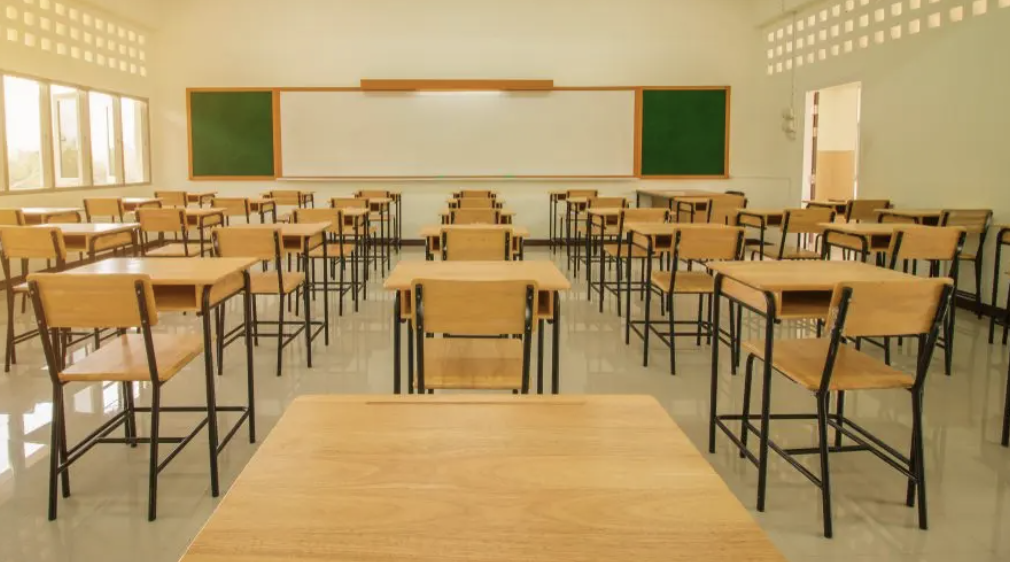 Closed schools
Private education institutions in Turkey are facing an uncertain future as the number of students continues to decline. The problem is particularly acute at the preschool level, where many schools are unable to fill their classrooms due to the country’s rapidly dropping birth rate.
According to Ümit Kalko, vice president of the All Private Education Institutions Association (TÖDER) and an education entrepreneur, private schools are operating at half capacity. “Many colleges have only filled about 50% of their available seats, and the situation is most severe in kindergartens—because no new children are coming,” Kalko told our newspaper in an interview evaluating the sector.
From Growth to Uncertainty: How Policy Shifts Reshaped the Sector
Kalko recalled that the private education sector once grew rapidly thanks to government incentives and reforms. “In 2013, tutoring centers were shut down. Institutions affiliated with terrorist organizations were removed from the sector, and many others converted into private schools,” he explained. “With state incentives, the industry expanded. The share of private educational institutions rose from 1% to 10%. These schools also created jobs for teachers who couldn’t be appointed to public positions.”
However, the sector’s expansion was built on expectations that government incentives would continue. “Investments were made assuming the incentives would remain in place,” said Kalko. “But they were discontinued in 2018. Since then, the sector has been trying to find its footing again.”
Over the last two years, roughly 150,000 students have transferred from private to public schools. Kalko warned that this shift isn’t solely economic. “It’s not just about money. The declining fertility rate has a direct impact on the private education market,” he said.
A Demographic Shift Hits Early Education Hard
Ten years ago, Turkey was welcoming about 1.4 million newborns annually. Today, that number has fallen to around 900,000. This sharp decline is shrinking the pool of potential students for years to come.
“In the last decade, the total number of school-aged children has decreased by about 500,000, and around 50,000 of those would have been potential private school students,” Kalko stated. “Out of 3 million available seats, 1.68 million remain empty. The most problematic level is preschool, simply because there are no new children entering the system.”
Kalko emphasized that early childhood education is the foundation of private schooling. Without growth at this stage, the entire structure becomes unsustainable. “If we cannot fill the kindergartens, it will affect elementary and high schools in the coming years,” he cautioned.
Private Schools Seek State Support
Kalko recently met with Minister of National Education Yusuf Tekin to discuss the sector’s challenges and the possibility of reinstating financial incentives. “When we approach our state with requests, there should be no fear or hesitation,” he said. “The state is our state. The stronger we are, and the more students we attract, the lighter our government’s burden becomes.”
He also called on private school owners to unite in addressing negative public perceptions of the sector. “We need to come together to change the misconceptions about private schools,” he said, noting that collaboration could help restore confidence and balance public understanding.
OECD Study Reveals Turkish Teachers Work Fewer Hours Than Global Peers
A separate report from the Organisation for Economic Co-operation and Development (OECD) adds another layer to the education discussion. The organization’s Teaching and Learning International Survey (TALIS 2024)—conducted every five years—examined teacher working conditions and attitudes across 55 countries. In Turkey, 662 schools, 654 principals, and about 14,000 teachers participated. The results were analyzed by the TEDMEM think tank under the Turkish Education Association (TED).
Younger Teachers, Lower Prestige
According to the findings, Turkish middle school teachers are among the youngest in the OECD, with an average age of 38—compared to the OECD average of 45. TEDMEM noted that this youthful workforce provides a strategic advantage for innovation and adaptability in education.
However, challenges persist. While 86.2% of teachers said they were satisfied with their profession and 78.3% were content with their current work environments, many felt undervalued by society. Only one in five teachers believed their profession was respected, and just 21.3% were satisfied with their salaries—far below the OECD average of 37.8%.
TEDMEM warned that low social prestige could undermine motivation and deter talented candidates from entering the profession.
Workload and Digital Gaps
The survey also revealed that Turkish teachers work 31.1 hours per week, significantly below the OECD average of 41 hours. Their preparation and lesson-planning time—4.5 hours weekly—is also well below the OECD’s 7.4 hours. This lack of preparation time, according to TEDMEM, may affect the quality of instruction.
When it comes to artificial intelligence in classrooms, only 23.8% of Turkish teachers reported using AI tools, compared to the OECD average of 36.3%. Most teachers used AI primarily for summarizing content. Alarmingly, 72.3% said they lacked the necessary knowledge or skills to integrate AI effectively, and 71.1% said their schools lacked adequate digital infrastructure.
TEDMEM emphasized that digital transformation requires more than hardware. “A holistic approach is needed—one that strengthens teachers’ pedagogical knowledge and capacity,” the report concluded.